The Problem
A door off track doesn't happen because of one bad day. It happens because a roller has been fighting a bent or misaligned rail for months, and something finally gives. In a lot of the houses we get called to, the track hardware is original to the build - and across this part of Livonia, that means houses that went up between 1938 and 1991, with the bulk of the stock dating to the 1960s and 70s. That's sixty-plus years on steel brackets that were never designed to last that long without adjustment.
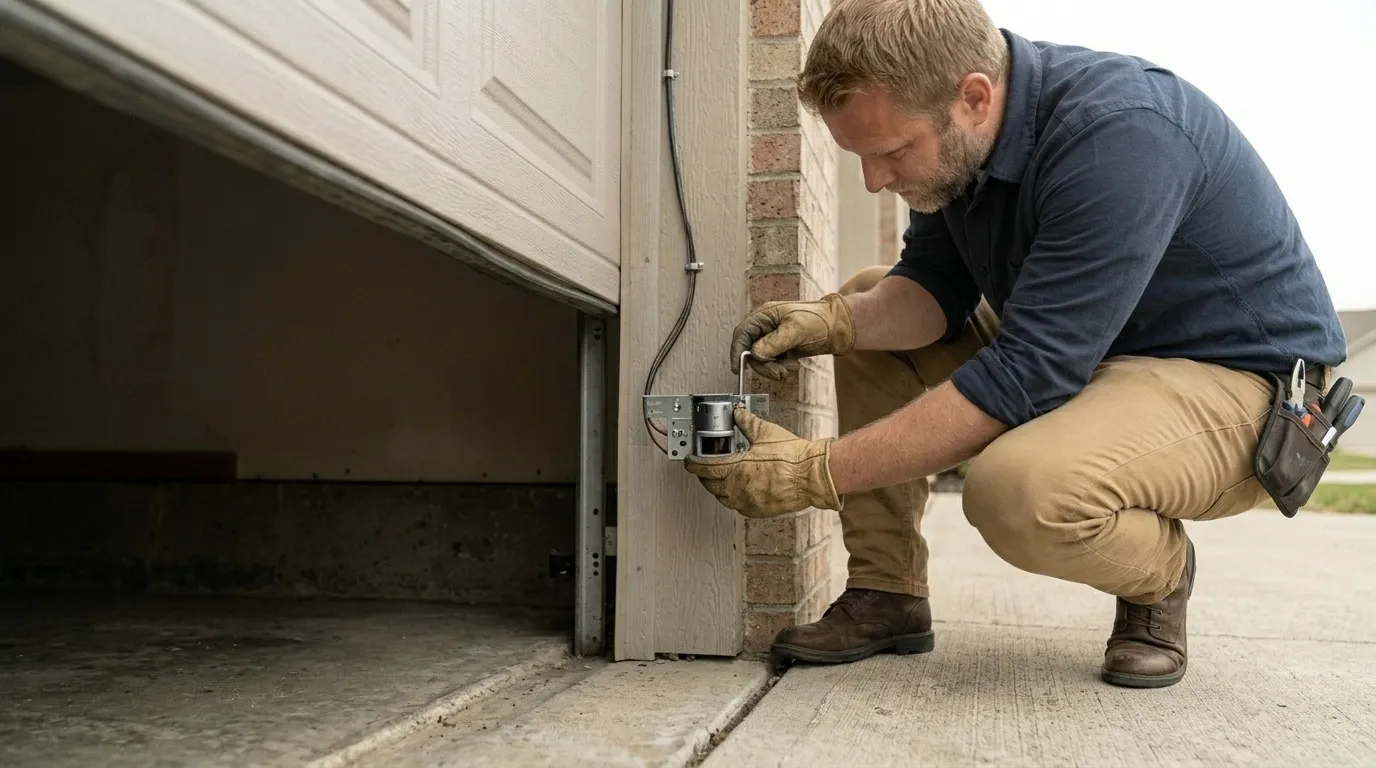
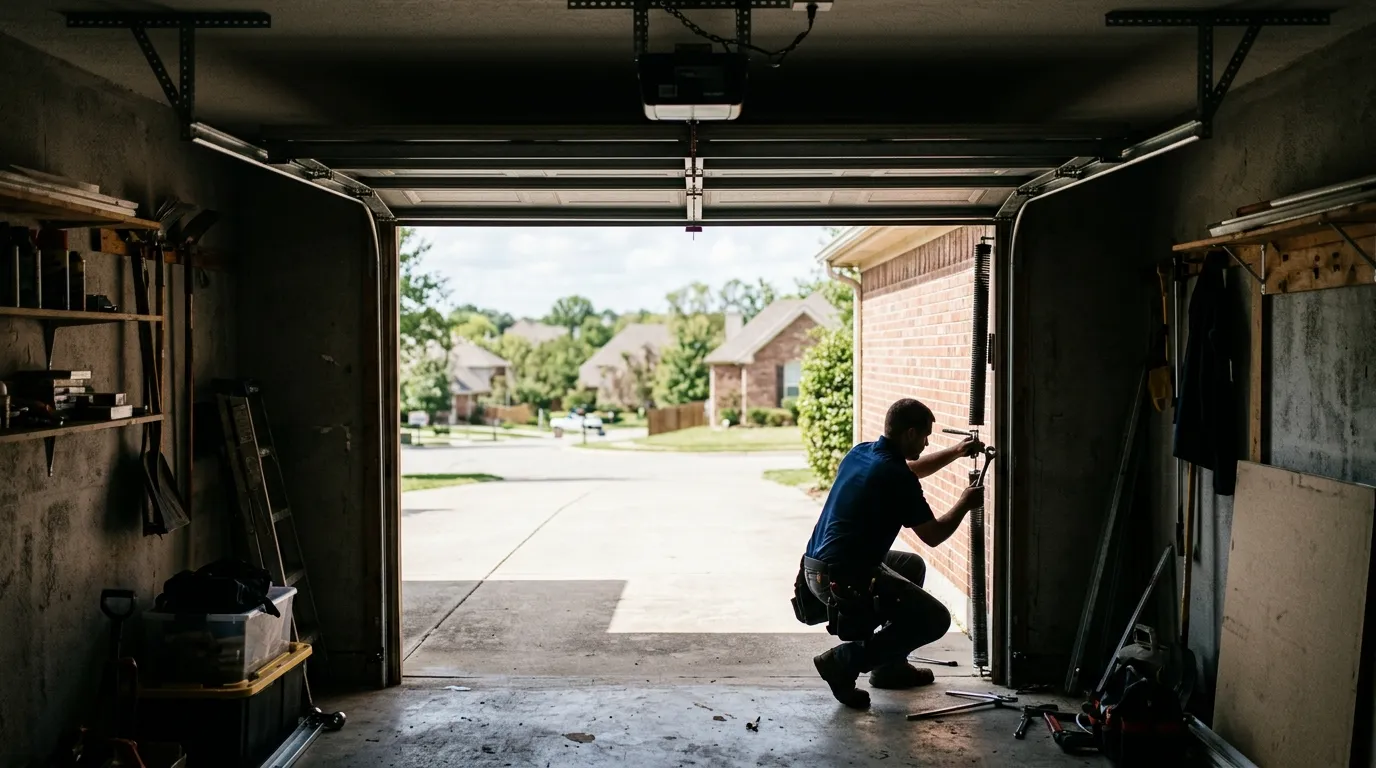
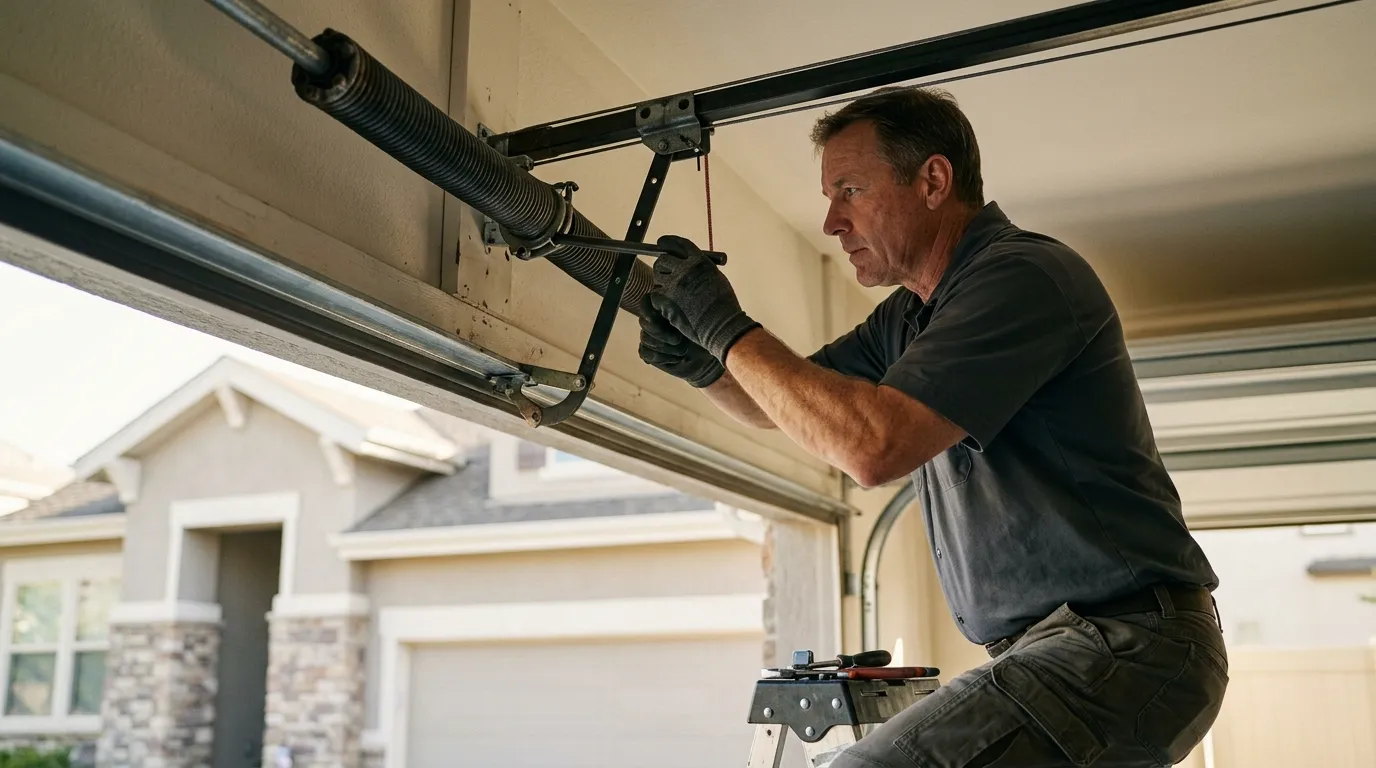
The usual sequence: a roller wears down and starts riding the edge of the track instead of the center. The track flexes a little more each cycle. Eventually a bracket bolt backs out, or the roller just pops loose on a hard stop, and the panel binds sideways instead of sliding straight. If the opener keeps pulling after that, you get a bent track, a cracked stile, or a door that won't move at all.
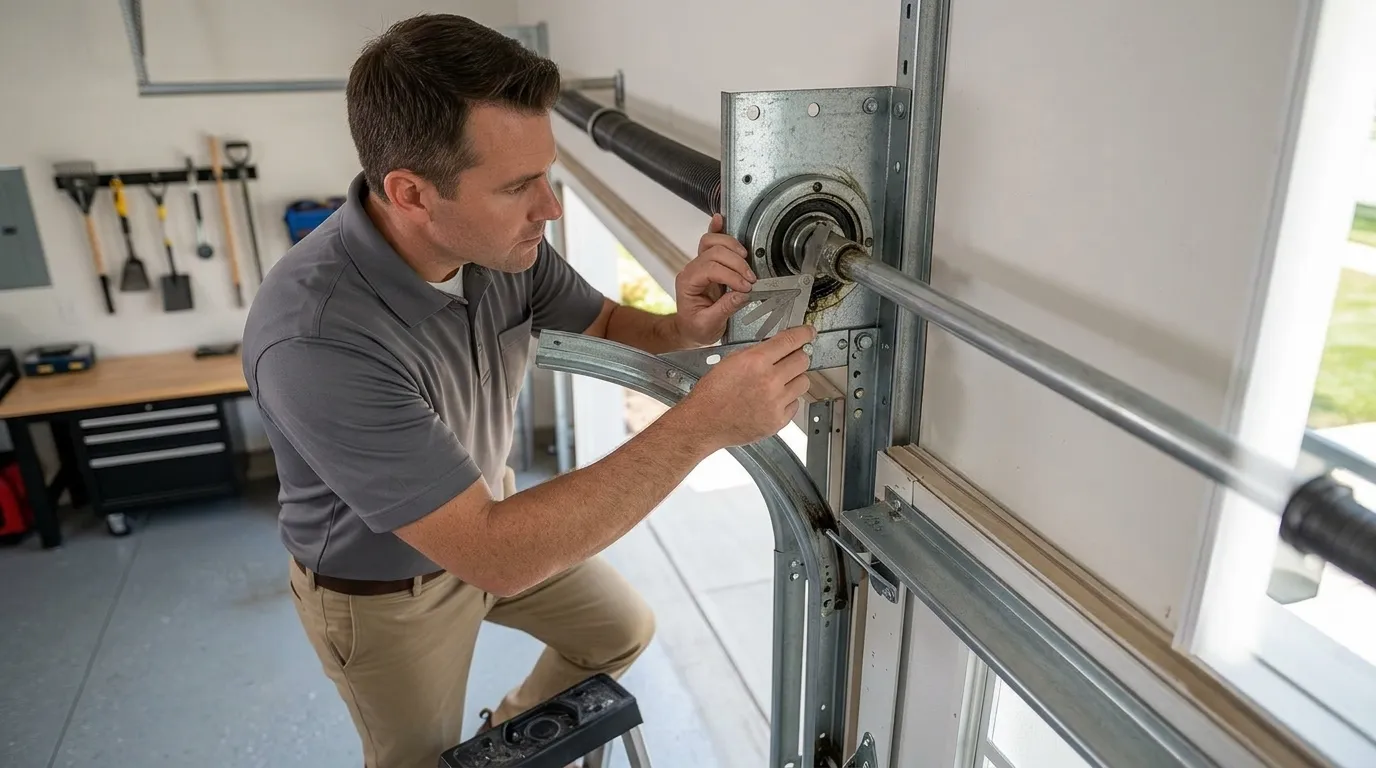
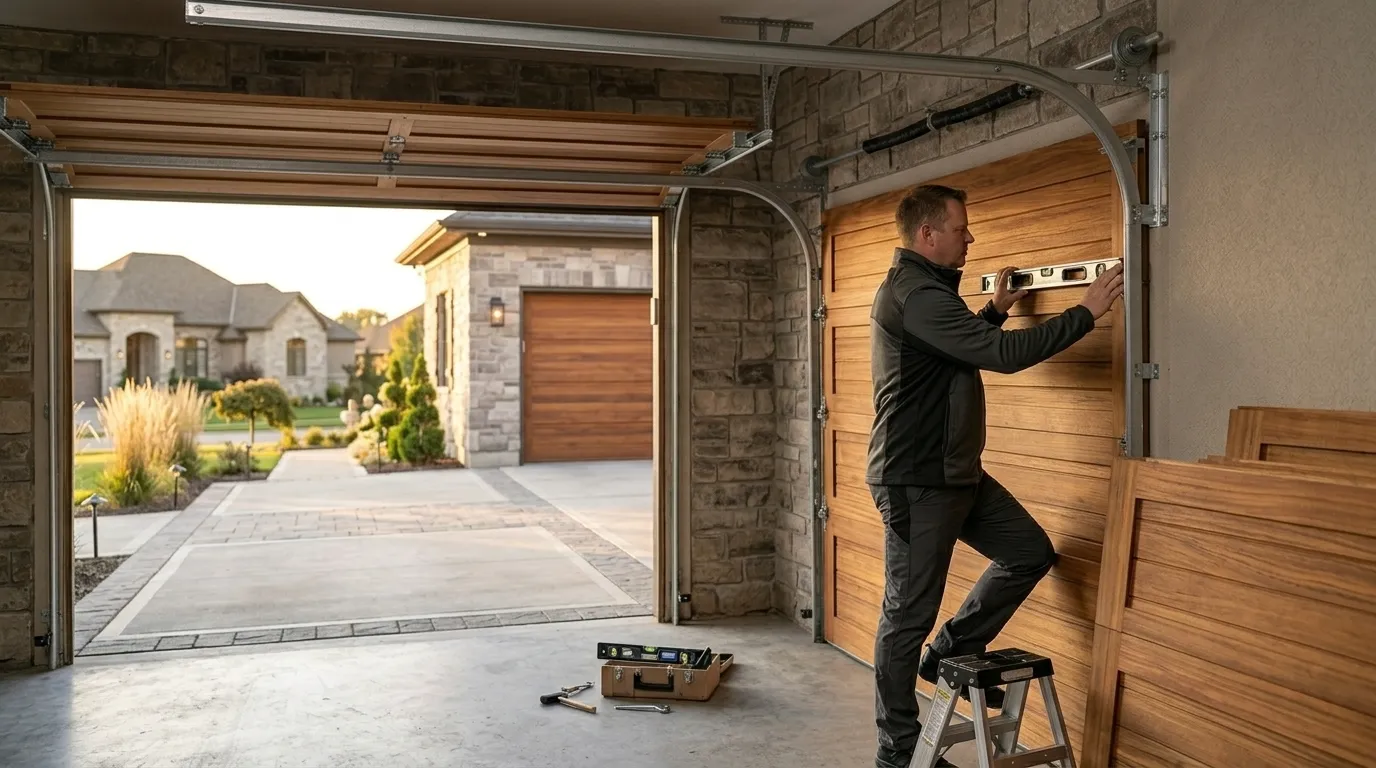
We don't fix this by spraying lubricant and calling it done. If the bracket is loose or the track is bent more than about a quarter inch out of plane, it needs to come off and get reset or replaced. Anything short of that is a repeat call in a few weeks.
When Waiting Is Fine
Not every wobble is an emergency. If the door still opens and closes smooth, and you just noticed a roller looks a little worn or hear a soft click partway through the cycle, you can wait for a scheduled visit instead of an emergency one. A door that's still tracking straight, just noisier than it used to be, is a maintenance item, not a breakdown.
Where we tell people not to wait: if the door has already jumped the track once, even briefly, or if you see daylight between the roller and the rail on one side. That's a sign the bracket has already shifted, and running the opener again risks bending the track further or racking the panel. At that point the cost of the fix goes up the longer it sits.
Given how much of the housing here still runs the original steel track and hardware from the 1960s and 70s build era, a lot of these calls aren't about age alone - they're about hardware that was fine until a bracket finally worked loose. If your door is from that era and has never had the track checked, that's worth doing before winter, not during a cold snap when steel contracts and clearances get tighter.
The Common Mistake
The mistake we see most is forcing the opener. When a door starts to bind or jump the rail, the natural instinct is to hit the button again, or pull the release and muscle the panel back into place by hand. Either one can turn a bent bracket into a cracked panel or a torn cable.
The second mistake is treating a track problem as a lubrication problem. Silicone spray quiets a dry roller for a week, but it does nothing for a bracket that's pulled away from the jamb or a rail that's bowed. If the door is still coming off track after you've oiled it, oil was never the issue.
We won't sell you a full track replacement if a bracket reset and a couple of rollers will do the job - that's an honest call we make on-site, not over the phone. But we also won't tell you a five-minute fix will hold if the rail's already bent past what a bracket adjustment can correct. On original hardware from a 1960s build, that's often the case, and it's better to hear that up front than to pay for the same visit twice.