The Problem
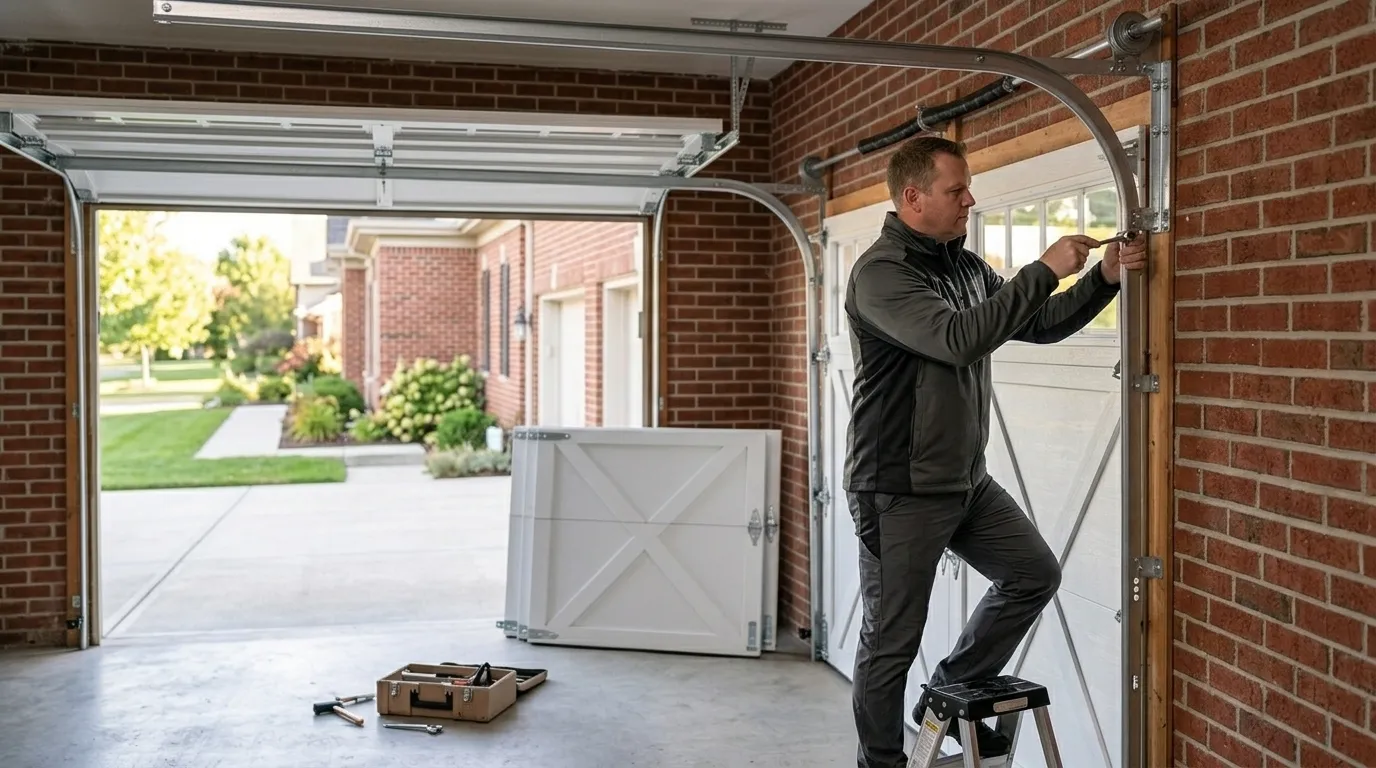
Most of the housing stock around Livonia went up between 1938 and 1991, with the heavy concentration landing in the 1960s and 70s. That means a lot of these garages are still running the torsion spring that came with the house - thirty, forty, fifty years of cycles on the same coil of wound steel. Springs don't fail on a schedule. They fail on a stress point, and cold weather is one of the biggest stress points there is. Livonia sits in a climate band the federal data marks as cold-severe, and steel behaves differently at 15 degrees than it does at 60. It gets brittle at the microscopic level, and a spring that's already fatigued from decades of use loses whatever margin it had left. That's why so many snapped-spring calls land on the coldest morning of the stretch, not a mild one. The door that worked fine in October can let go in January with no warning beyond a bang and a door that won't budge. If your garage still has the original spring and the house dates to that same build era, you're not dealing with an if, you're dealing with a when.
When Waiting Is Fine
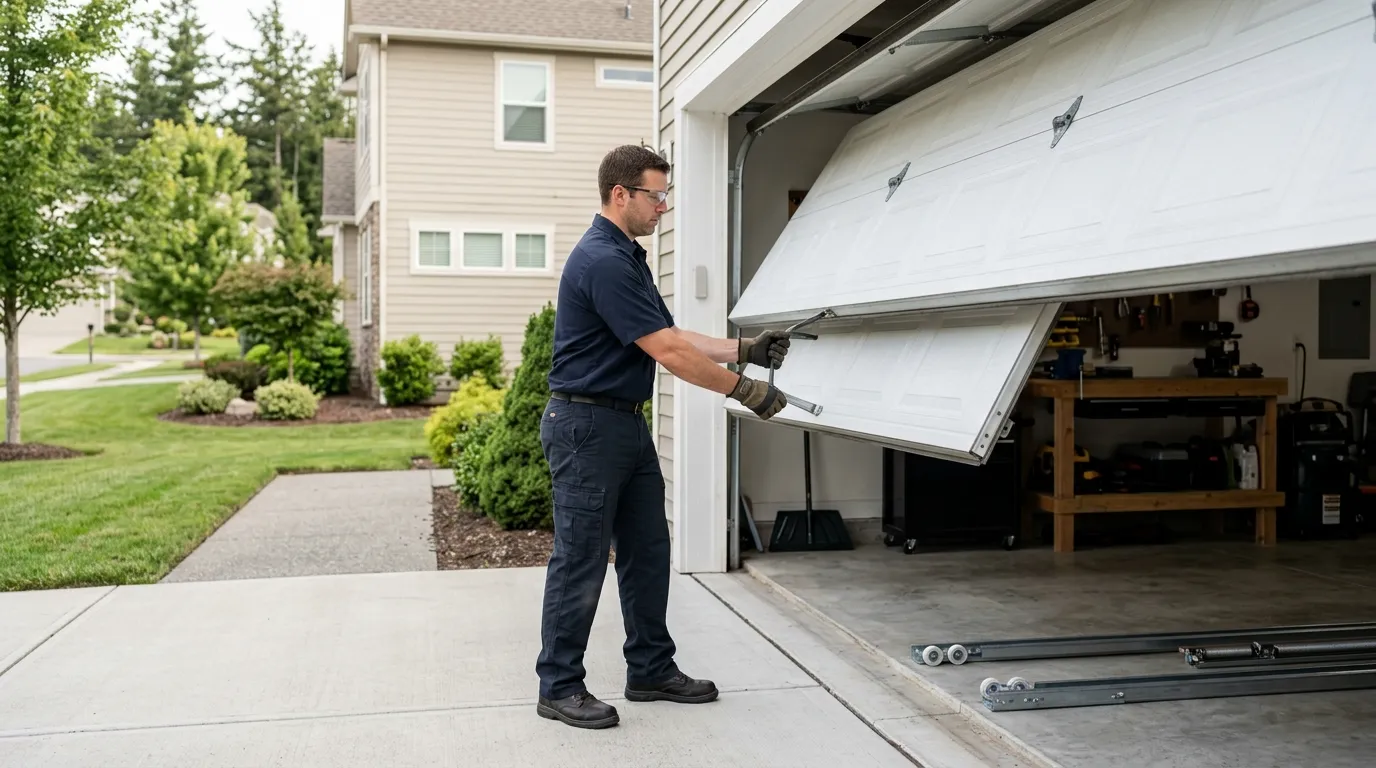
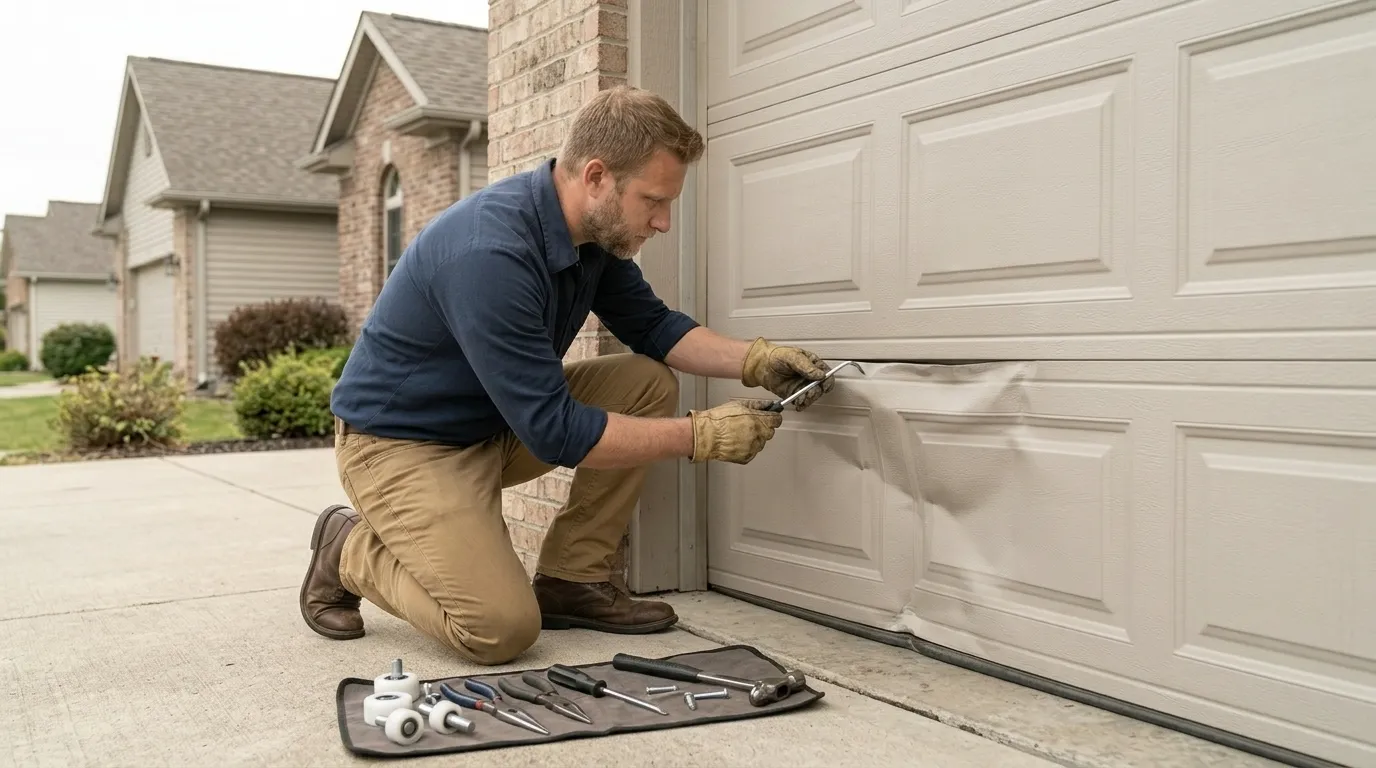
Not everything that acts strange in cold weather is a spring problem, and not every spring problem needs a truck out tonight. If the door is slow to open on a cold morning but moves normally, closes flush, and doesn't groan or sag on one side, that's usually just stiff lubricant and cold steel - it can wait for a scheduled visit. If a cable has jumped a drum, the door won't move at all, or one side of the door hangs lower than the other, that's not a wait-and-see. That's a spring or cable failure, and a door in that state can drop without warning. We'll say plainly: we don't always have a same-day slot, and parts for some of the older torsion hardware still in service on these houses can take longer to source than a big-box store special order. If your door is off track or a spring has already gone, don't force the opener - that's how a cable failure turns into a bent track or a hurt hand. If it's just sluggish, a phone call to describe what you're seeing helps us tell you honestly whether it's urgent.
The Common Mistake
The mistake we see most is treating a slow or noisy door in cold weather as normal wear instead of a warning. Homeowners wait out the season, the door keeps working, and then it doesn't - usually on the coldest morning, usually with no warning shot. We also see people try to compensate by cranking the opener's force setting up when the door seems to struggle in the cold, which just hides the real problem and puts more strain on a spring that's already near the end of its life. We hear the same pattern from callers in Garden City and Plymouth whose houses share Livonia's build era - same age spring, same cold snap, same story. With median household income across this area sitting at $70,984, most of these calls come down to a real decision: replace the spring, or is the opener and track worn enough that full replacement makes more sense long-term. We won't push replacement on a door that just needs a spring. But we also won't sell you a spring on a door where the track and rollers are shot underneath it.