Livonia, MI
Garage doors we install
Steel, insulated, carriage, full-view, and commercial doors - sized and fitted to your opening.
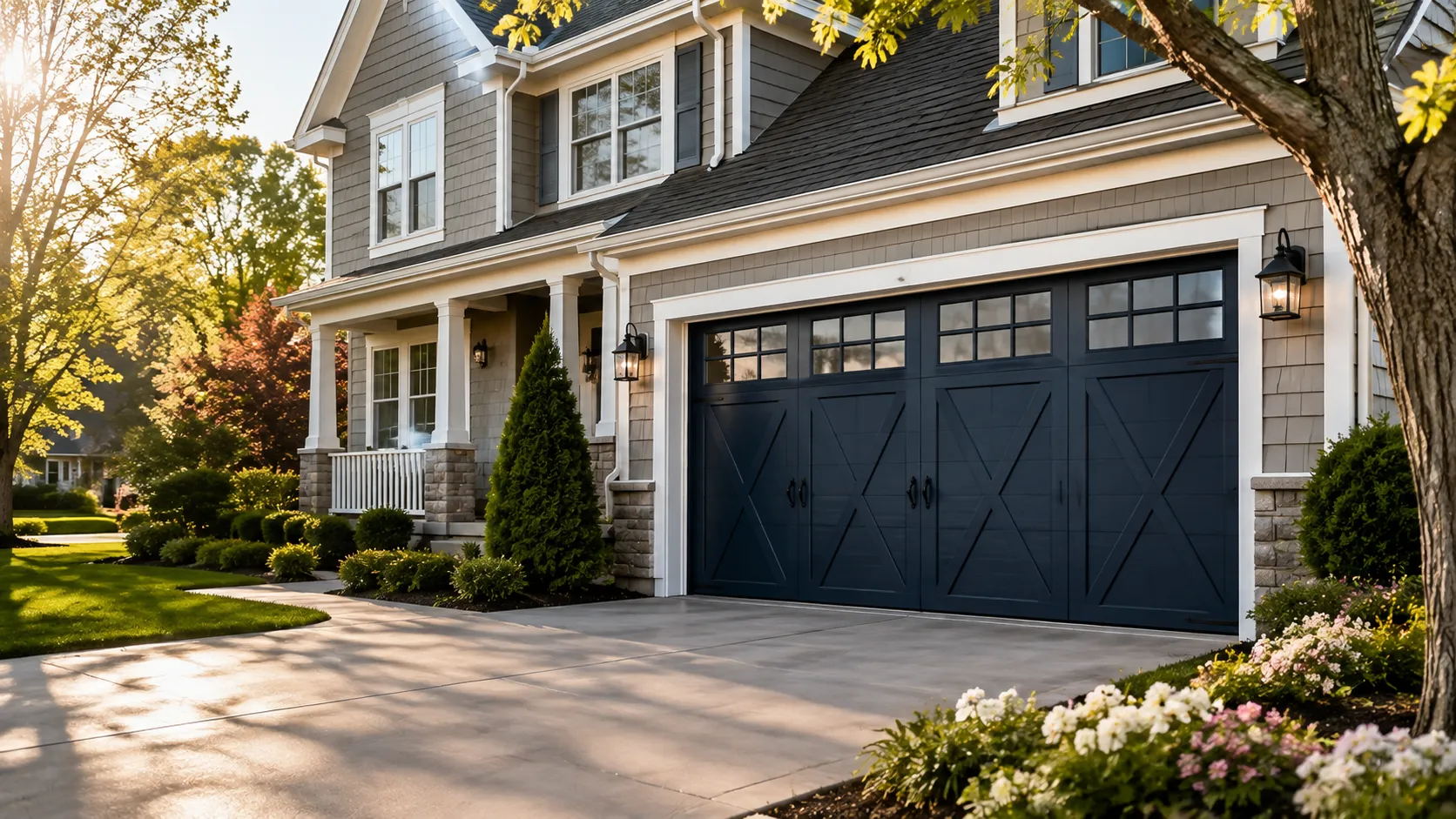
Carriage house
Request a quote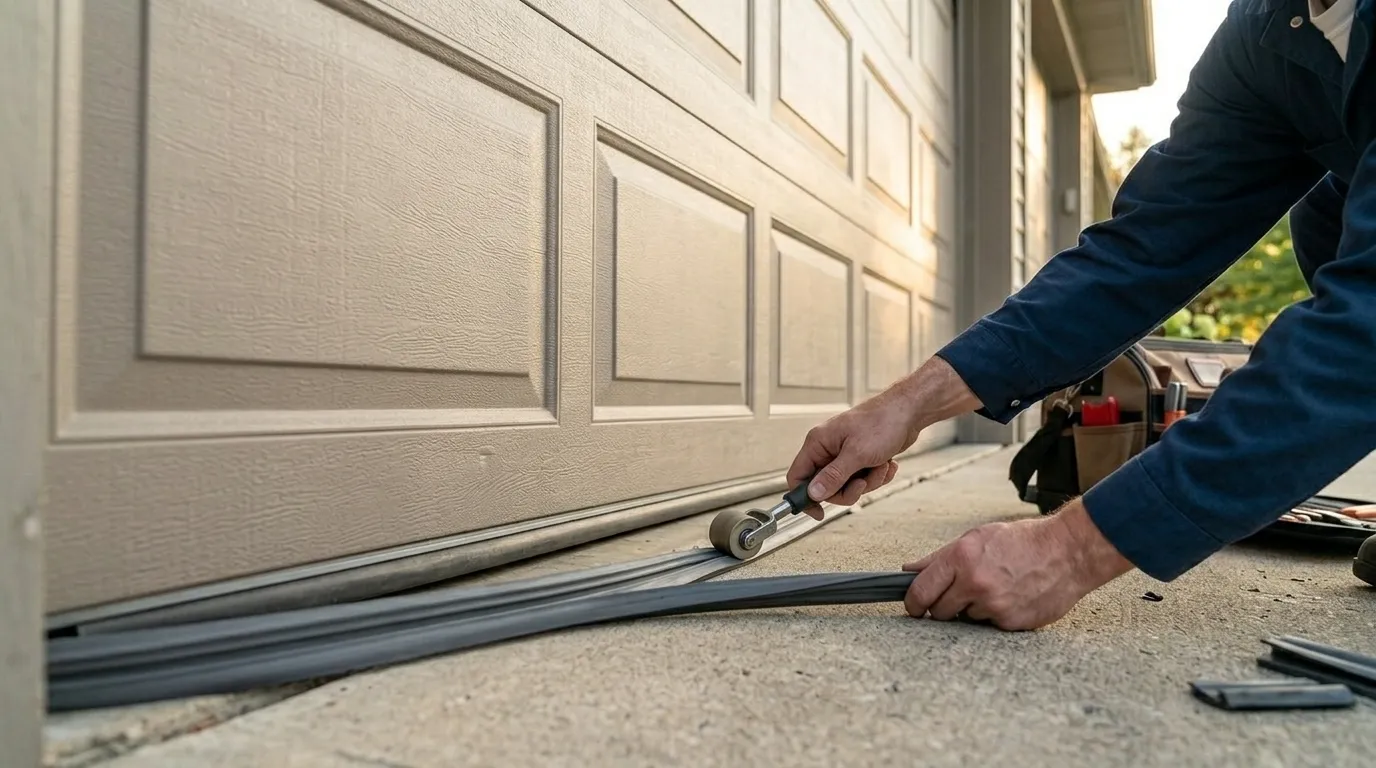
Modern flush
Request a quote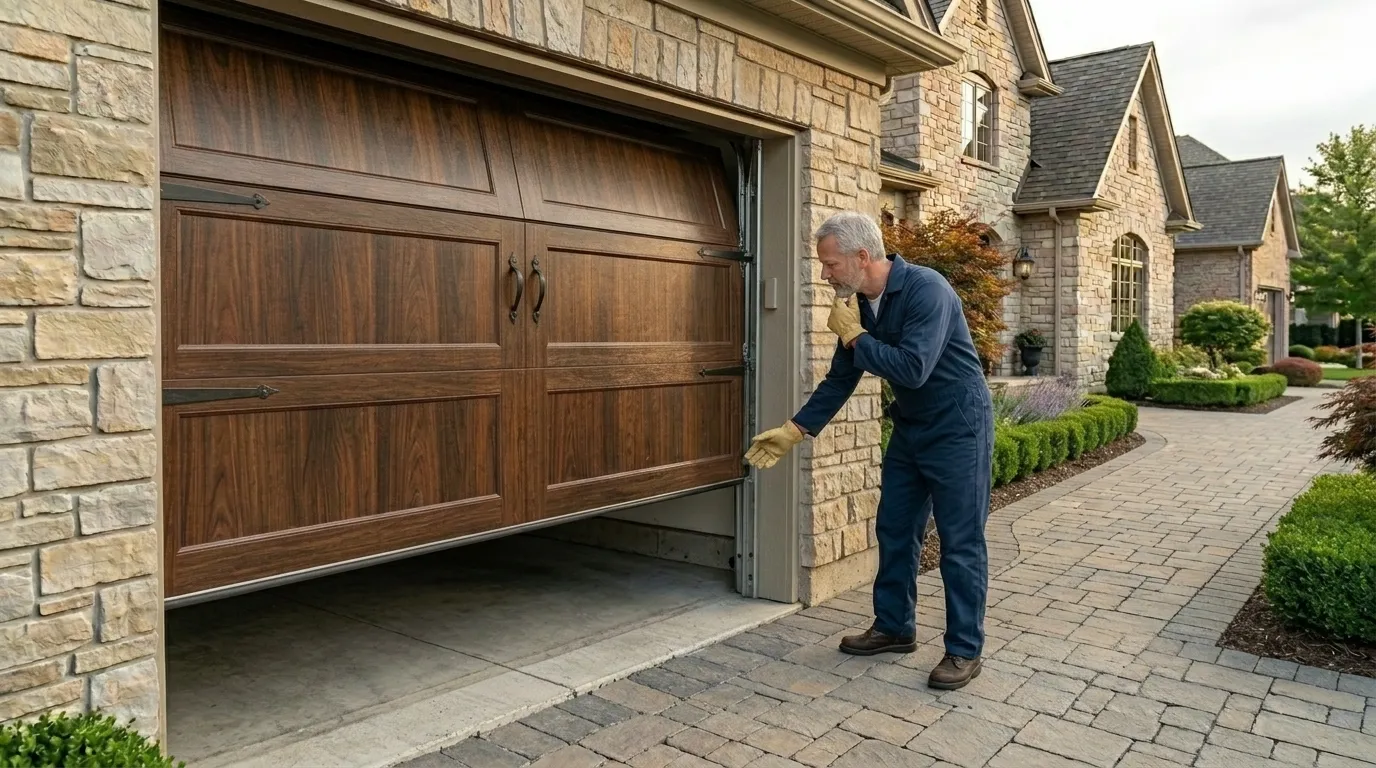
Full-view glass
Request a quote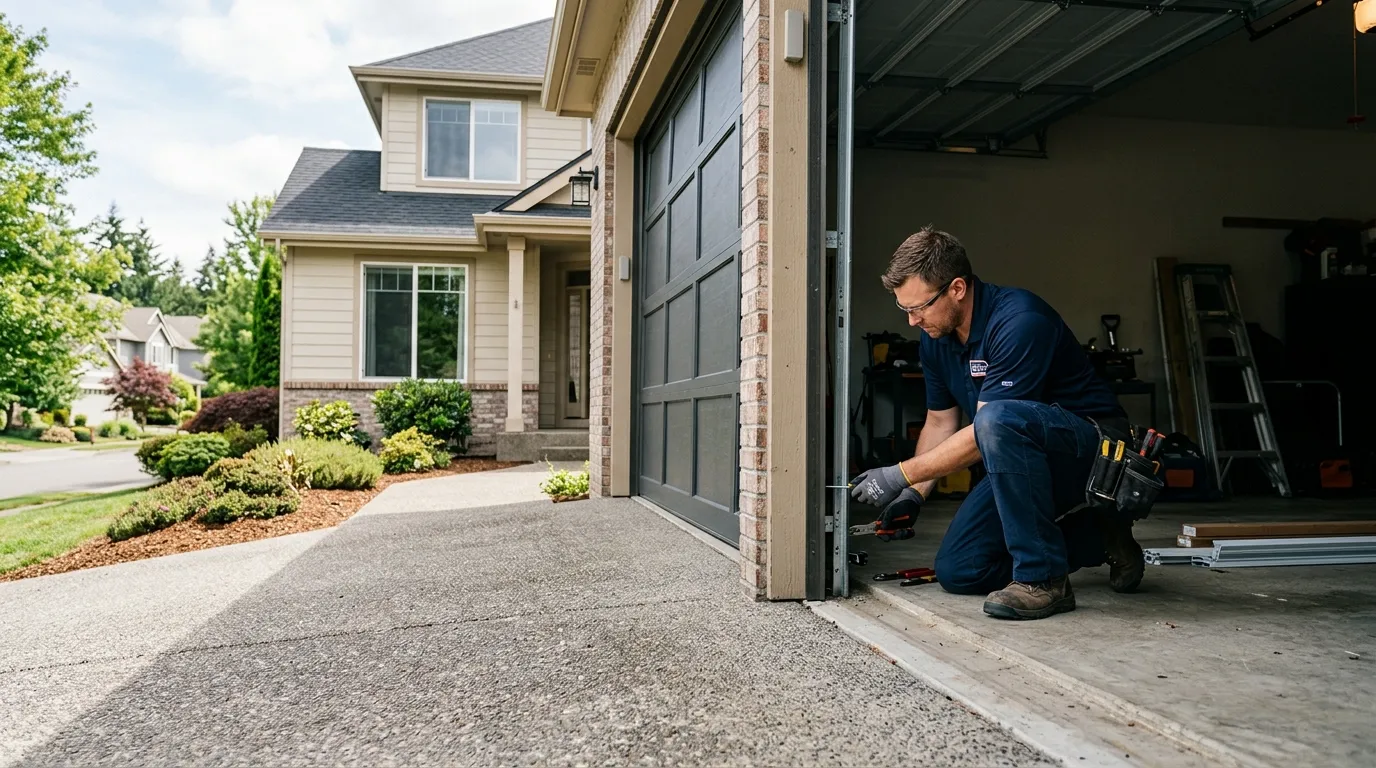
Raised panel
Request a quote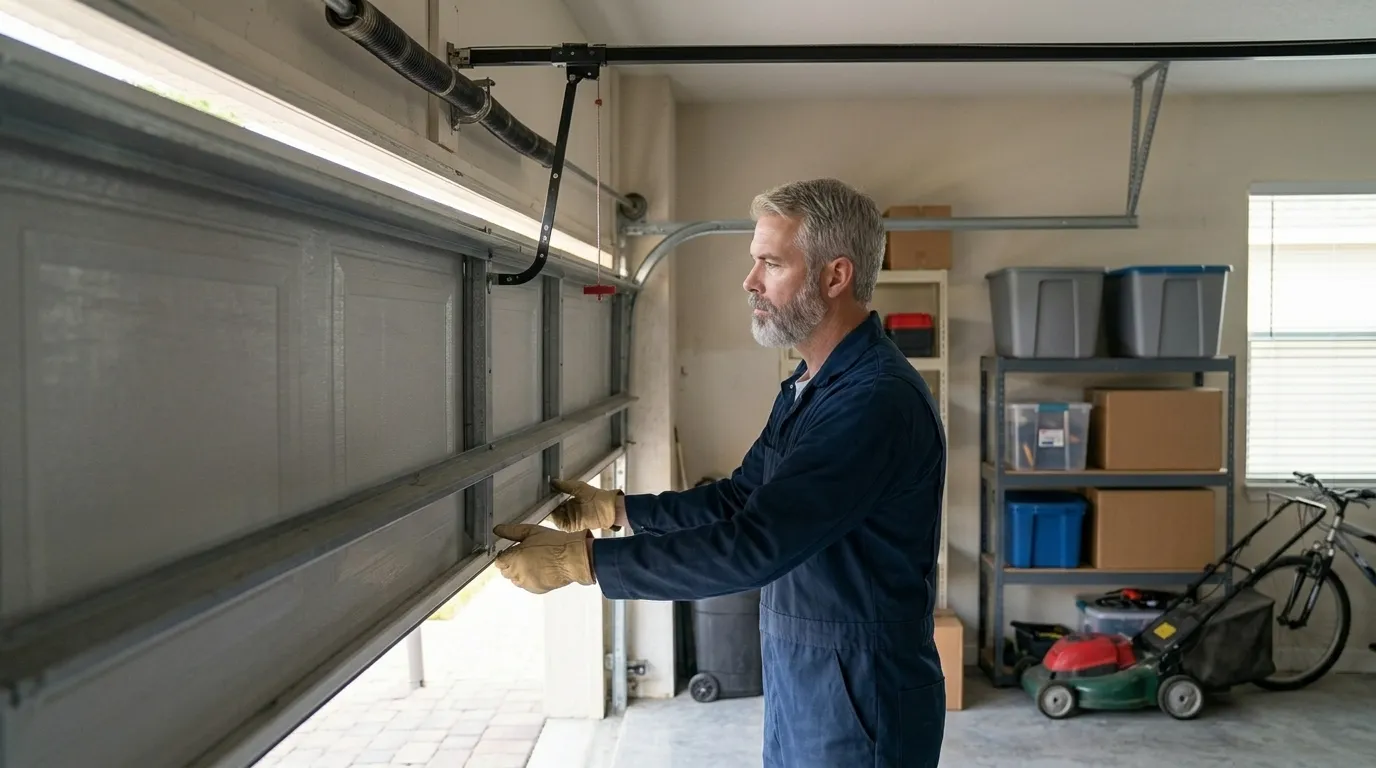
Commercial roll-up
Request a quoteMaterials & styles
Comparing door styles
General characteristics of each style - your exact options depend on the manufacturer and product line.
Sectional steel
Steel, insulated or non-insulated
The most common residential garage door style in North America. Horizontal panel sections hinge together and roll up along a pair of vertical-then-horizontal tracks. Available as a single steel skin or, more often, an insulated build with a foam core between two steel layers.
Carriage house
Steel, composite, or wood-faced
Styled to look like the swing-out carriage or barn doors of an older building, but operates on the same overhead track as a standard sectional door. Usually finished with decorative hinge and handle hardware to complete the look.
Modern flush
Steel or aluminum
A flat, smooth-faced panel design with no raised molding or ridges - a minimalist look that pairs with contemporary architecture. Built on the same sectional-track mechanism as a traditional panel door.
Full-view glass
Aluminum frame with glass or acrylic panels
Aluminum-framed sections glazed with glass (clear, frosted, or tinted) instead of solid panels. Common on modern homes and commercial storefronts for natural light; typically offers less insulation than a solid steel door unless the glazing itself is insulated.
Raised panel
Steel
The traditional embossed-panel look most associated with a residential garage door, available in long- or short-panel patterns. Comes insulated or non-insulated, same as sectional doors.
Commercial roll-up
Heavy-gauge rolling steel
A rolling steel curtain (often slatted) built for higher daily cycle counts and larger openings than a residential sectional door - loading docks, warehouses, and commercial bays.
Options
Insulation & options
How it works
From “it’s stuck” to “it’s fixed”
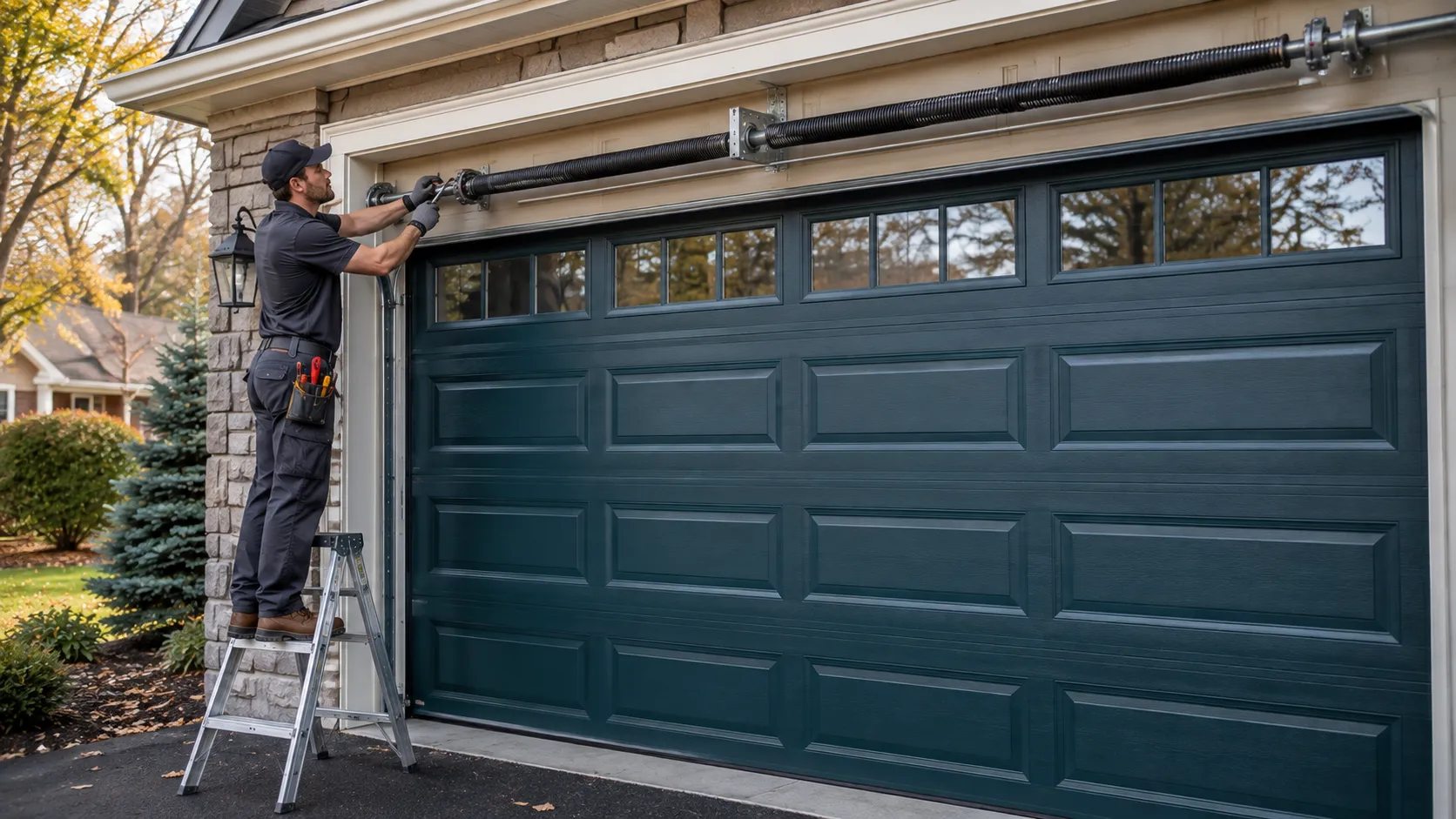
Tell us what’s wrong
Describe the symptom - won’t open, loud bang, opener runs but the door won’t move.
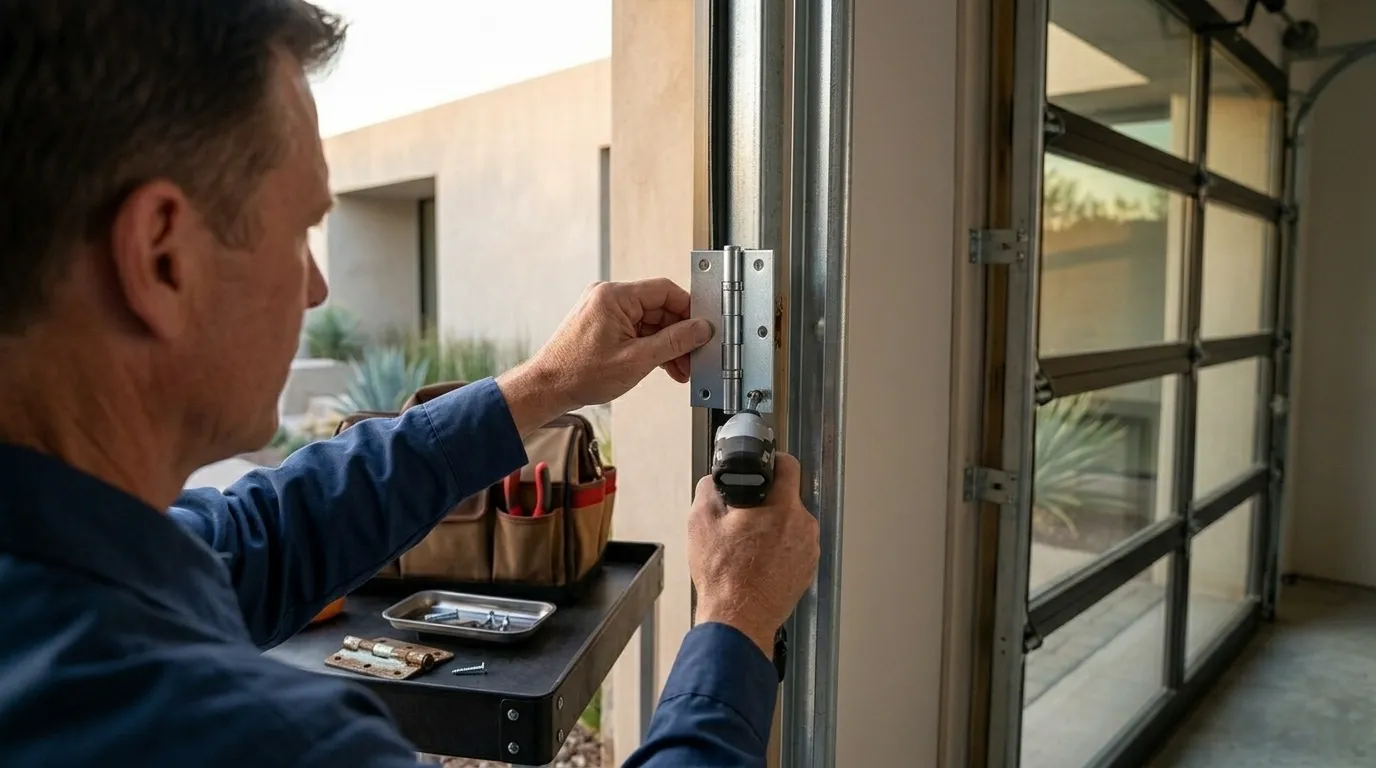
On-site diagnosis
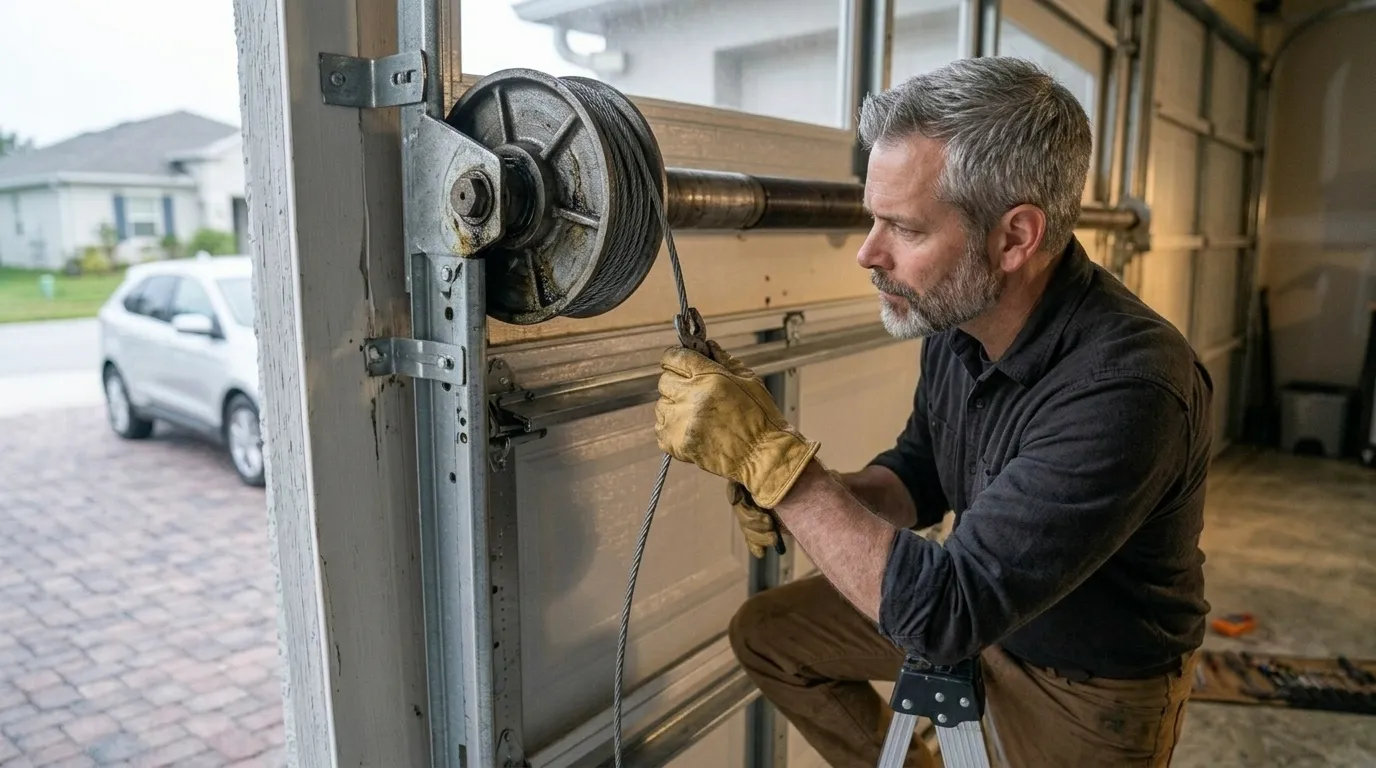
A technician tests the door under power and by hand and finds what actually failed.
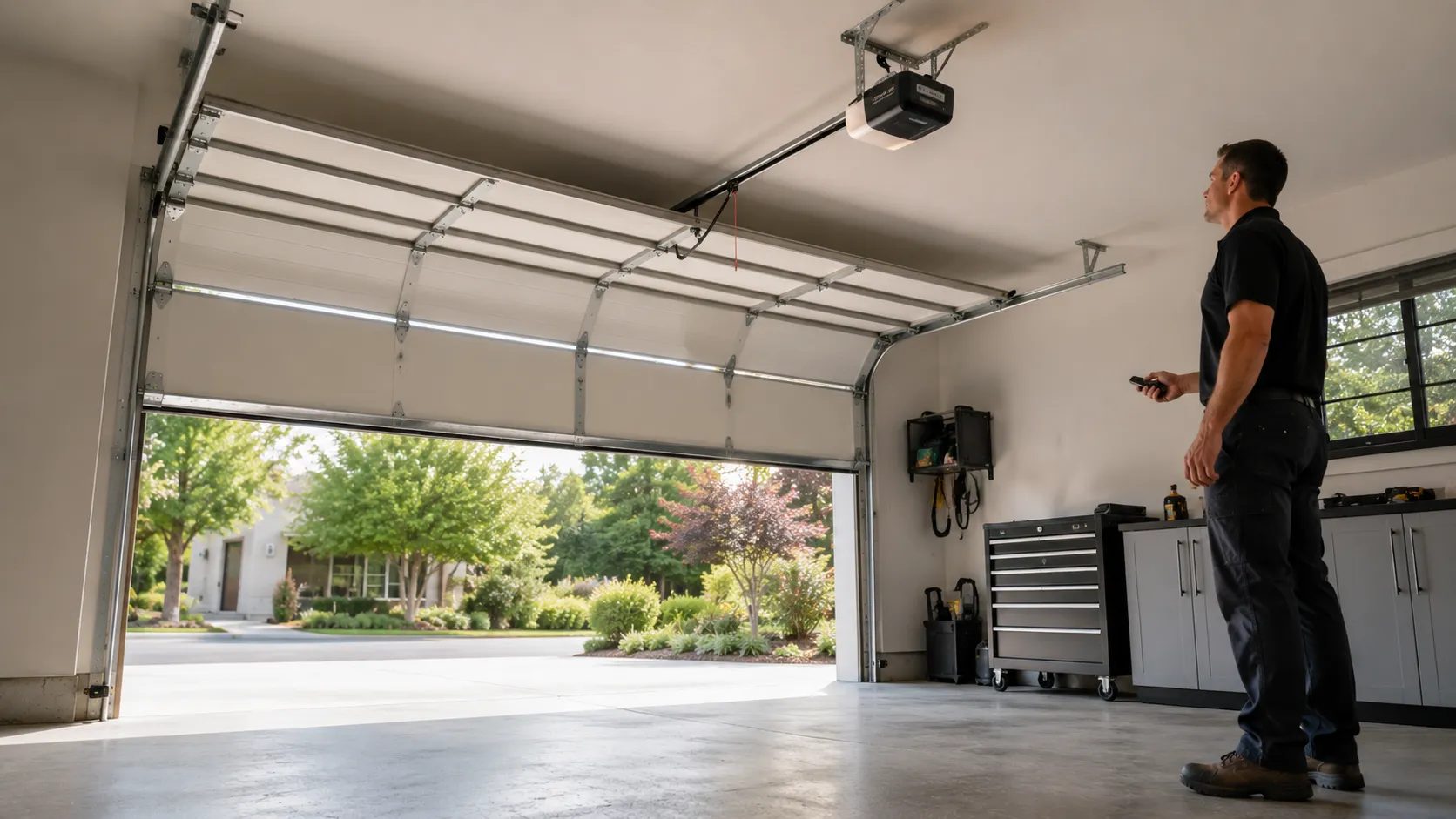
Clear, up-front plan
You get the fix that’s needed and what drives the cost - before any work starts.
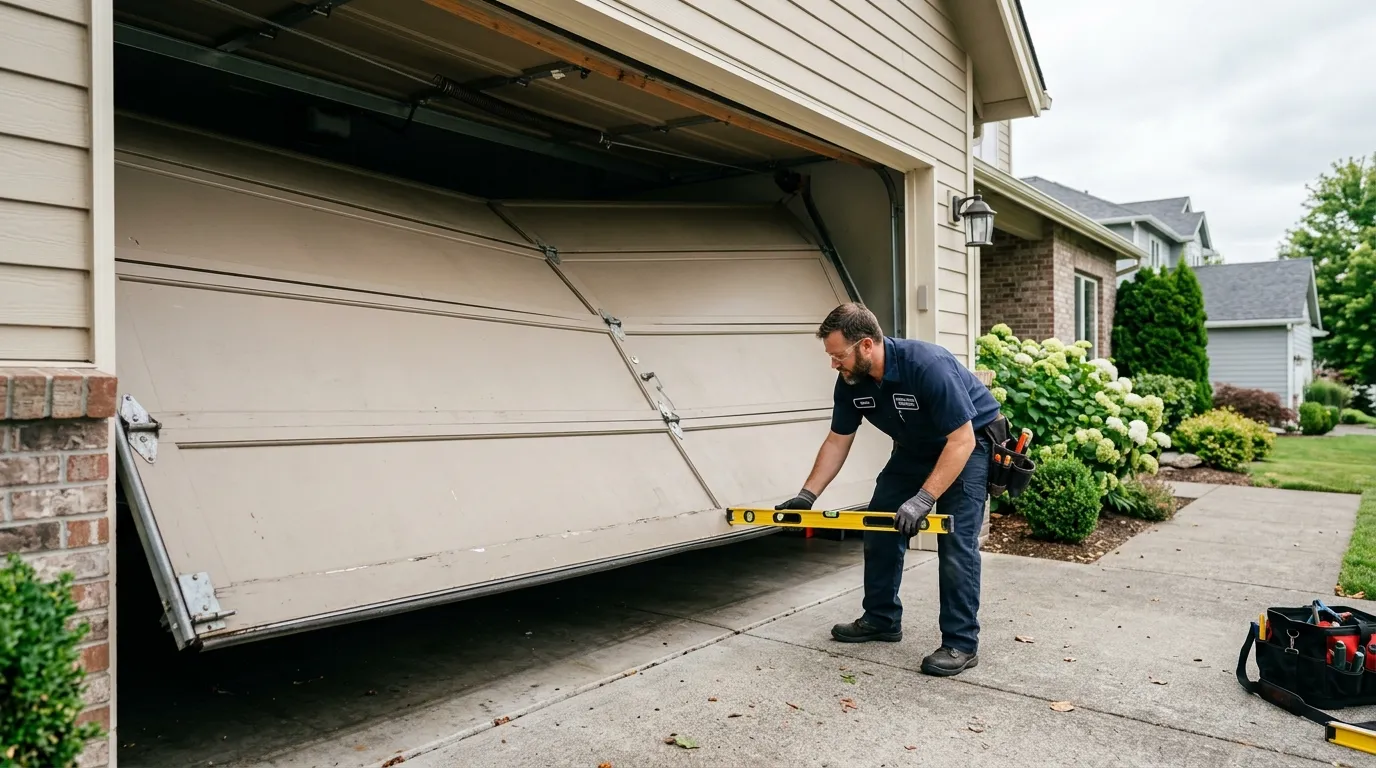
Repaired & tested
The repair is done, the door is set true and tested, and the work area left clean.
Door styles
Doors and work we handle
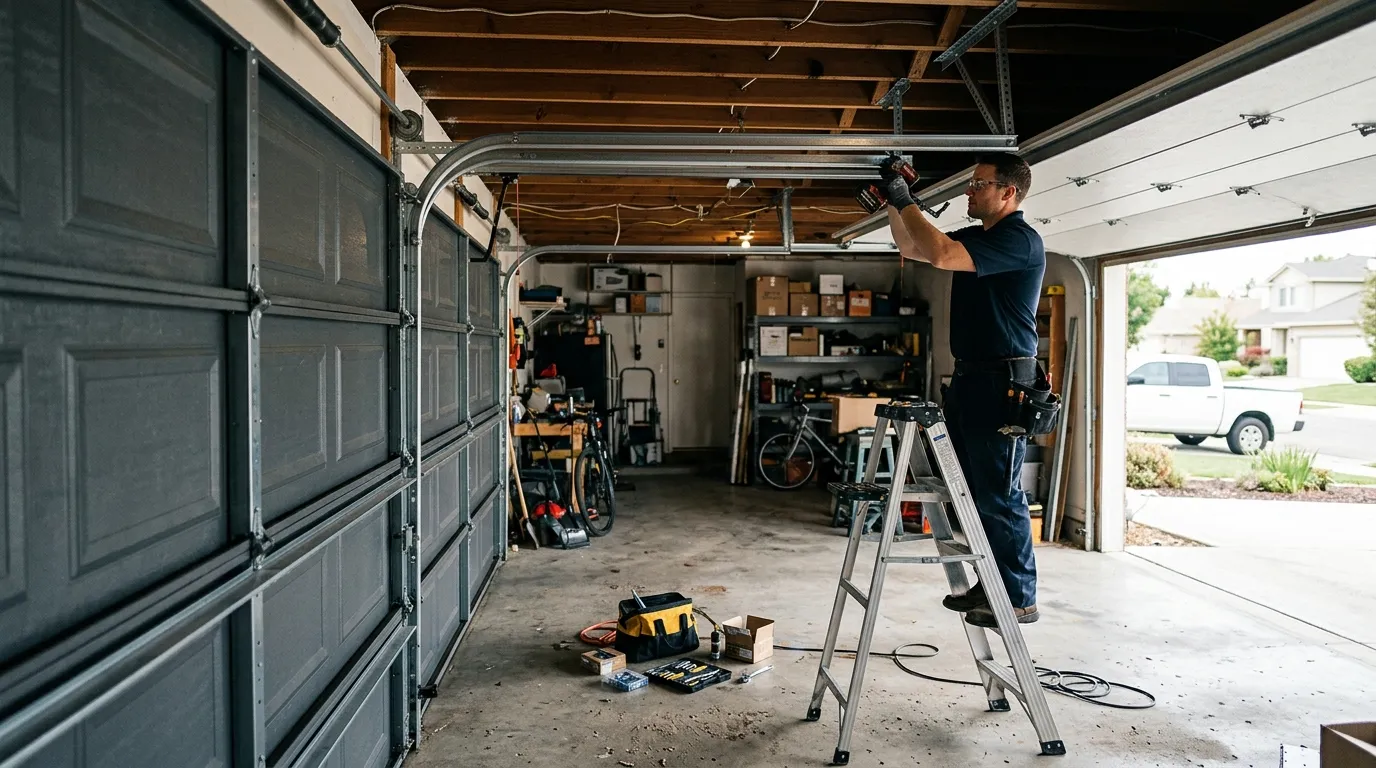
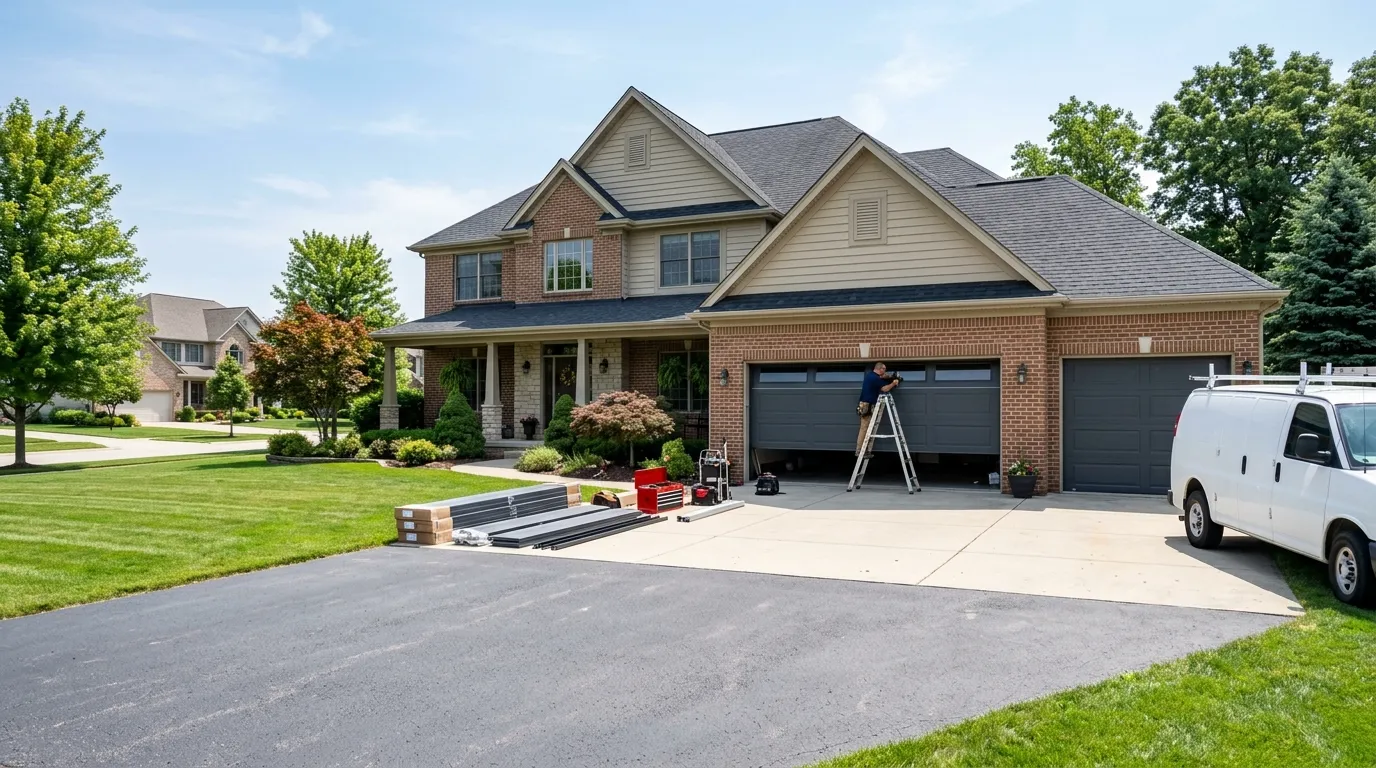
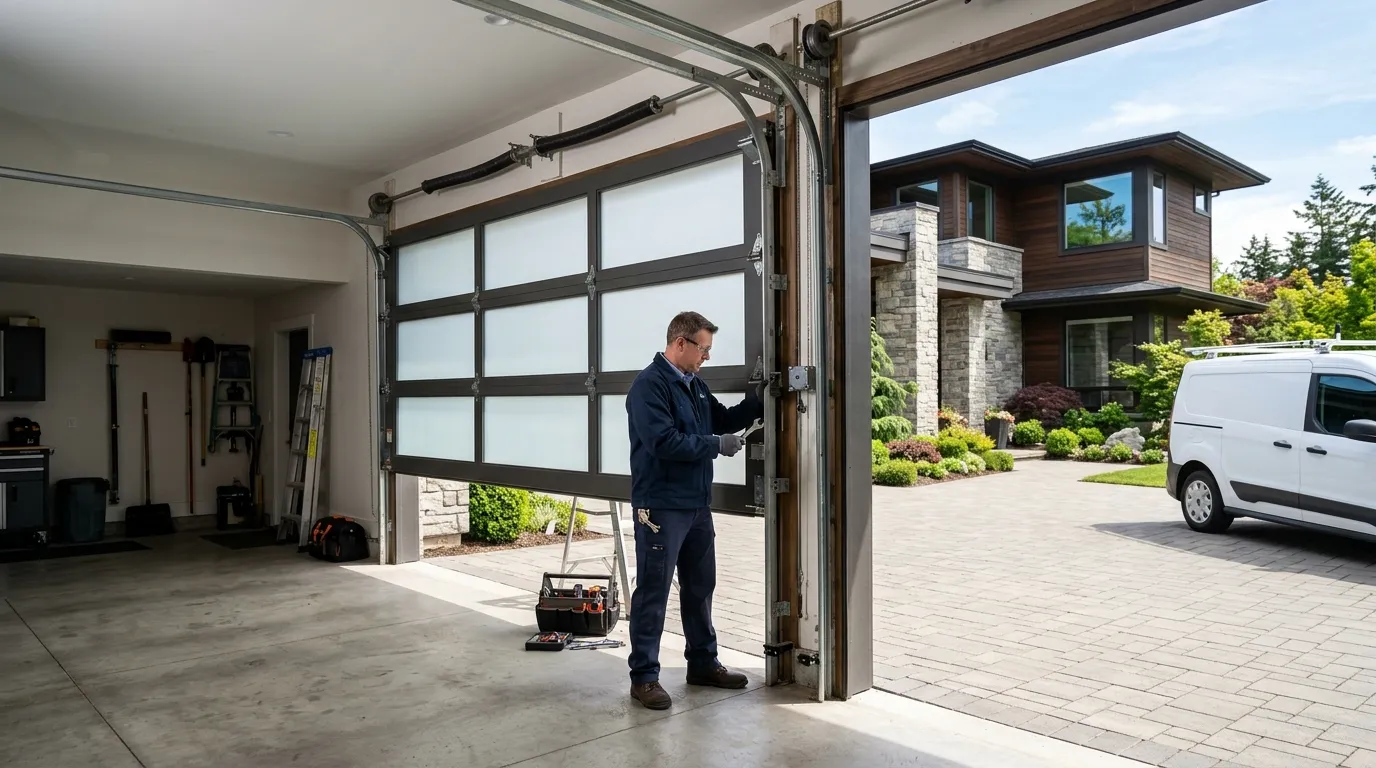
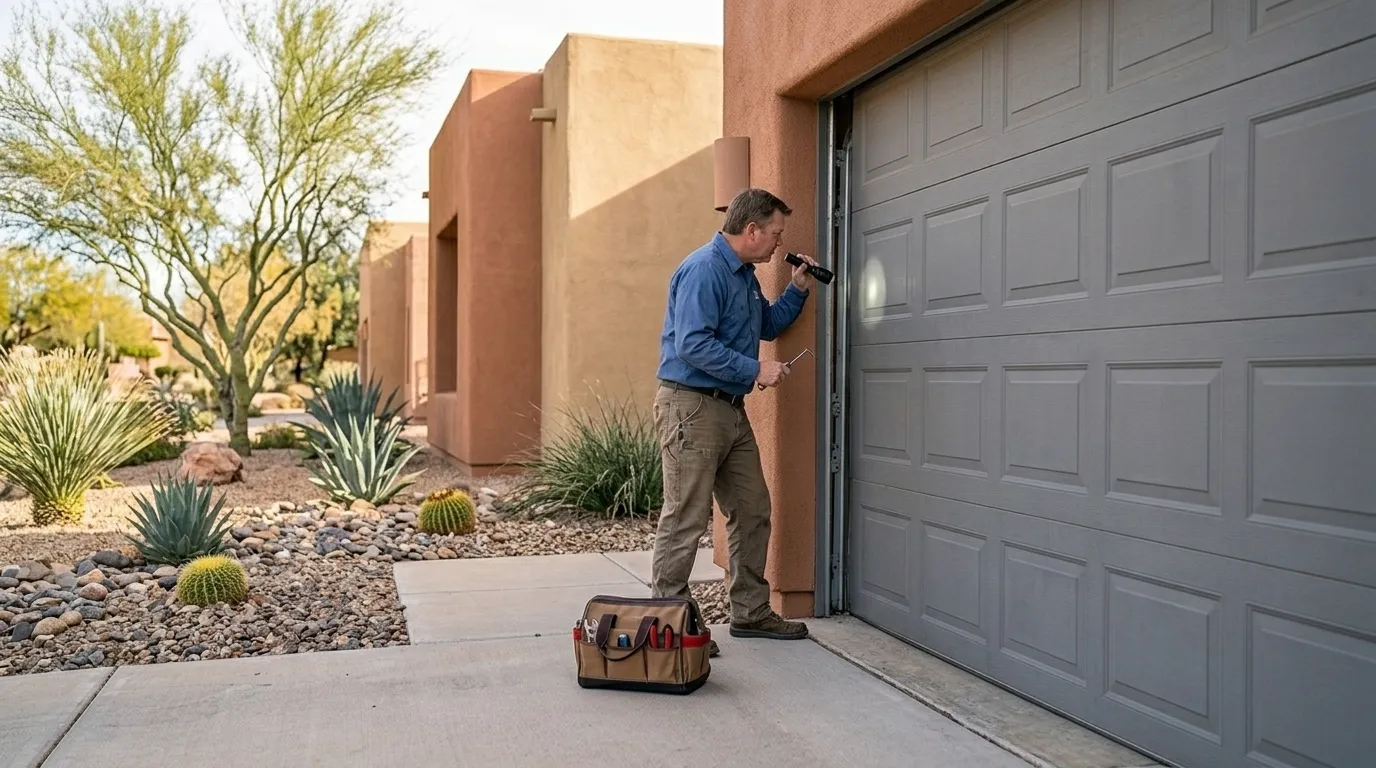
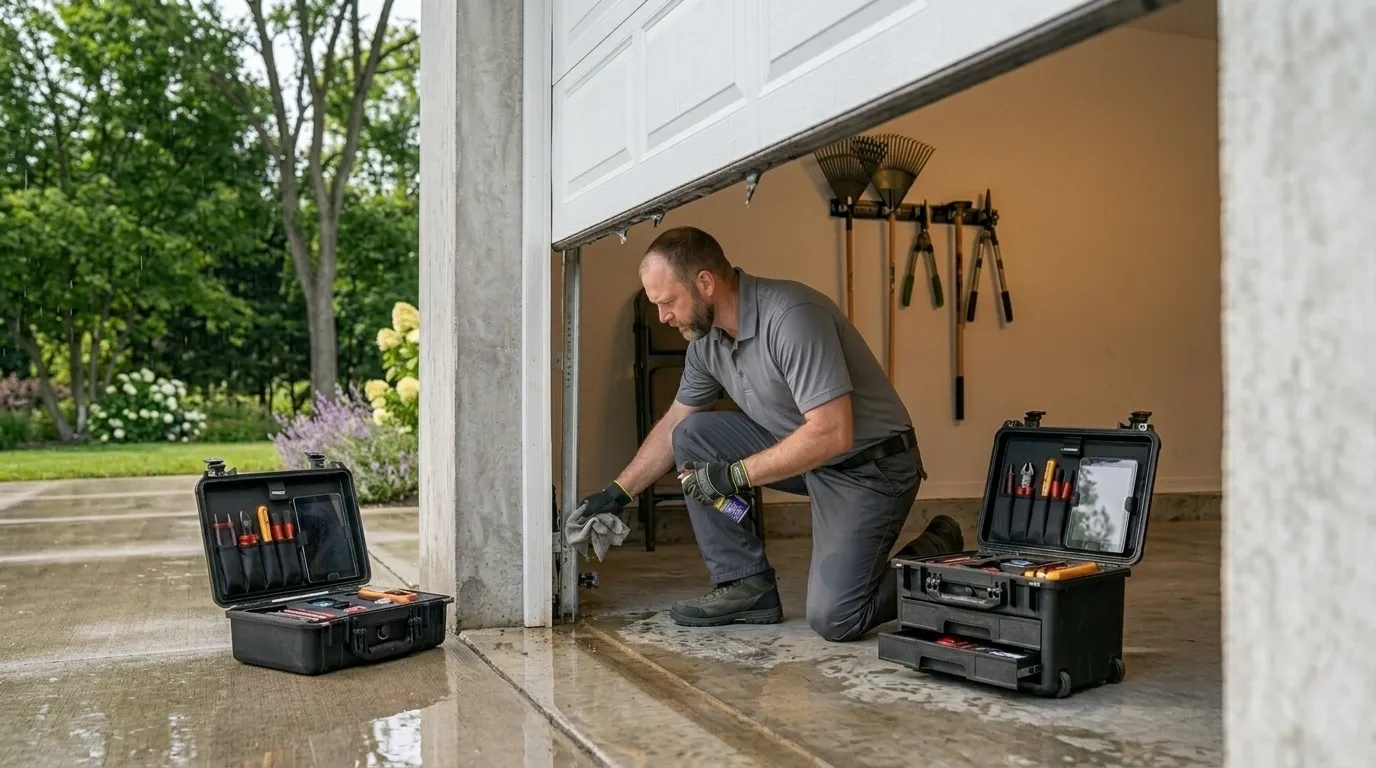
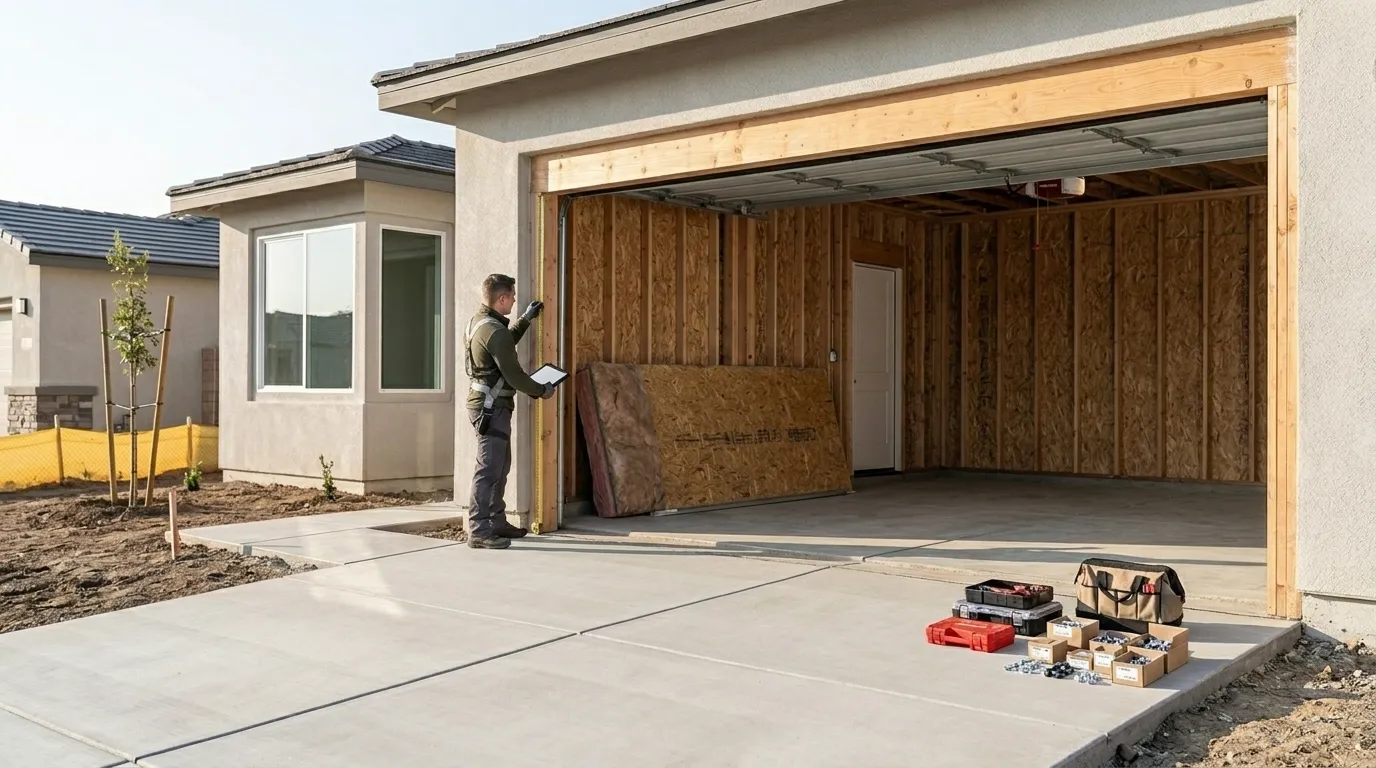
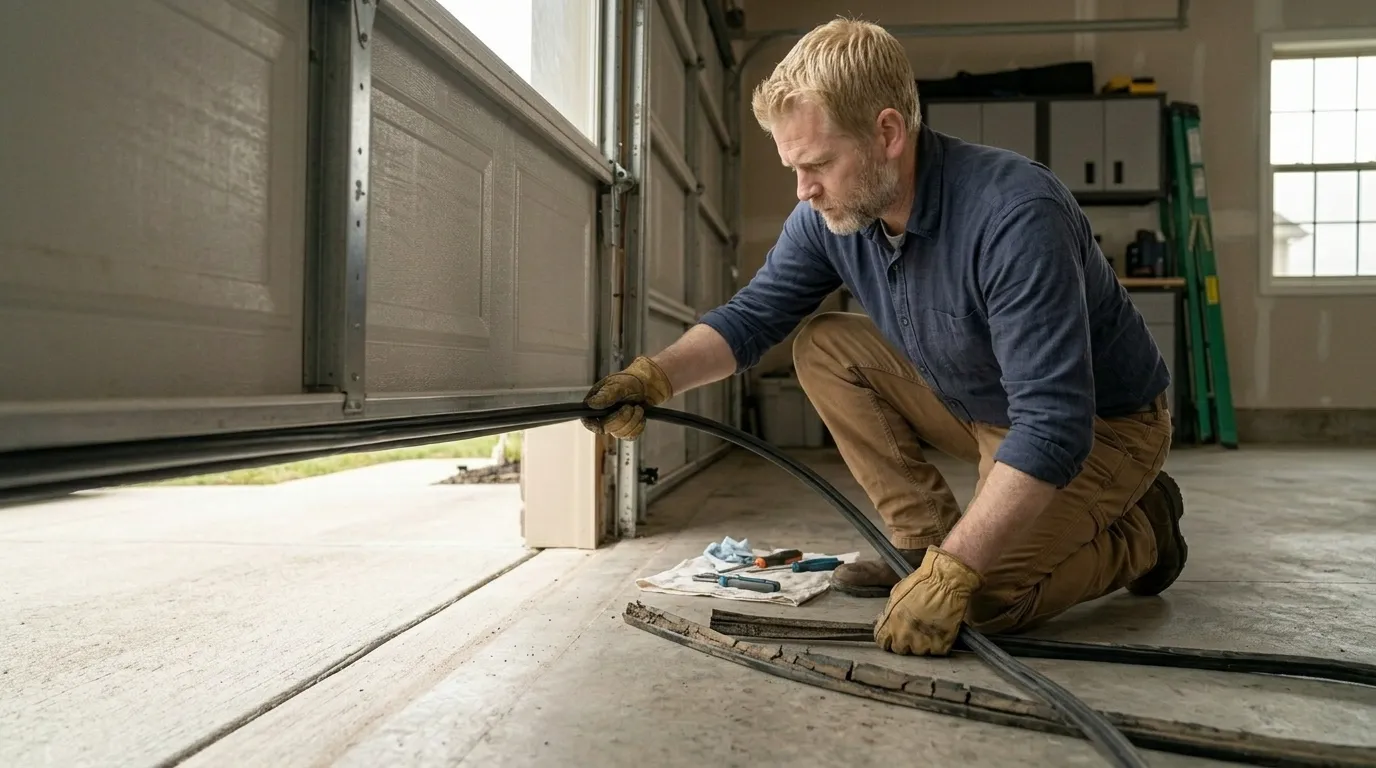
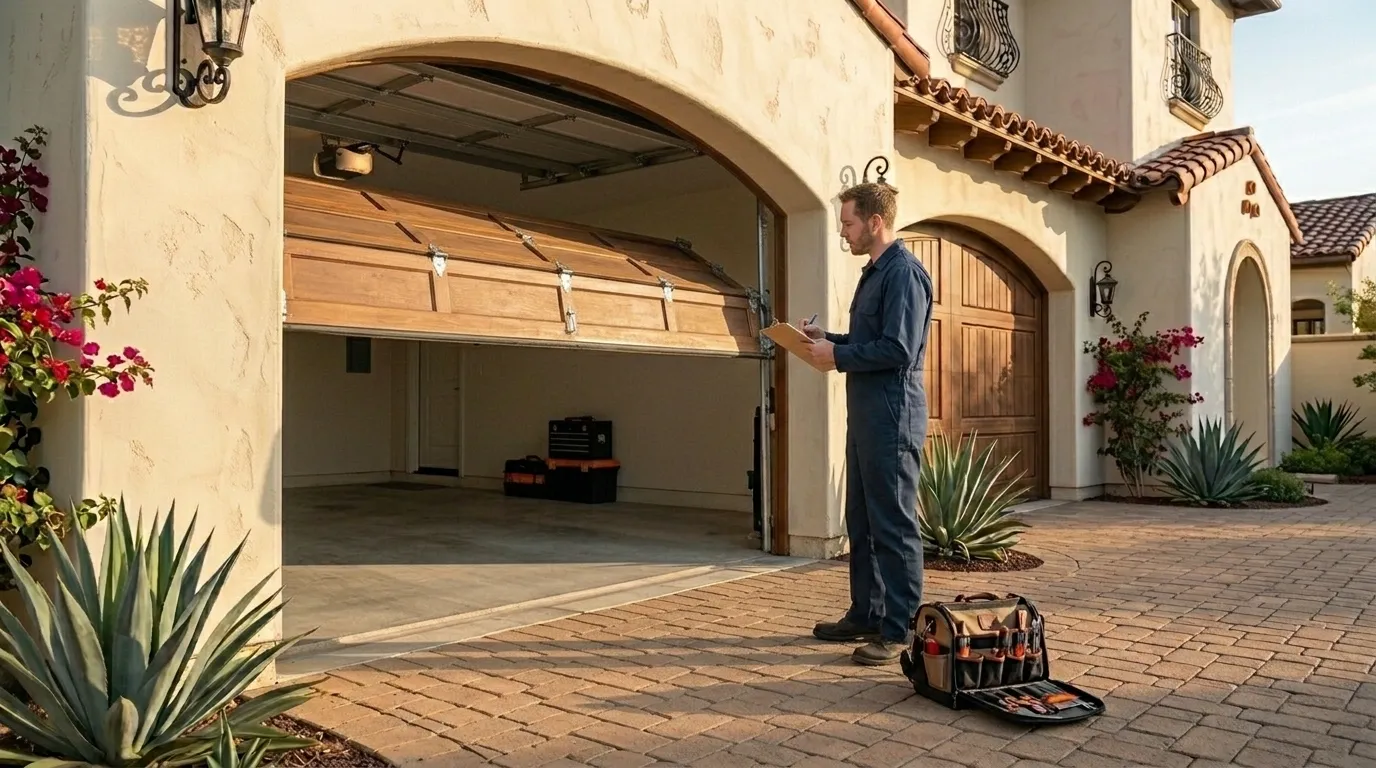
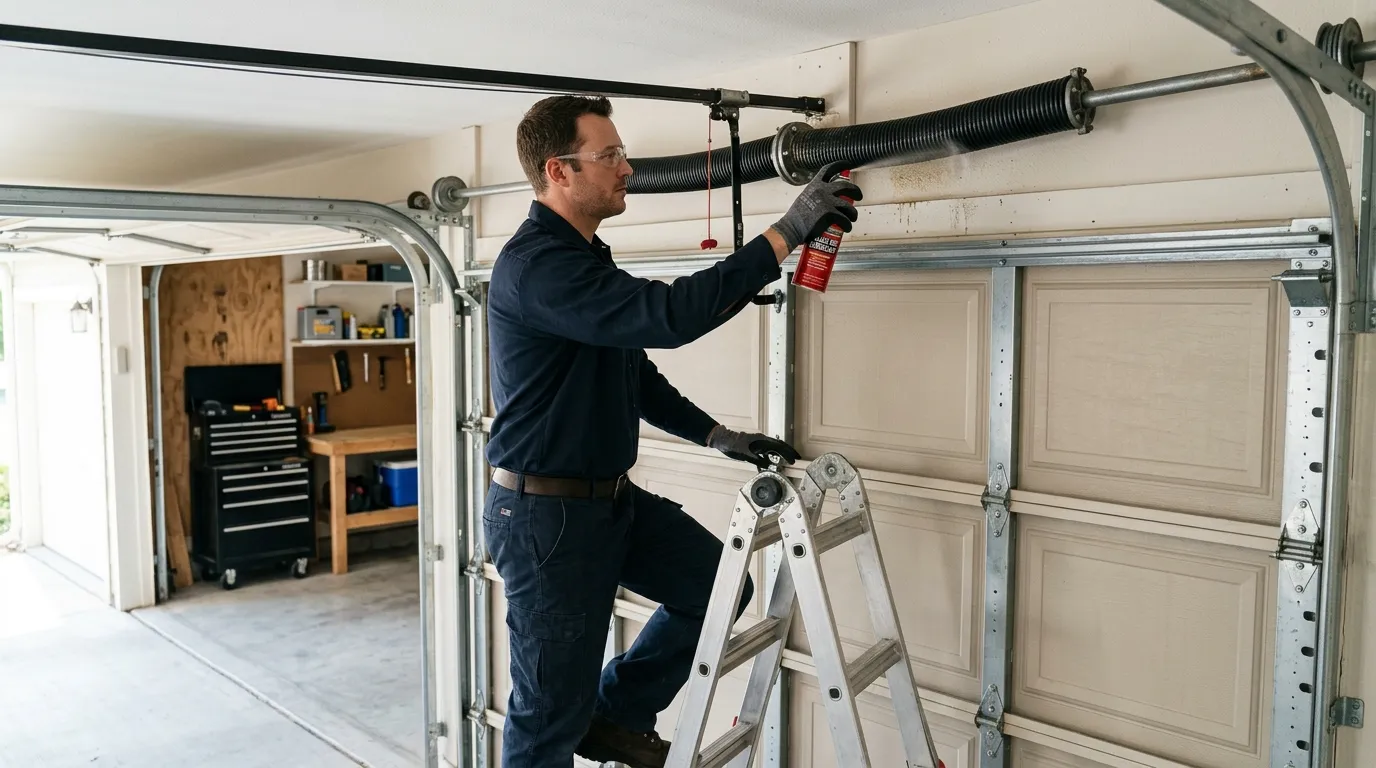
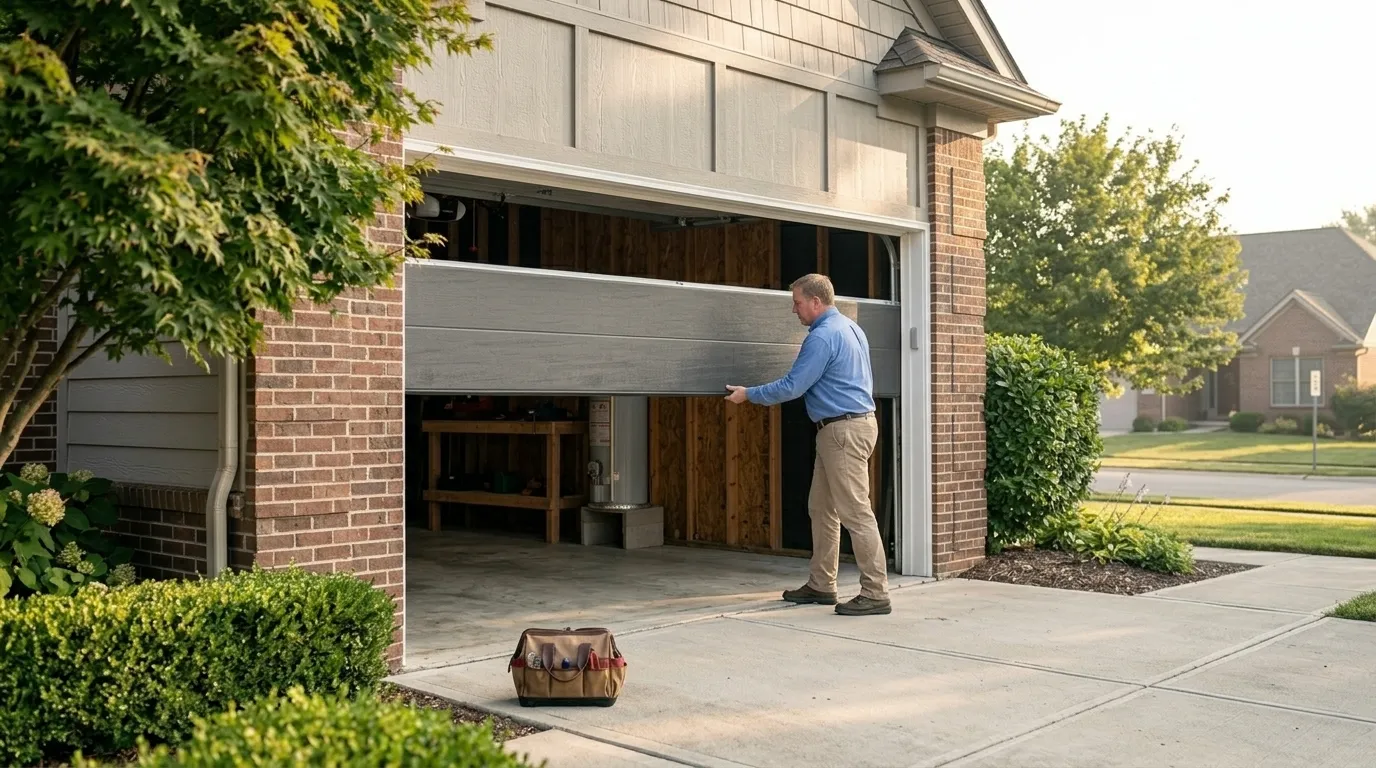
Illustrative styles - sectional, insulated steel, carriage, and commercial doors.
Questions
Frequently asked
Straight answers about garage door repair in Livonia. Still unsure? Ask us directly.
Why did my torsion spring break in the winter and not before?
Cold makes steel springs more brittle, and this area sits in a severe cold climate band, so winter failures are common here. A spring that's been slowly weakening for years often finally lets go on the coldest week of January rather than in July, even though the wear happened all year round.
Is it worth fixing a door on a house built in the 1960s?
Usually, yes, if the door panel itself is sound. Most of the housing stock in this area dates from that period, and the doors were built heavy. The spring, cables, and opener wear out long before the actual door does, so replacing those parts on an otherwise solid door is normal, not a stopgap.
Do you work outside Livonia?
We cover the surrounding area, including communities like Garden City, and Dearborn Heights within a few miles. If you're further out, ask when you call and we'll tell you straight whether it's a drive we make.
Can you match the original opener from my house?
Not always. Openers from the 1960s and '70s aren't manufactured anymore, so a replacement on an older Livonia-area house usually means a new unit rather than an exact match. We'll fit it to your existing track and door rather than replacing hardware that doesn't need it.
Ready to get your garage door sorted?
Tell us what it’s doing and where you are in Livonia - we’ll take it from there.