The Problem
Most garages in Livonia sit on slabs poured between 1938 and 1991, with the bulk of the stock dating to the 1960s and 70s. Sixty years of freeze and thaw under that slab means it has shifted, even if only a fraction of an inch. The sensor brackets bolted to the track are riding on that same slab and track assembly, so when the concrete moves, the brackets move with it. That's the root of most drift complaints we get - not a bad sensor, a foundation that's settled a little over six decades.
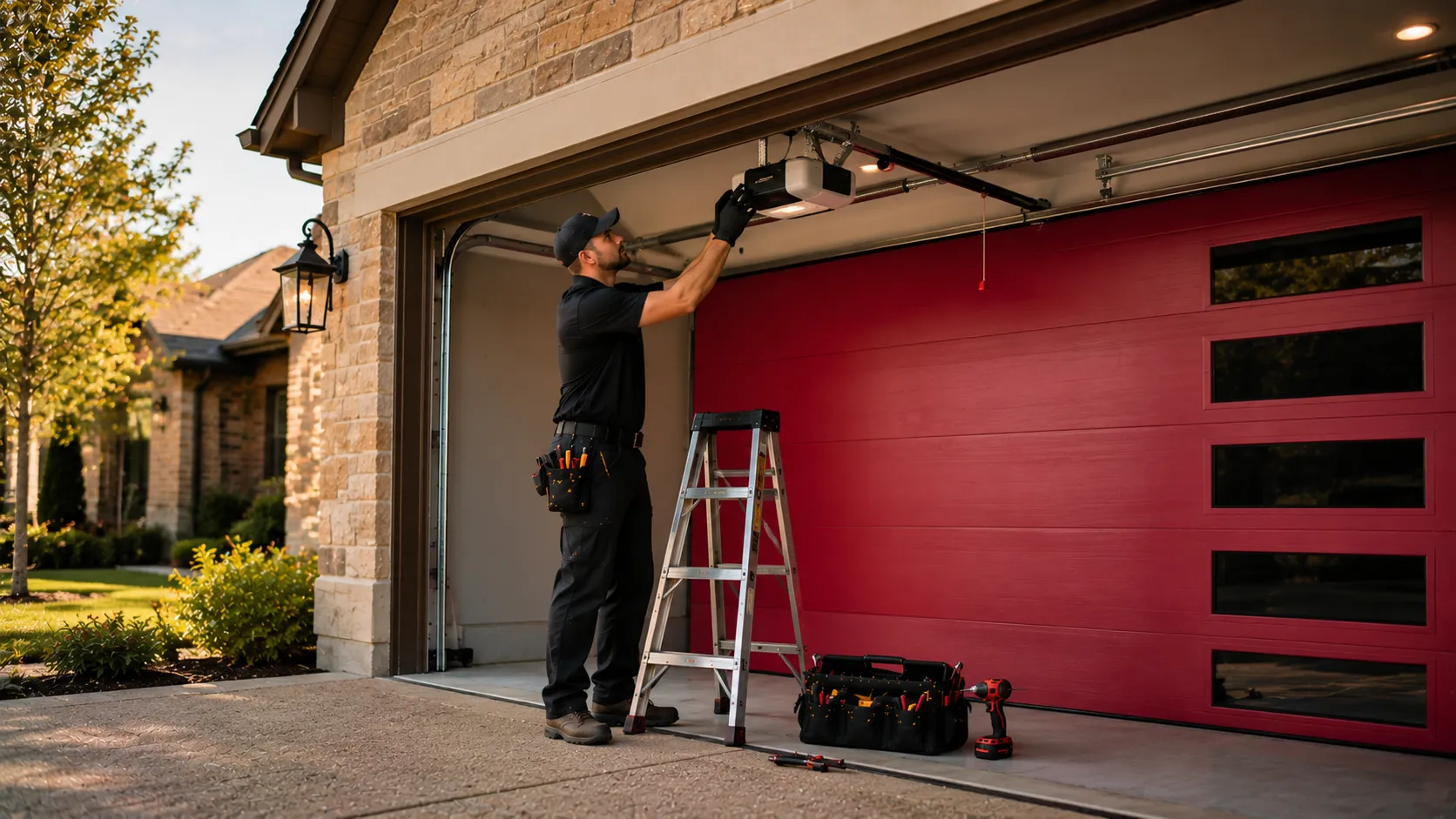
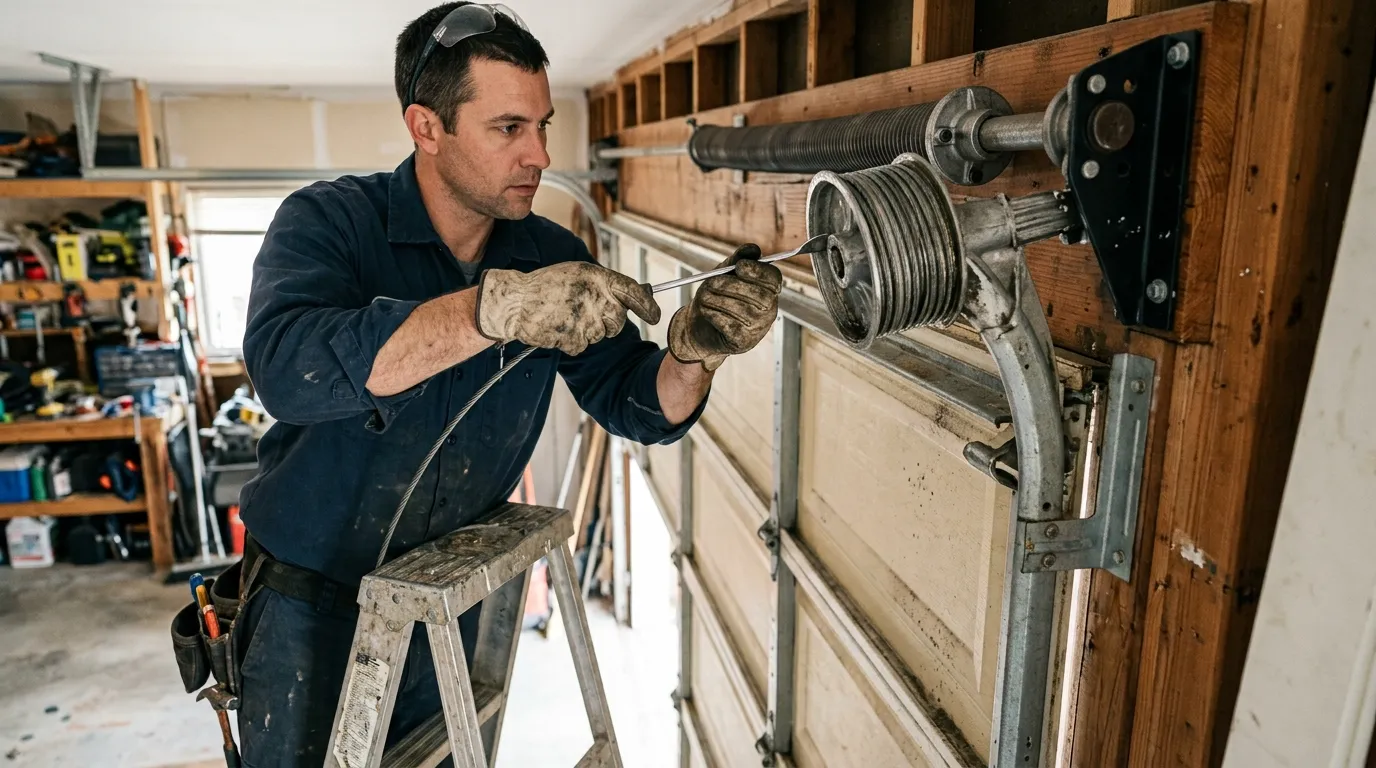
On top of that, a lot of these houses still have their original track hardware or a replacement from decades back, mounted with brackets that were never built for fine adjustment. A small nudge from a stored bike, a snow shovel leaned against the rail, or just the door cycling thousands of times over 50-plus years is enough to walk the beam off-axis. The door still looks fine. The light on the opener unit tells a different story - a blinking indicator that means the two eyes aren't seeing each other anymore.
When Waiting Is Fine
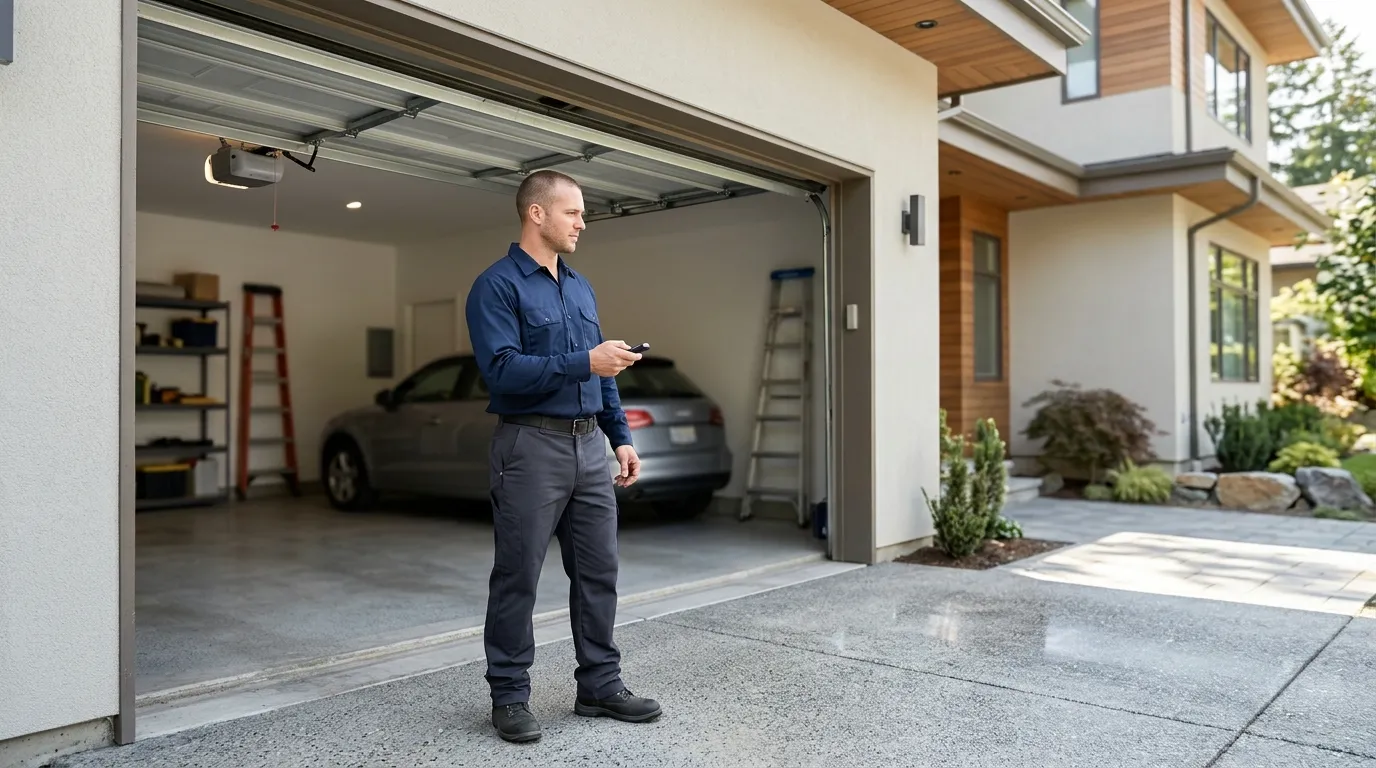
If your door reverses once, closes fine the next ten times, and there's no visible tilt in either sensor, you don't need a service call yet. Wipe both lenses with a dry cloth first - dust and cobwebs in an older, less-sealed garage account for a fair share of these calls before alignment ever enters the picture. If that fixes it, you're done.
A door that closes and reverses intermittently, especially only in early morning or late evening, is also often just harsh light hitting a sensor eye rather than a mechanical fault. That's not urgent. Give it a day or two of watching the pattern before you call anyone out. The honest truth is a lot of sensor complaints we get don't need a truck - they need five minutes with a rag.
The Common Mistake
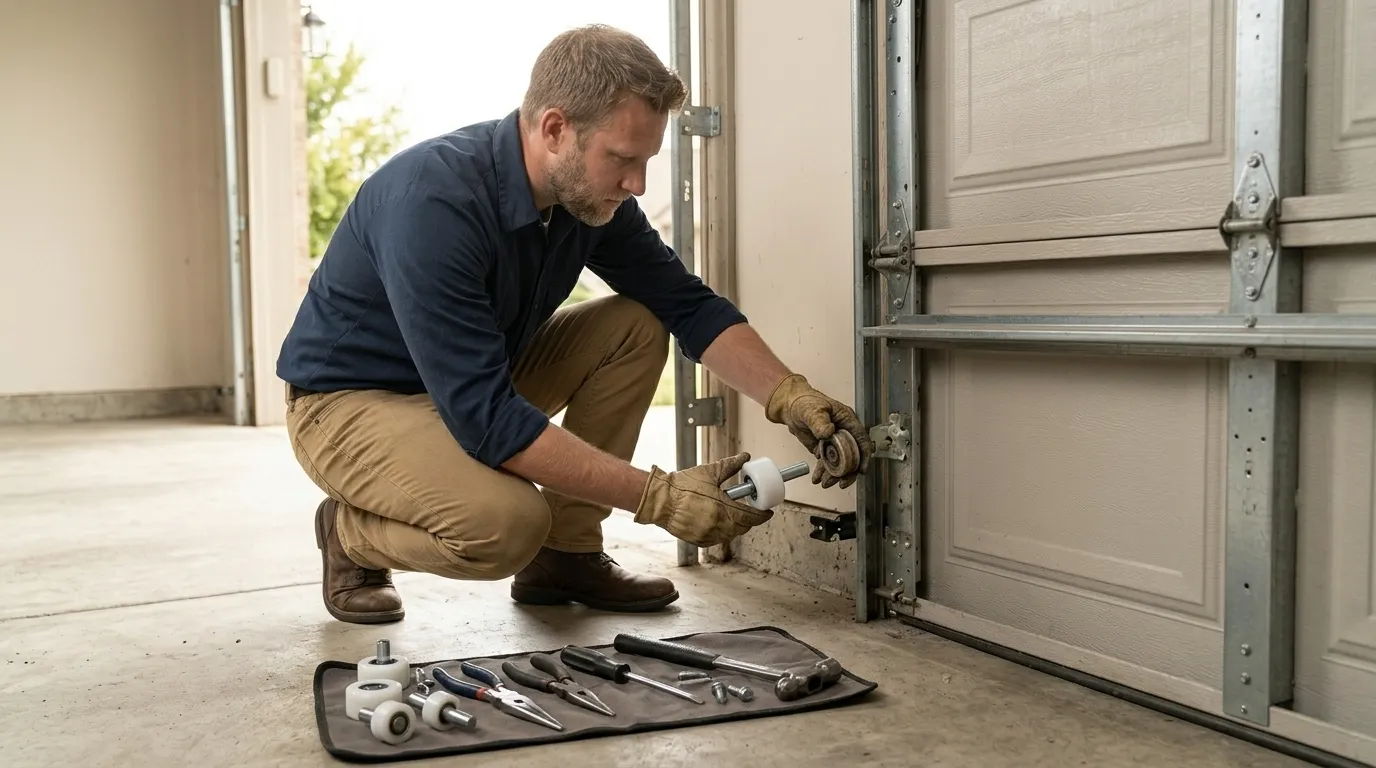
The mistake we see most is someone cranking down the bracket screws hard to stop the wobble, without checking that both sensors are still level with each other first. On a track and bracket set that's original to a 1960s build, the metal is thinner than what goes into new construction, and over-tightening can bend the bracket arm itself. Once that arm is bent, no amount of screw adjustment gets the beam straight again - you're into a bracket replacement instead of a five-minute fix.
The other mistake is assuming a drifting sensor means the sensor unit is dying. Most of the time in this area, it's the mount, the slab movement under it, or a frozen lens, not the electronics. We won't sell you a new sensor pair if a $10 bracket and a level get the job done - that's not a repair worth billing for.