
Doing It Yourself
Dearborn Heights holds close to 21,986 households, which is a lot of driveways but not a lot of variety in what's behind the doors. Most of this stock dates to around 1958, right in the middle of the 1938-1991 build window that runs across the wider service area. That means a fairly narrow band of door and track hardware to deal with, which is actually good news for a homeowner willing to do some of the work themselves.
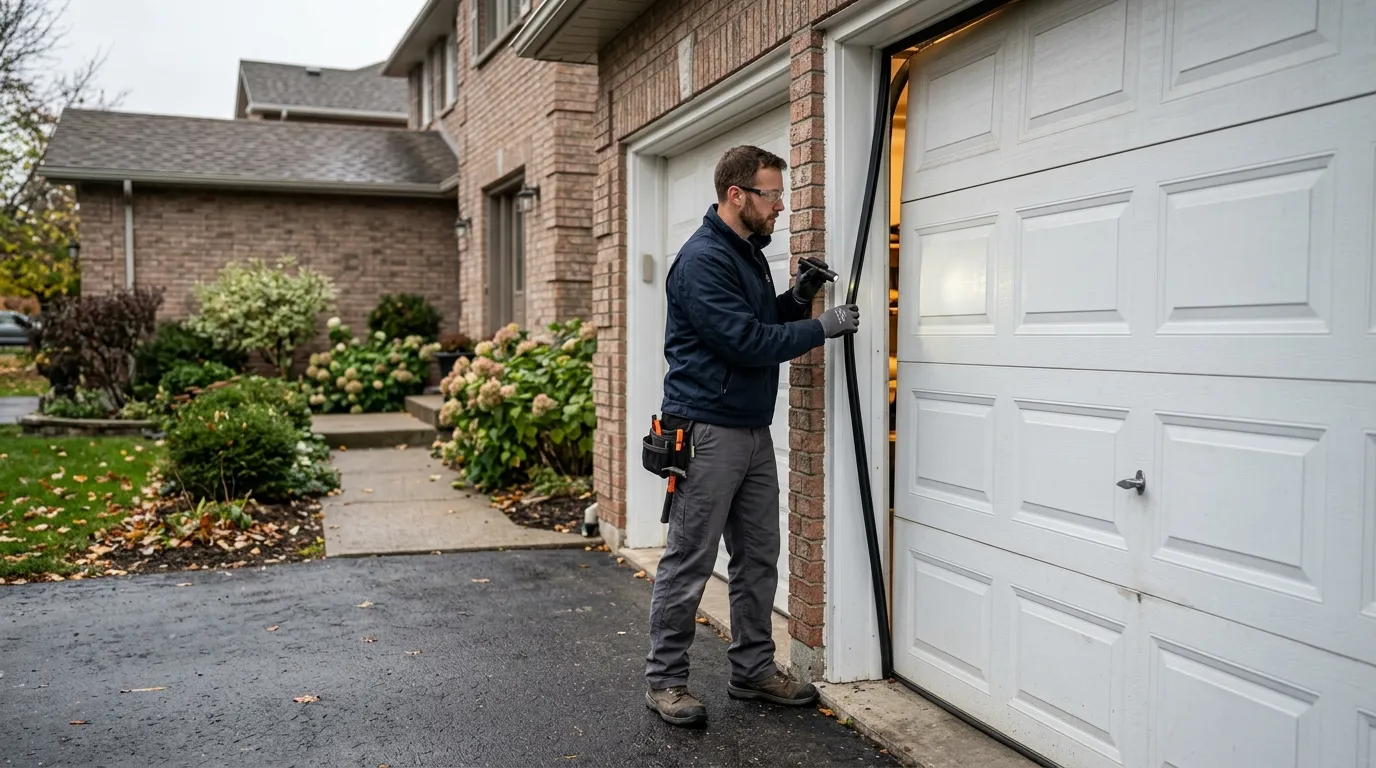
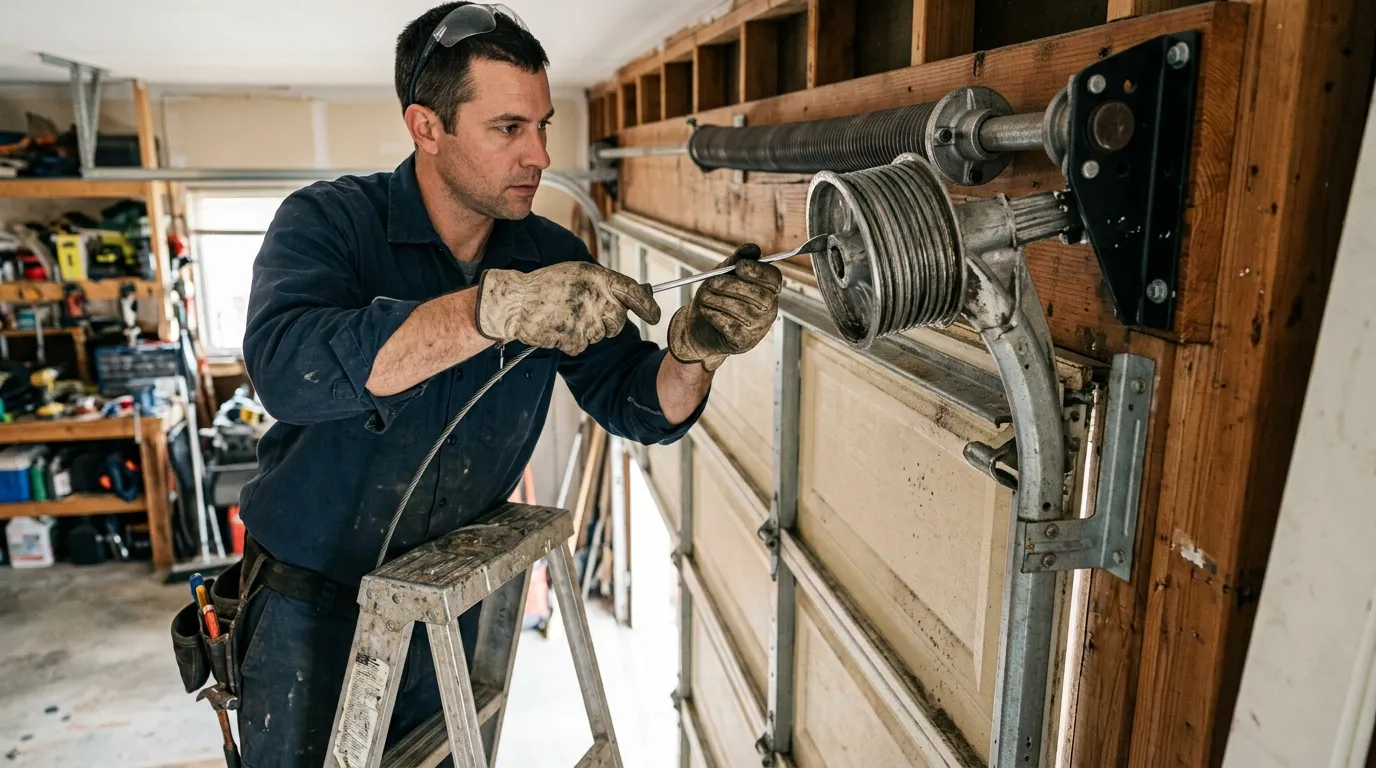
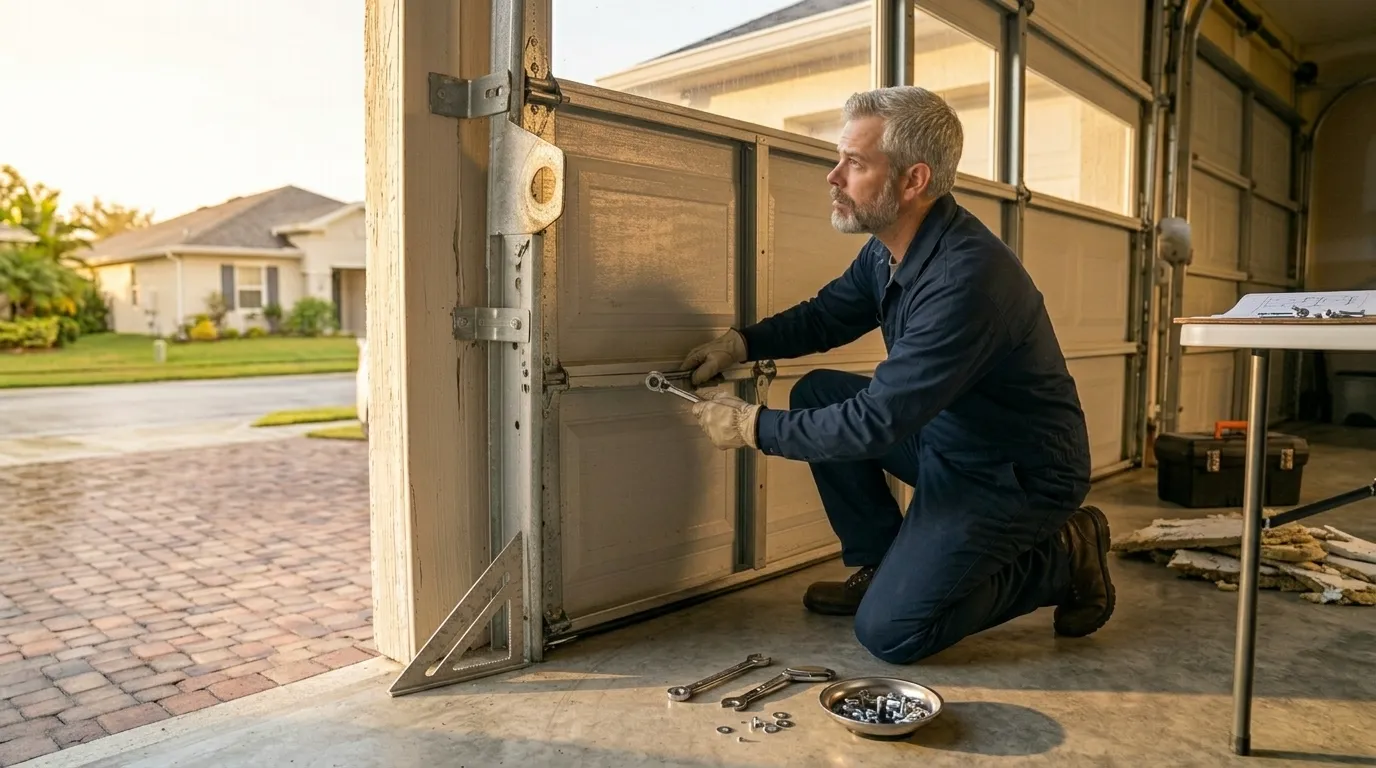
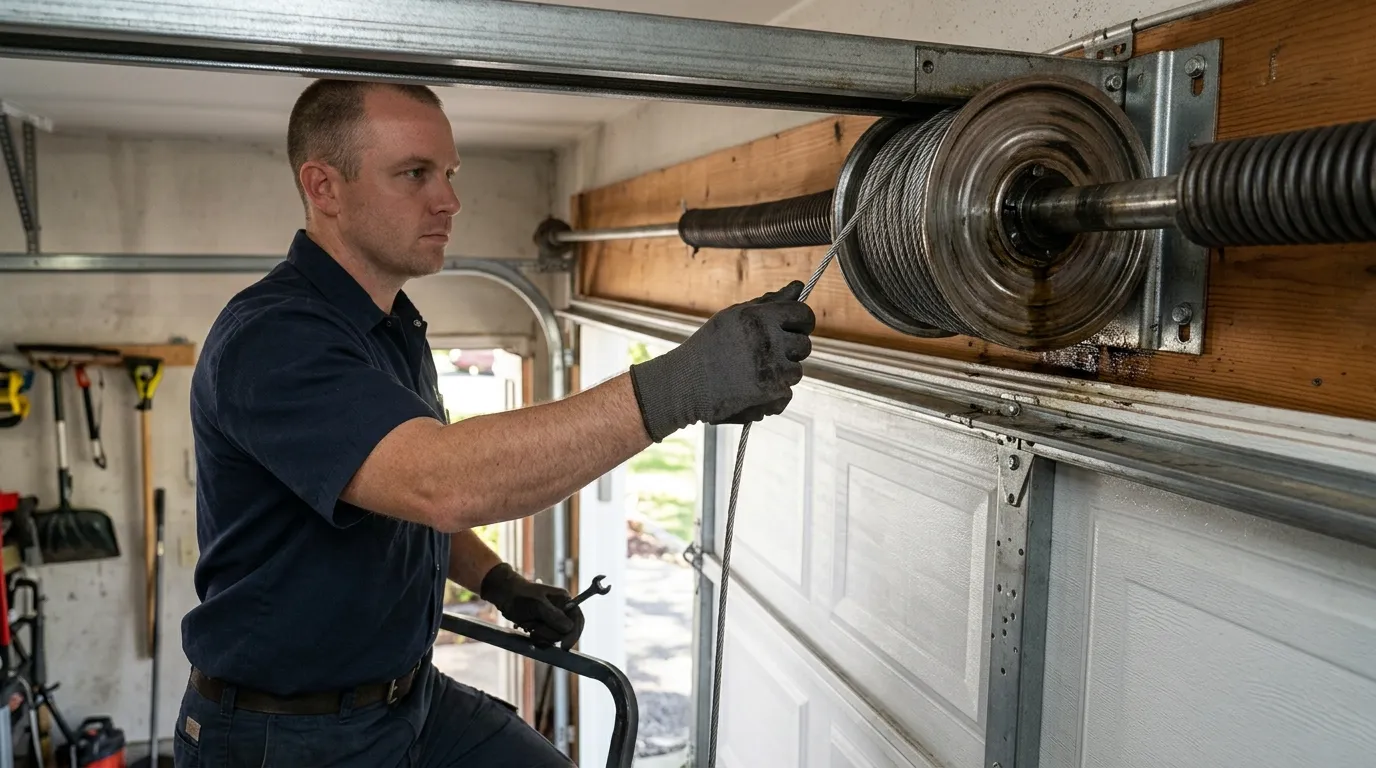
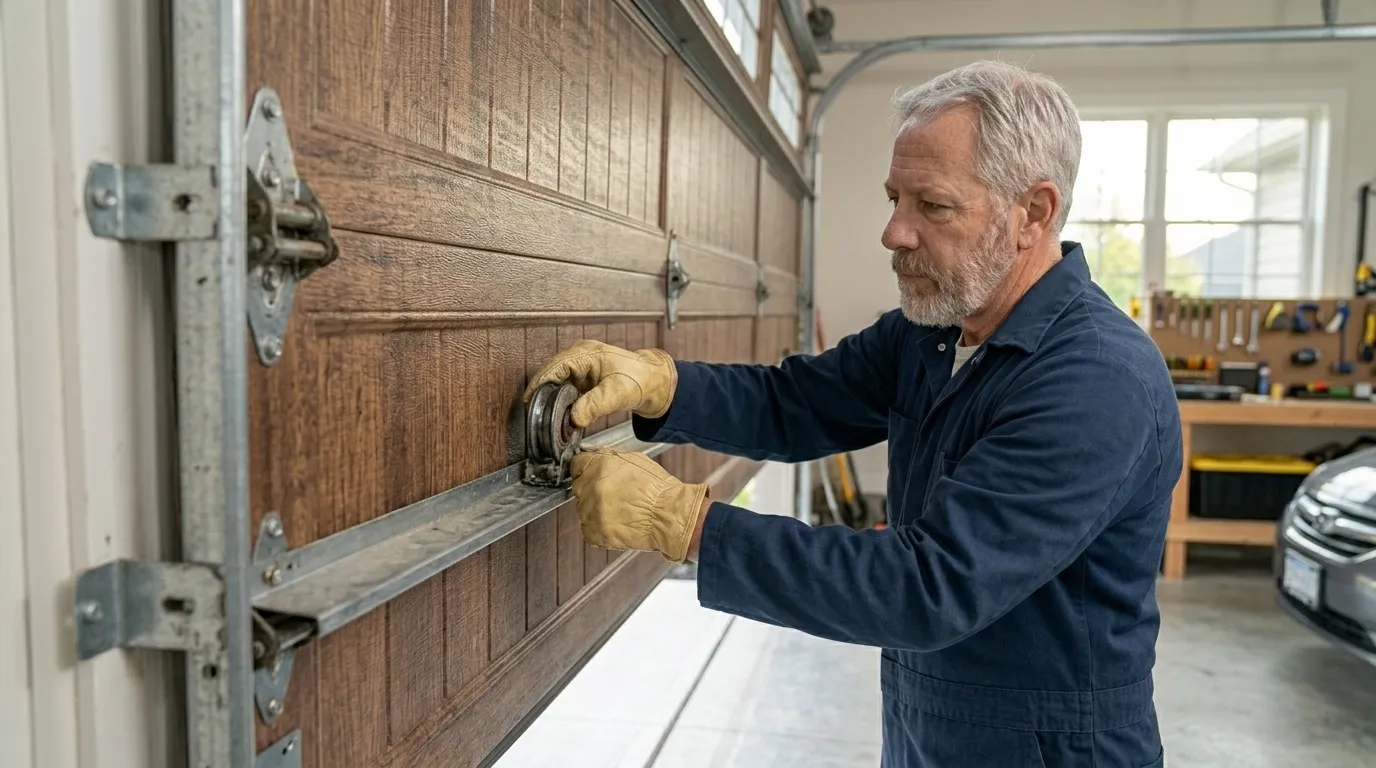
You can handle the basics: wipe down and lubricate the rollers and hinges twice a year, check that the auto-reverse still trips when you set a 2x4 flat under the door, and look at the cables for fraying near the bottom bracket. What you should not do on a house this age is touch the torsion spring. On 1950s-era doors the spring is often sized for a heavier original door even if a lighter replacement panel was installed later, and winding or unwinding it without the right bars is how people end up in the ER. Leave that one call to someone with the tools.
How Long It Takes
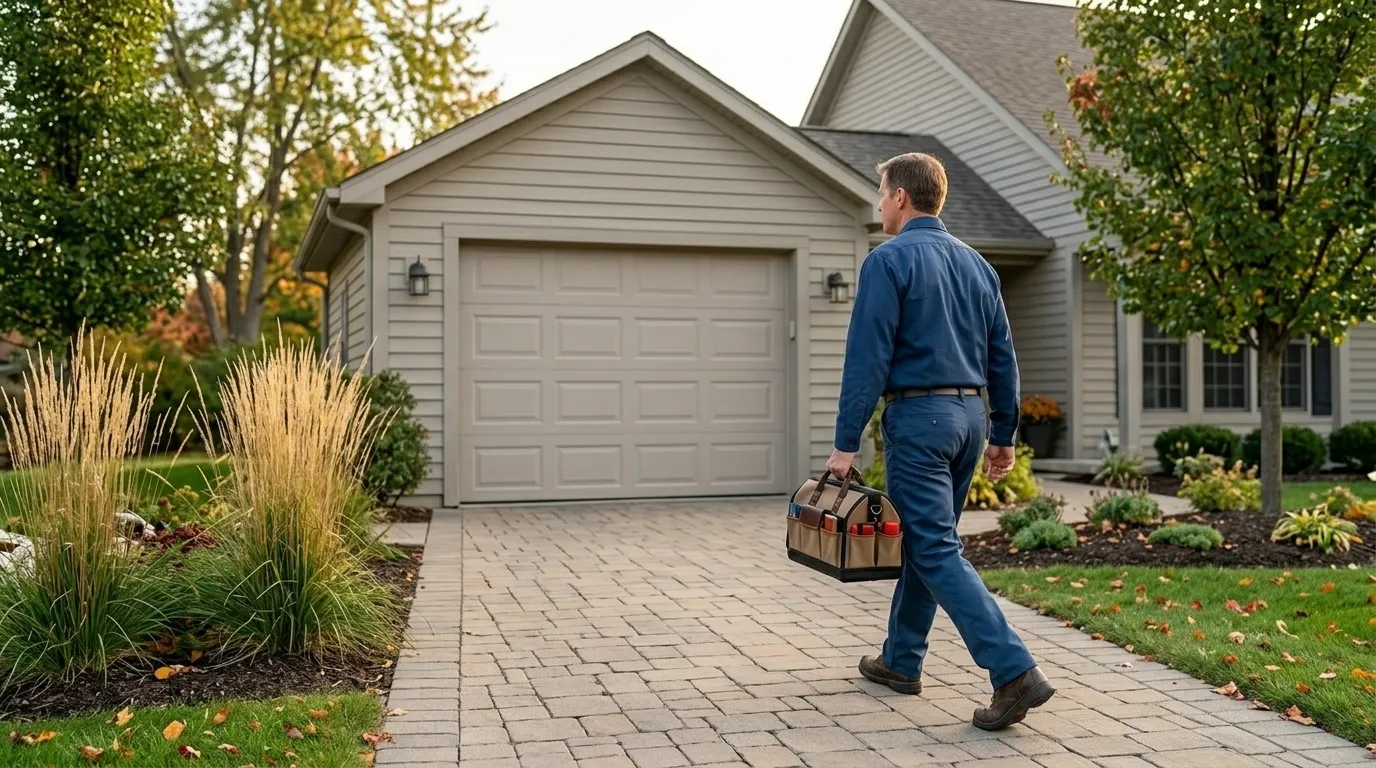
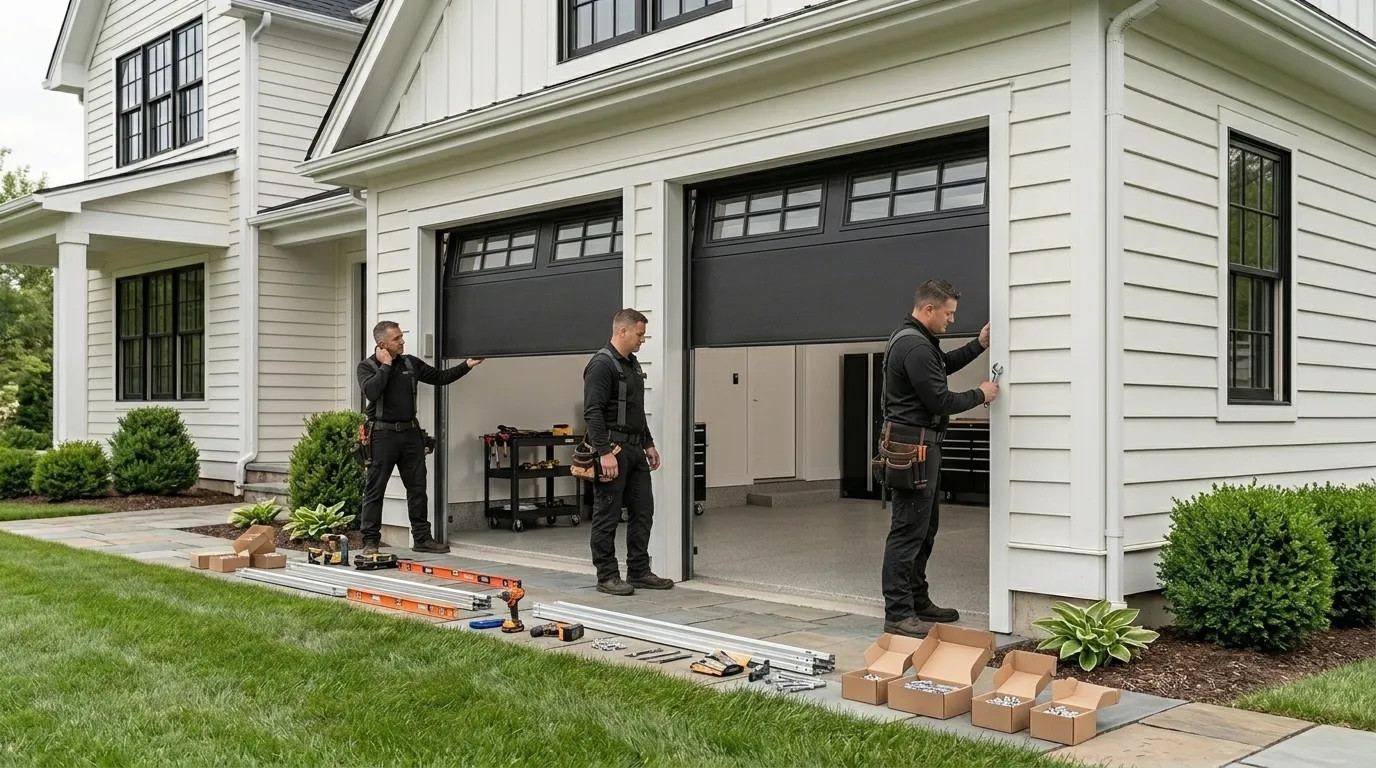
A standard tune-up on a single door - lubrication, hardware check, spring balance test, opener force adjustment - usually runs under an hour once the truck is on site. Add a second door or a belt-drive opener that needs its travel limits reset and you're looking at closer to ninety minutes. None of that includes drive time, since this job comes out of Livonia, about 6 miles away.
What stretches a visit is what gets found once the door's open. A track that's been walking out of alignment for a year takes longer to true up than one that's a season old. Houses built in 1958 have had over six decades of settling, and slab or foundation shift shows up as a track that's slightly bowed rather than obviously bent - it takes patience to true, not force.
What You Are Seeing
If your door has started making a rhythmic thump as it travels, that's usually a flat spot on a roller, not the opener. A door that closes several inches and reverses on its own is telling you the down-force is set too tight, often because someone tightened it years ago to fight a spring that was already losing tension. A door that's heavier to lift by hand than it used to be is a spring loeing tension, full stop - that's not a lubrication problem.
On houses from this build era we also see a specific pattern: the opener was added years after the original door, so the header bracket and the opener's mounting point were never quite matched to the door's actual weight. That mismatch shows up as strain on the opener motor long before the door itself fails.
The Complications
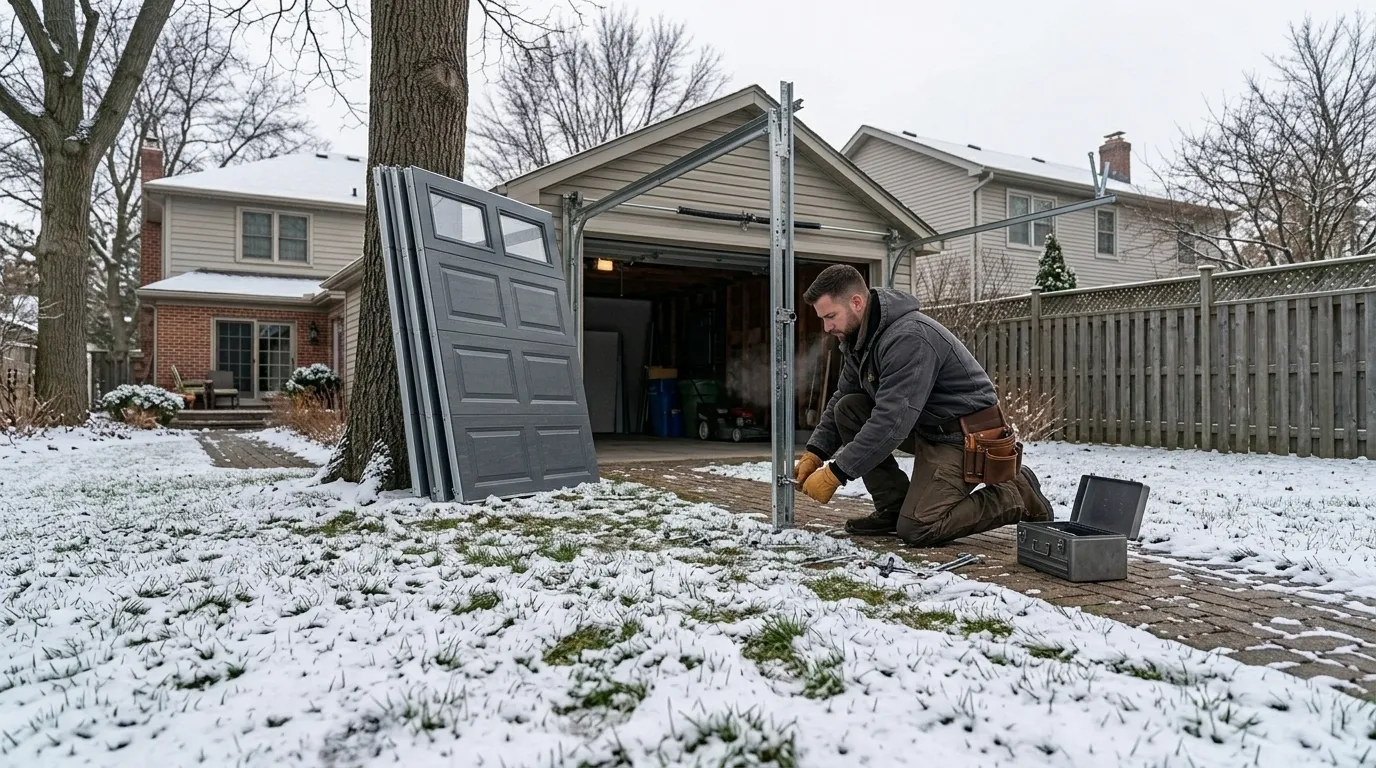
Not every door on a 1958-built house has been re-tracked to a modern two-inch section, and the older narrower track sizes aren't stocked on every truck. If your hardware turns out to be an older gauge, that can mean a return trip once the right part is sourced - we won't force a modern roller into an old track just to finish the job in one visit.
We also won't recommend a full tune-up on a door where the panel itself is rusted through at the bottom or the springs have already stretched past safe tolerance. On some of these older units, replacement is the honest answer and a maintenance visit is money spent postponing a bigger bill. We'll tell you that straight rather than sell a service that just delays the inevitable.