Doing It Yourself
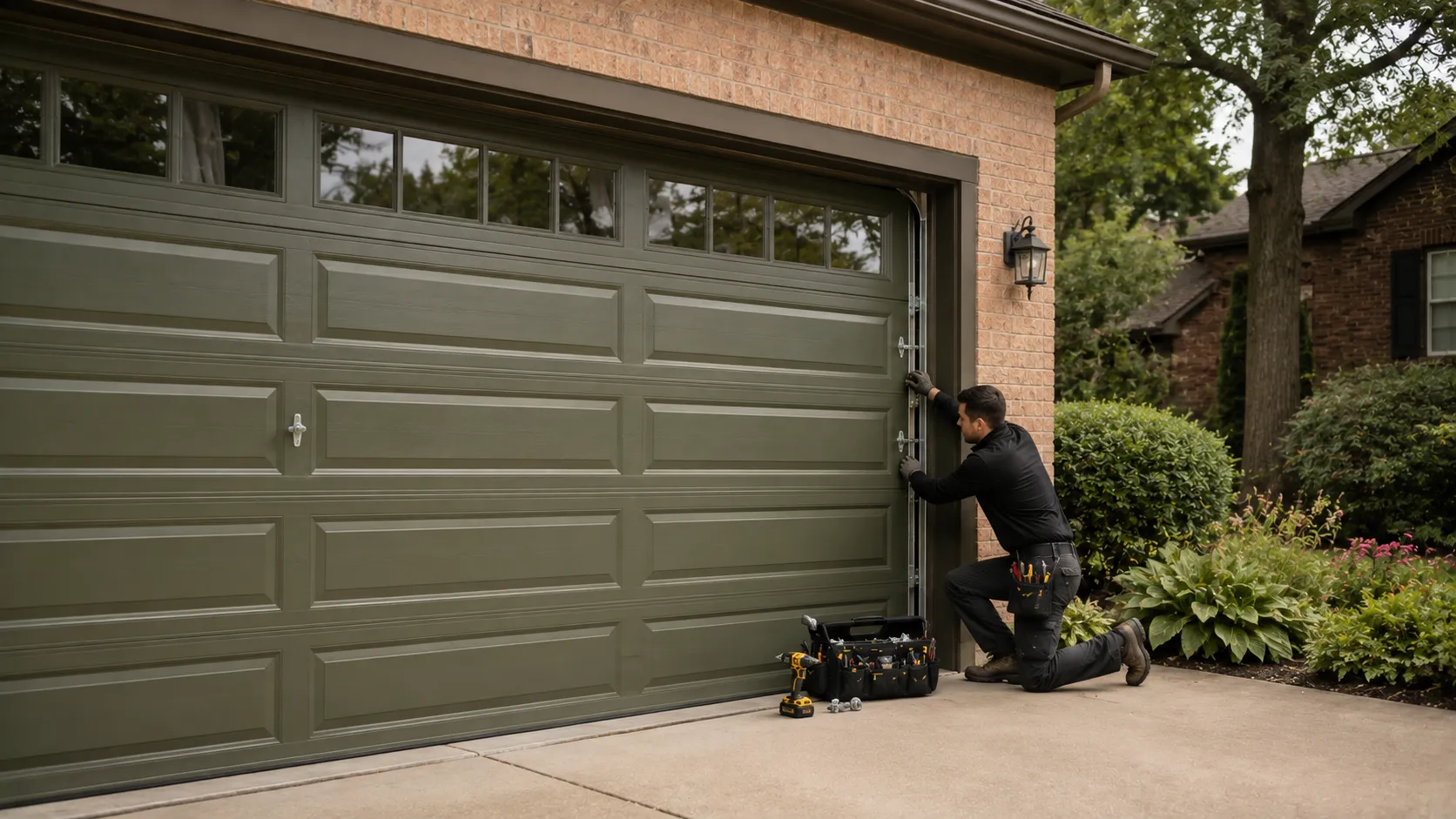
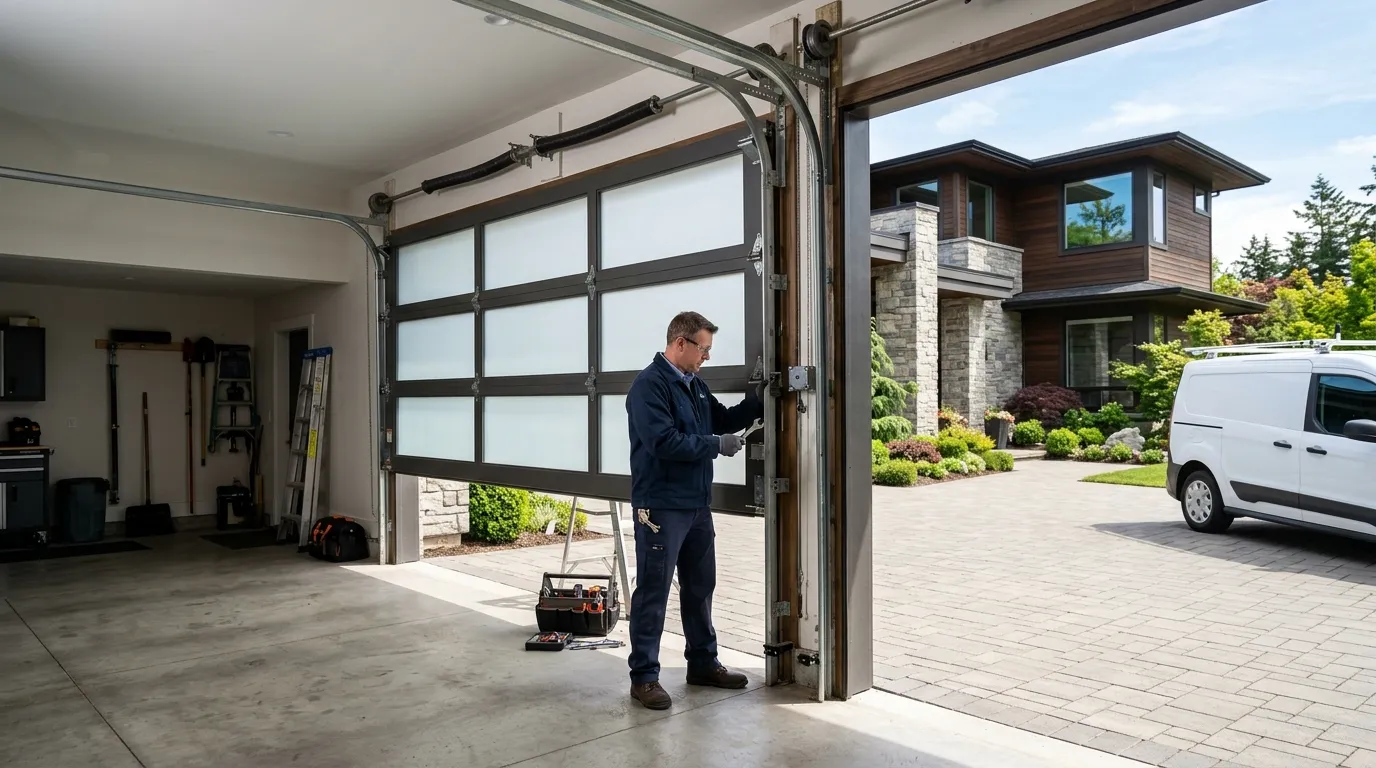
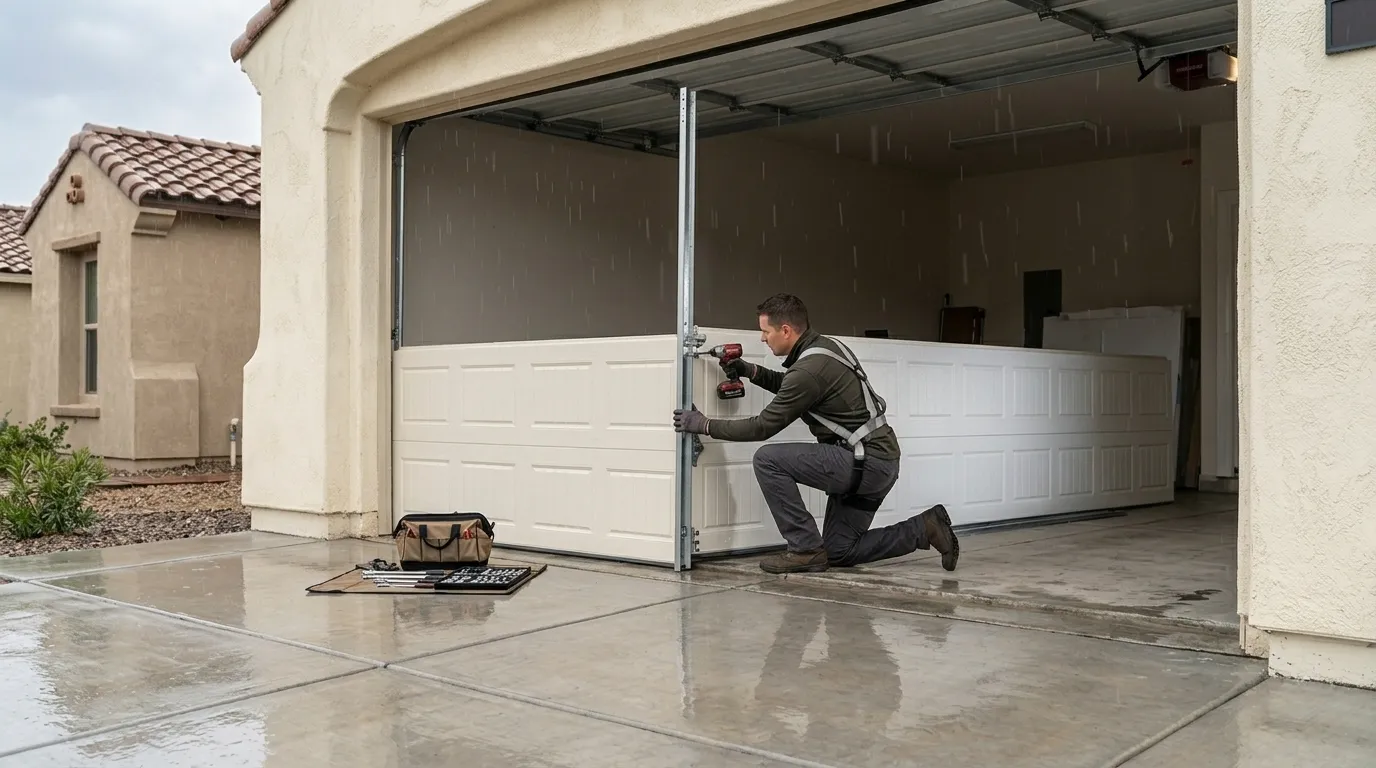
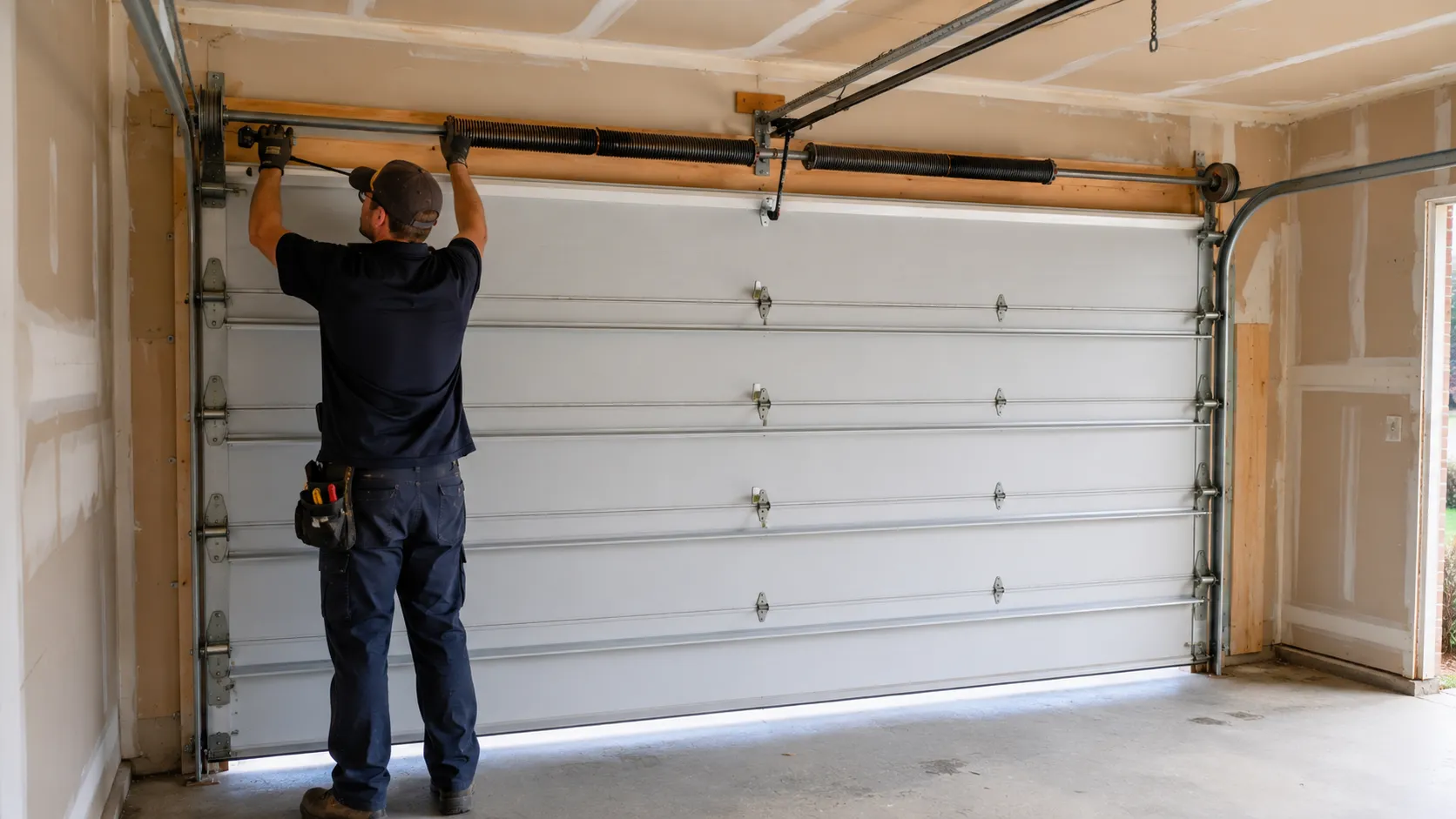
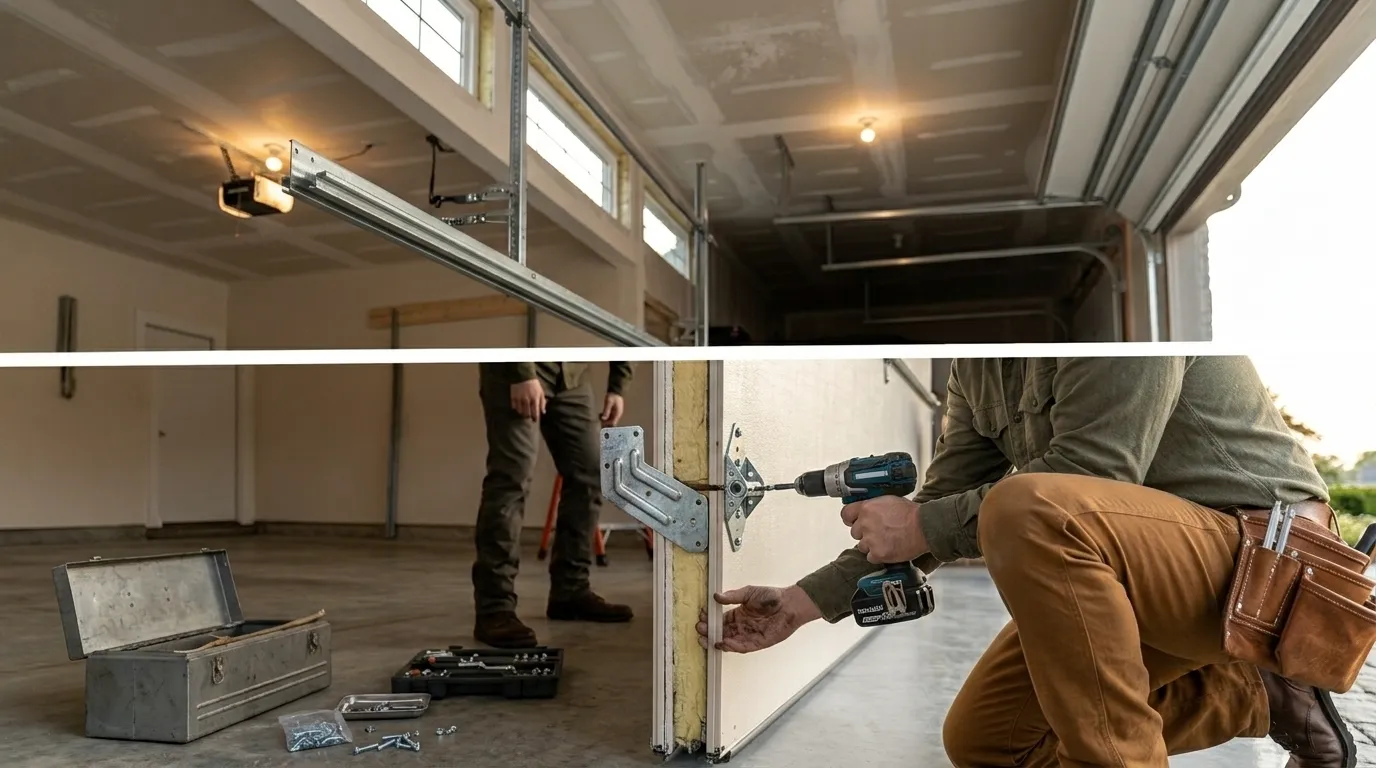
If your house in Dearborn Heights was built anywhere near the 1958 median for this area, the garage door hardware inside that opening is older than what you'll find at a big box store today. A lot of these openings still run original torsion springs on side-mounted brackets, or in some cases extension springs over the track rather than a center torsion shaft. Before you pull a panel or touch a spring, know which system you have - the repair kit for one does not fit the other, and mixing parts is how people get hurt. Lubricating hinges and rollers, tightening loose bolts on the track, and testing the auto-reverse safety feature are reasonable DIY tasks on any door. Replacing a spring, re-tensioning a torsion bar, or realigning bent track on hardware this old is not. Springs from this era were often sized for doors that have since been re-skinned or insulated, changing the weight they're carrying, so a spring that looks fine can be wound for a door that no longer matches it. If you're not sure what you're looking at, that uncertainty itself is the signal to call rather than guess.
How Long It Takes
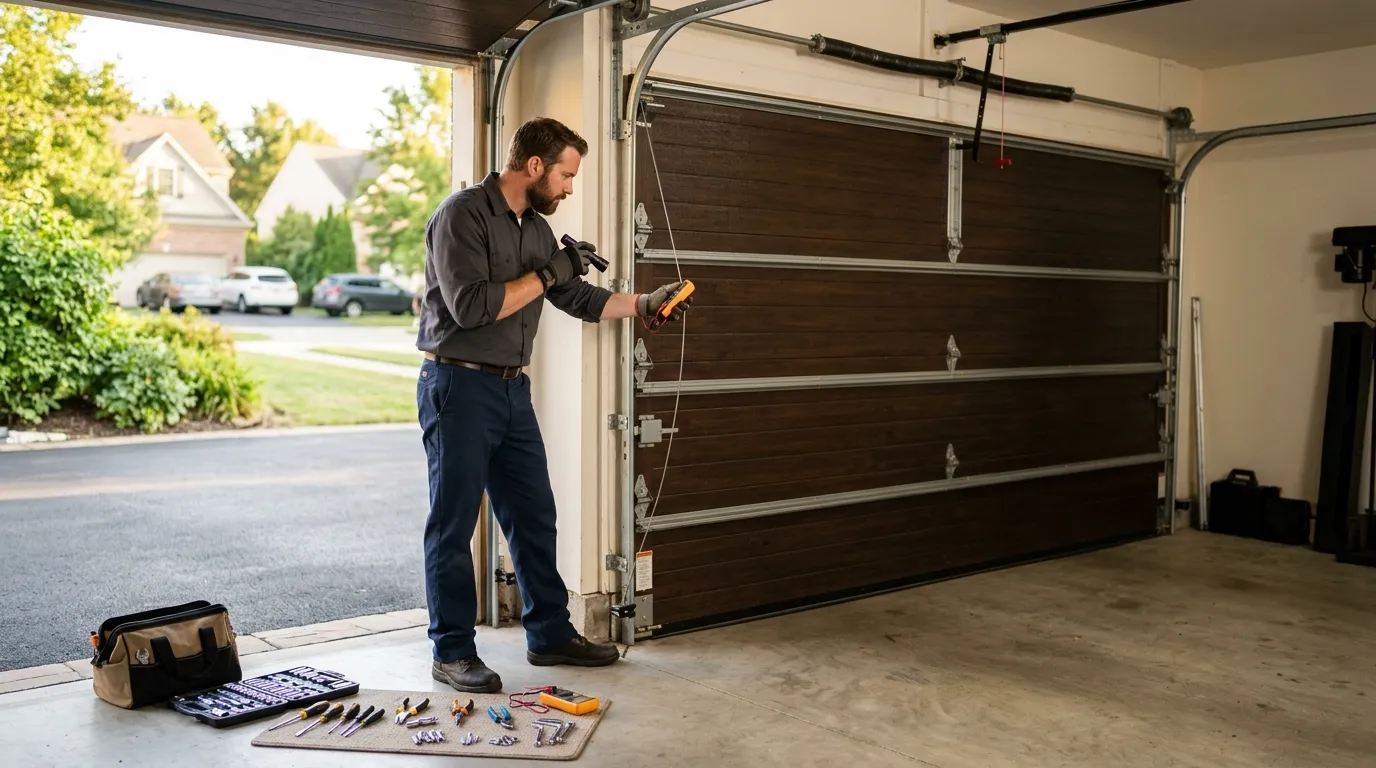
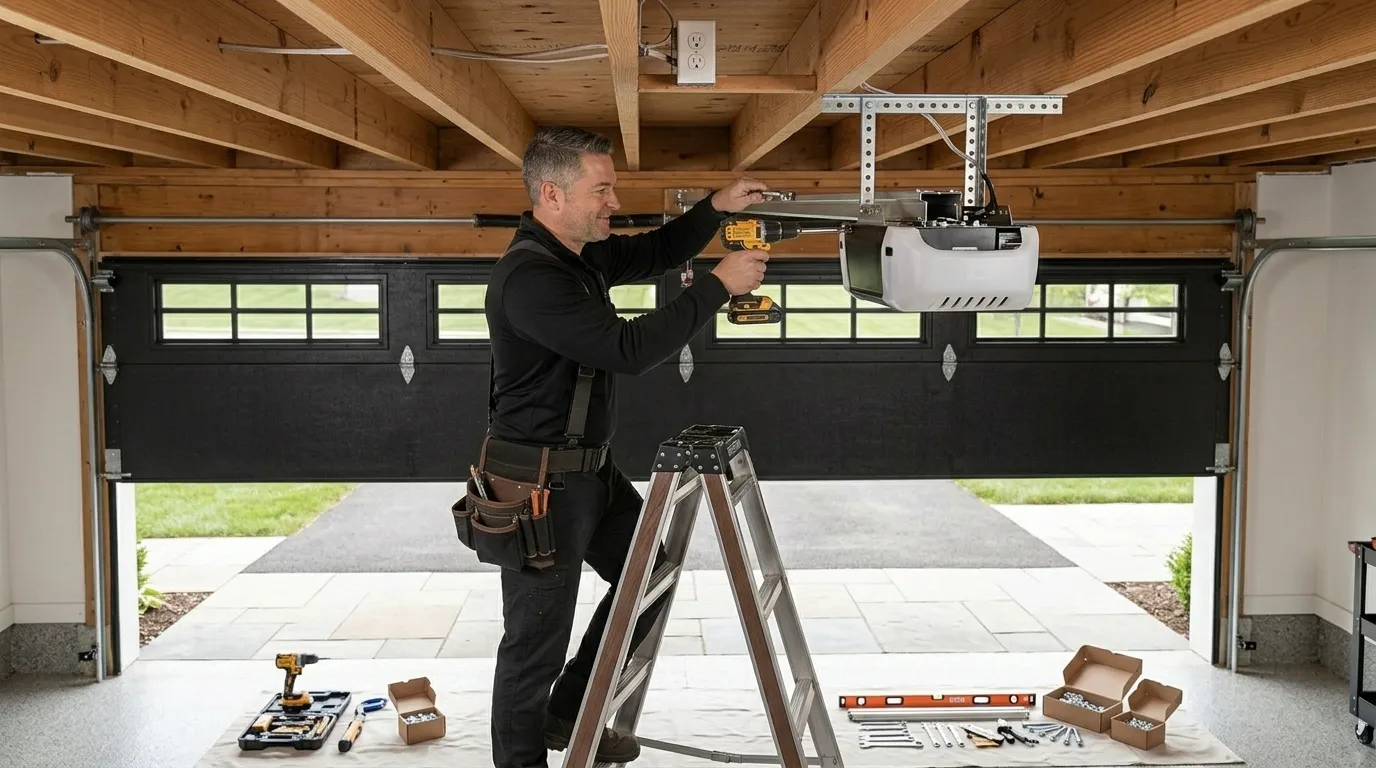
A straightforward spring replacement or opener swap on a Dearborn Heights garage runs about what you'd expect for any single-car or two-car residential door, but jobs here sometimes run longer because of the hardware itself. Original torsion assemblies from the 1958 era don't always match current drum and cable sizing, so a tech may need to adapt the mounting rather than bolt on a stock part. Track that's been shimmed or re-hung over the decades can also take extra time to true up before a new spring or cable goes on correctly. We don't quote a fixed number of minutes here because the honest answer depends on what's behind the panel once we're inside - a clean torsion job on newer hardware moves fast, while an extension-spring system with worn pulleys takes longer to do safely. What we can tell you is that we travel from Livonia, about 6 miles away, so the drive itself isn't the variable - the age and condition of what's already installed is.
What You Are Seeing
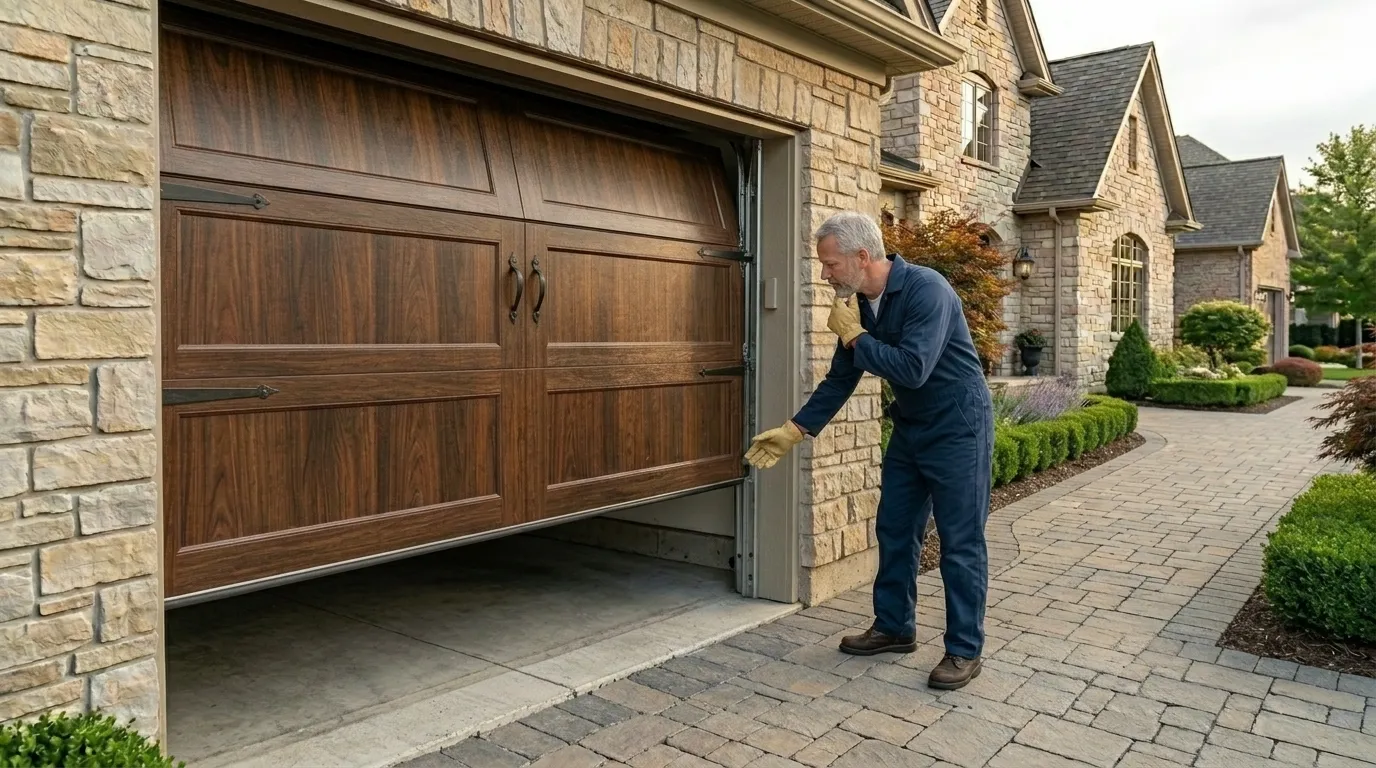
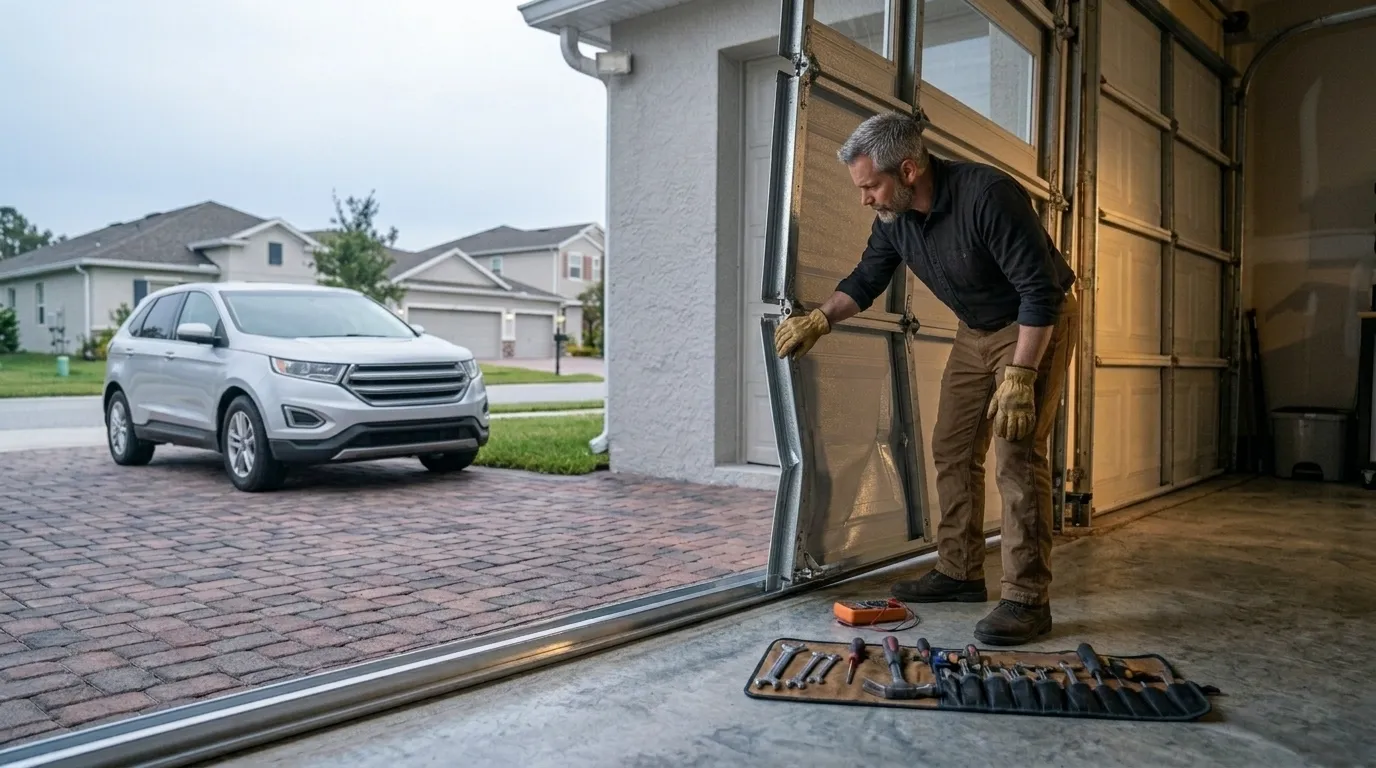
A door that reverses direction on its own partway up, or won't fully close, is usually a spring tension problem - the opener senses resistance it isn't built to override and stops itself. On houses this age, that resistance often comes from a spring that's lost tension over the years or from track that's shifted slightly out of parallel. A loud bang followed by a door that won't budge is almost always a broken spring, and on older torsion setups that bang can be sharp enough to worry anyone standing nearby. Grinding or scraping sounds usually point to rollers that have worn past their bearing surface, common once a door and its hardware have logged decades of cycles. If the door feels heavy to lift by hand with the opener disconnected, that's a spring issue, not a motor issue, and no amount of opener adjustment will fix it. We're describing symptoms here, not diagnosing your specific door sight unseen - what's actually wrong depends on what's behind your panel.
The Complications
The biggest complication on older Dearborn Heights doors is finding parts that match what's already there. A torsion drum or cable drum sized for 1958-era hardware isn't always what's sitting on a supplier's shelf today, and sometimes a full hardware upgrade is the more sensible fix rather than hunting down an exact match. We'll tell you plainly when that's the case rather than jury-rig a part that won't hold tension correctly - that's the honest limitation here, and it matters more on older stock than newer. A second complication is header framing. Openers added after the original build sometimes sit on wood that's thinner than current code calls for, and reinforcing that before installing new equipment adds a step most homeowners don't expect. None of this means an older door is a lost cause. It means the job sometimes needs an extra look before we quote it, and we'd rather take that look than promise a fix that won't last through next winter.