
Doing It Yourself
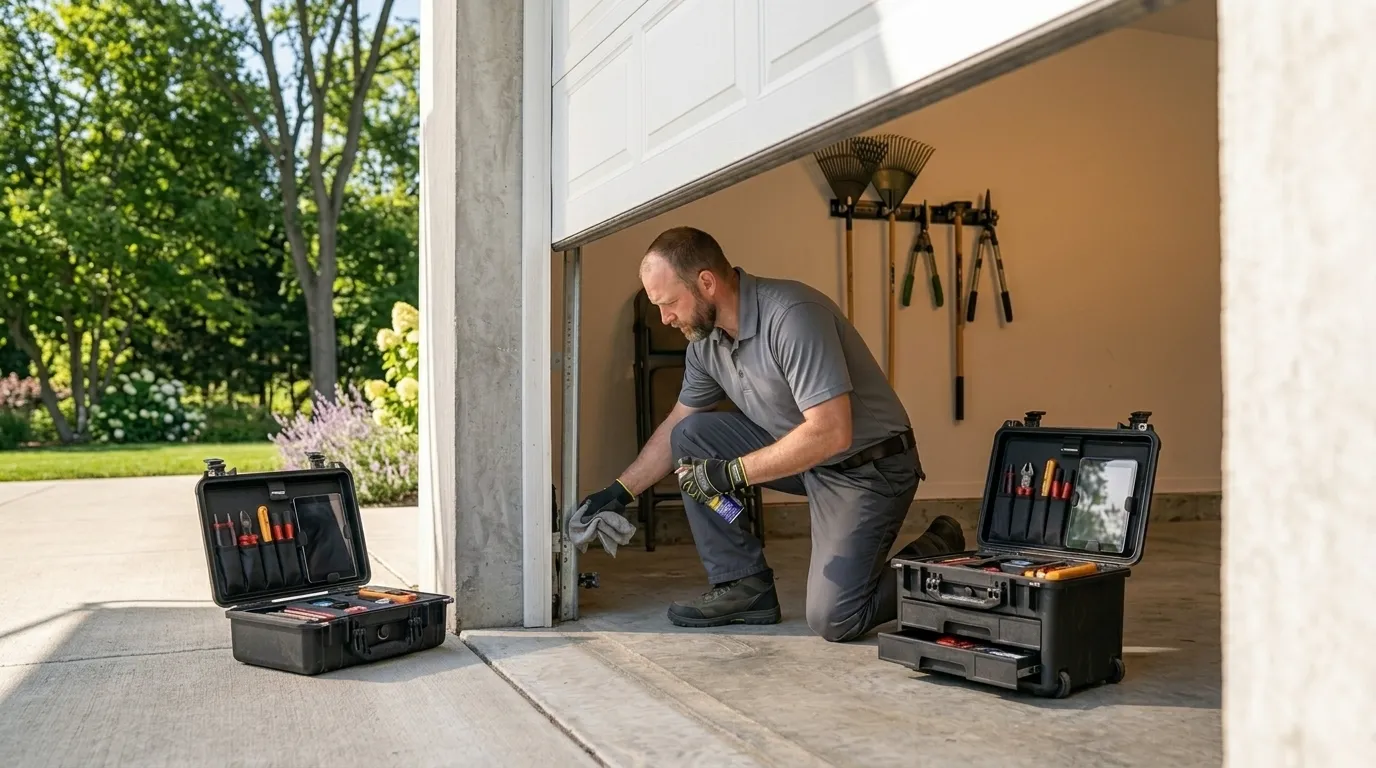
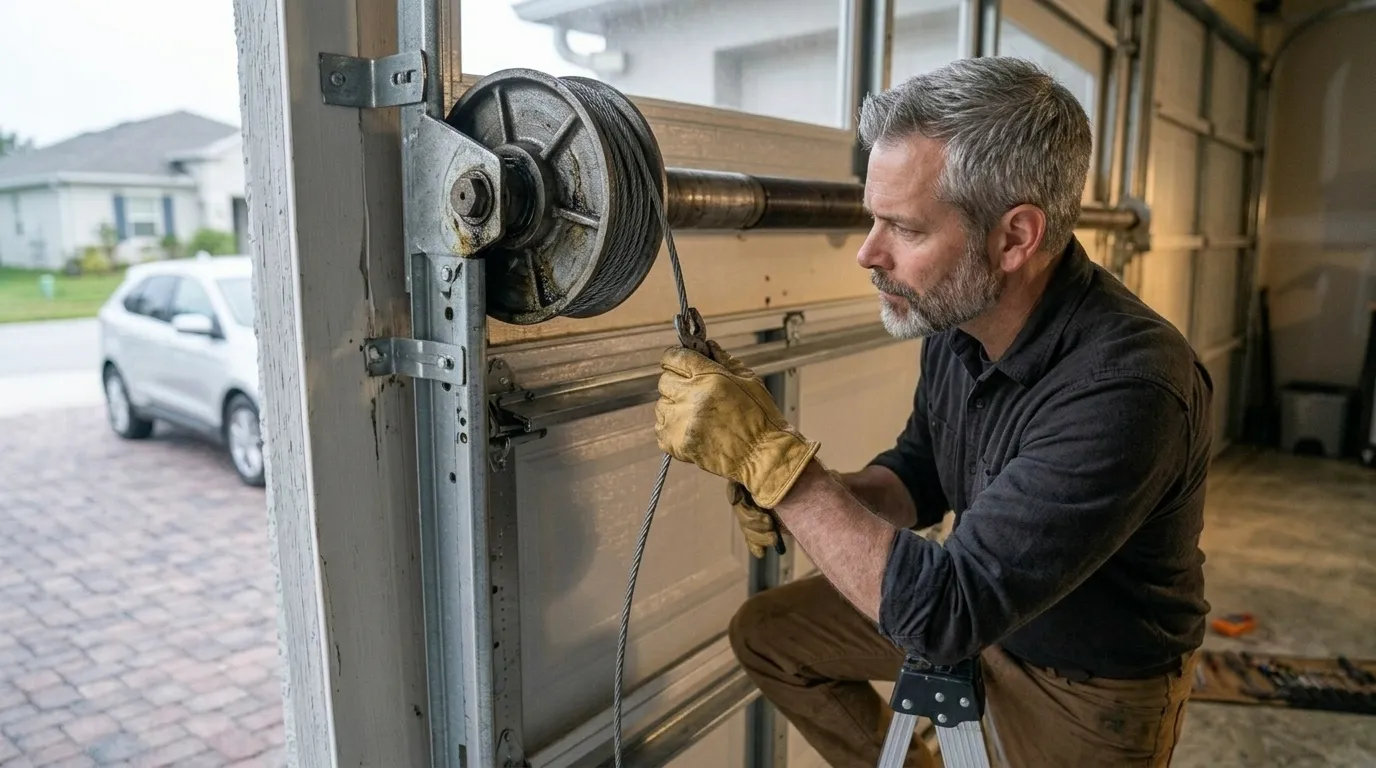
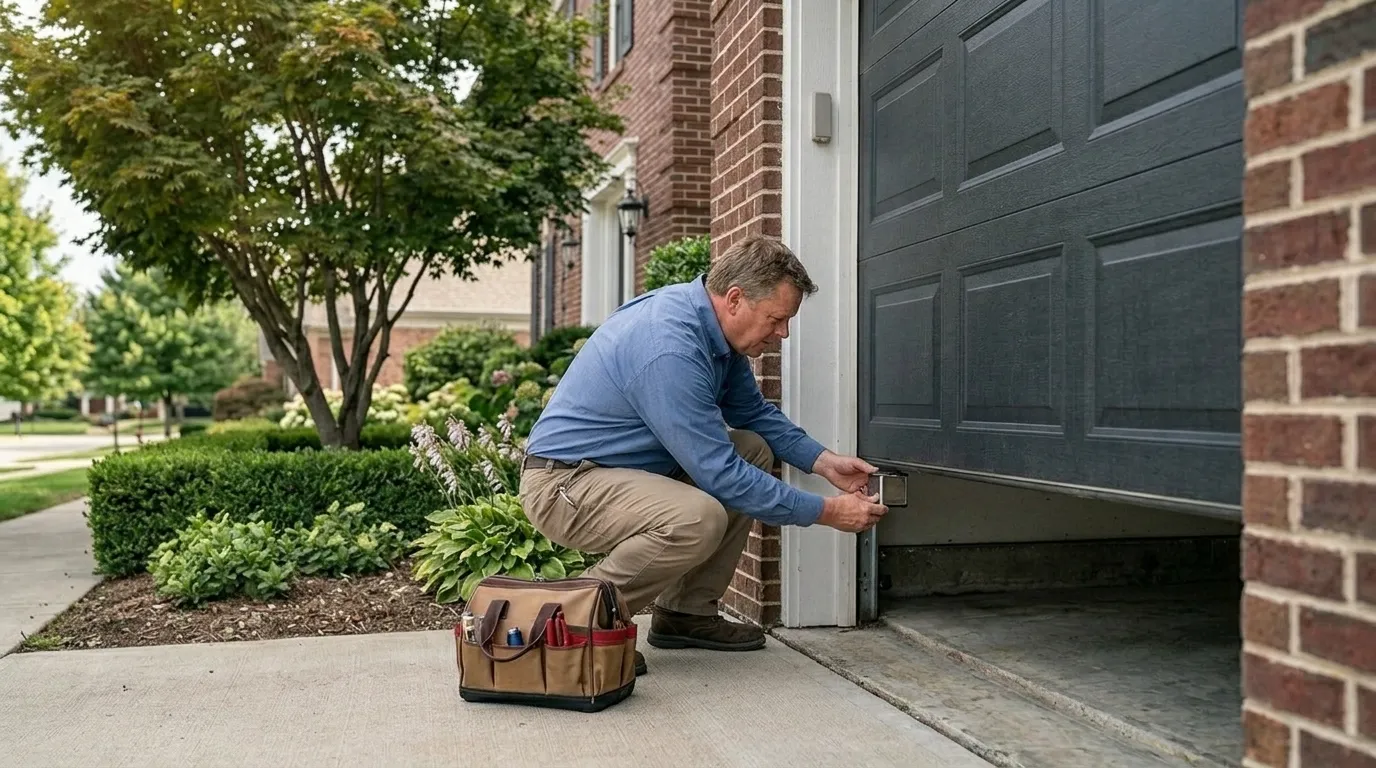
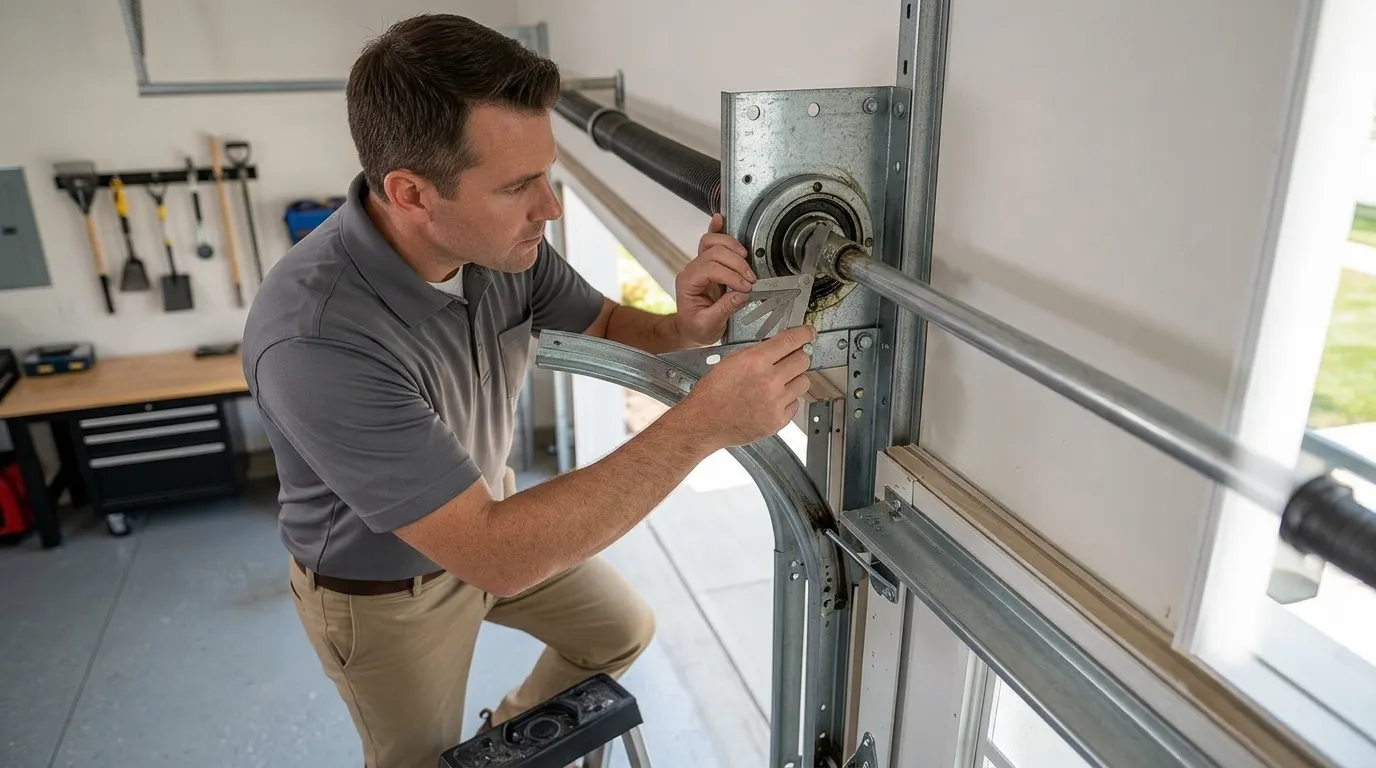
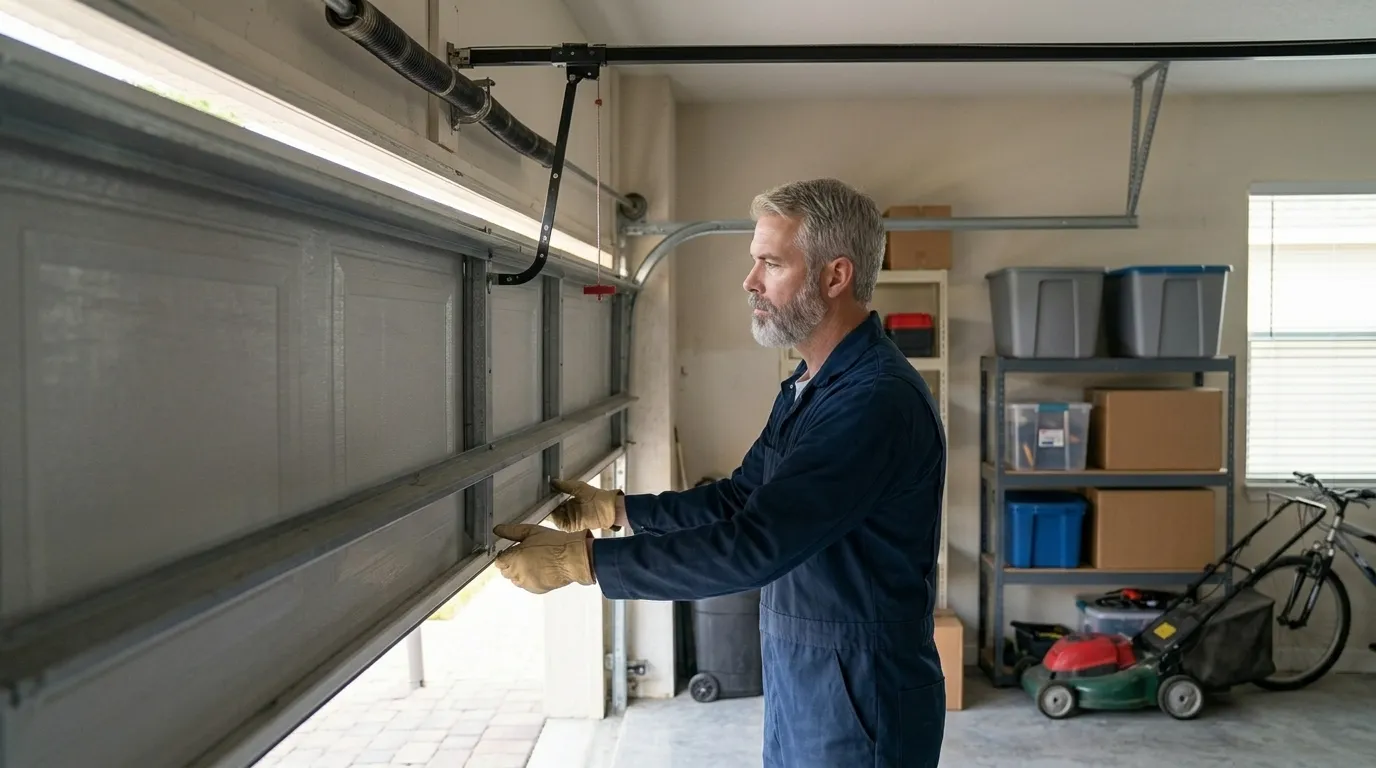
A lot of Dearborn Heights garages still carry the door that came with the house, or a close replacement of it. Median build year here runs around 1958, and that era means narrower openings than what gets built now - single-car bays under 9 feet wide, or two-car doors that are really two singles side by side instead of one wide panel. Many of those original doors are steel or wood one-piece slabs on extension springs mounted along the horizontal track, not the torsion setup you'd find on newer double doors. That distinction matters if you're thinking about doing your own repair. Extension springs are under real tension, and on an older track system the safety cables that keep a broken spring from whipping across the garage are sometimes missing entirely - they weren't required when these doors went in. Swapping a roller or lubricating hinges is fine to do yourself. Touching a spring, a cable, or the bottom bracket on a door this age is not a weekend project, and we'd rather tell you that up front than have you find out the hard way. If the door is original to a 1958 build, parts for it may not be something a hardware store carries anymore either.
How Long It Takes
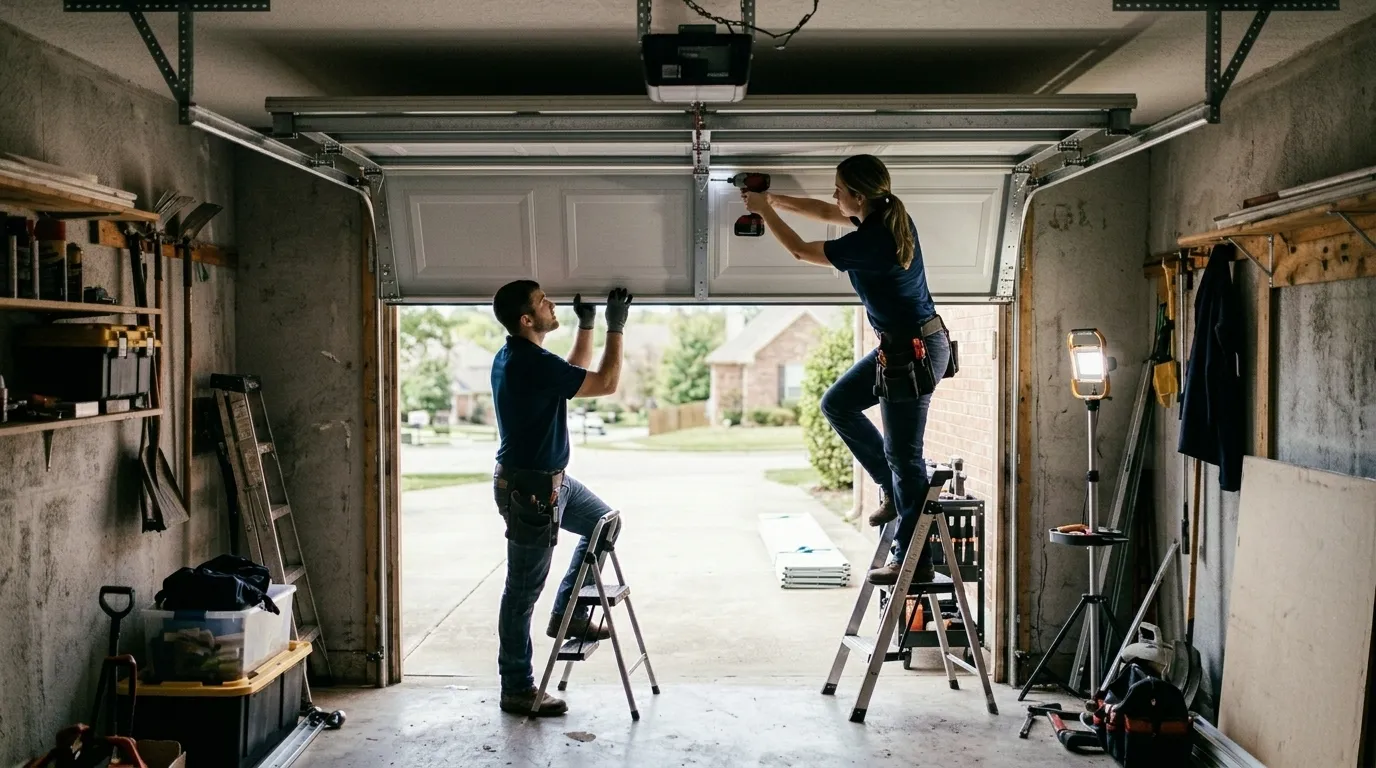
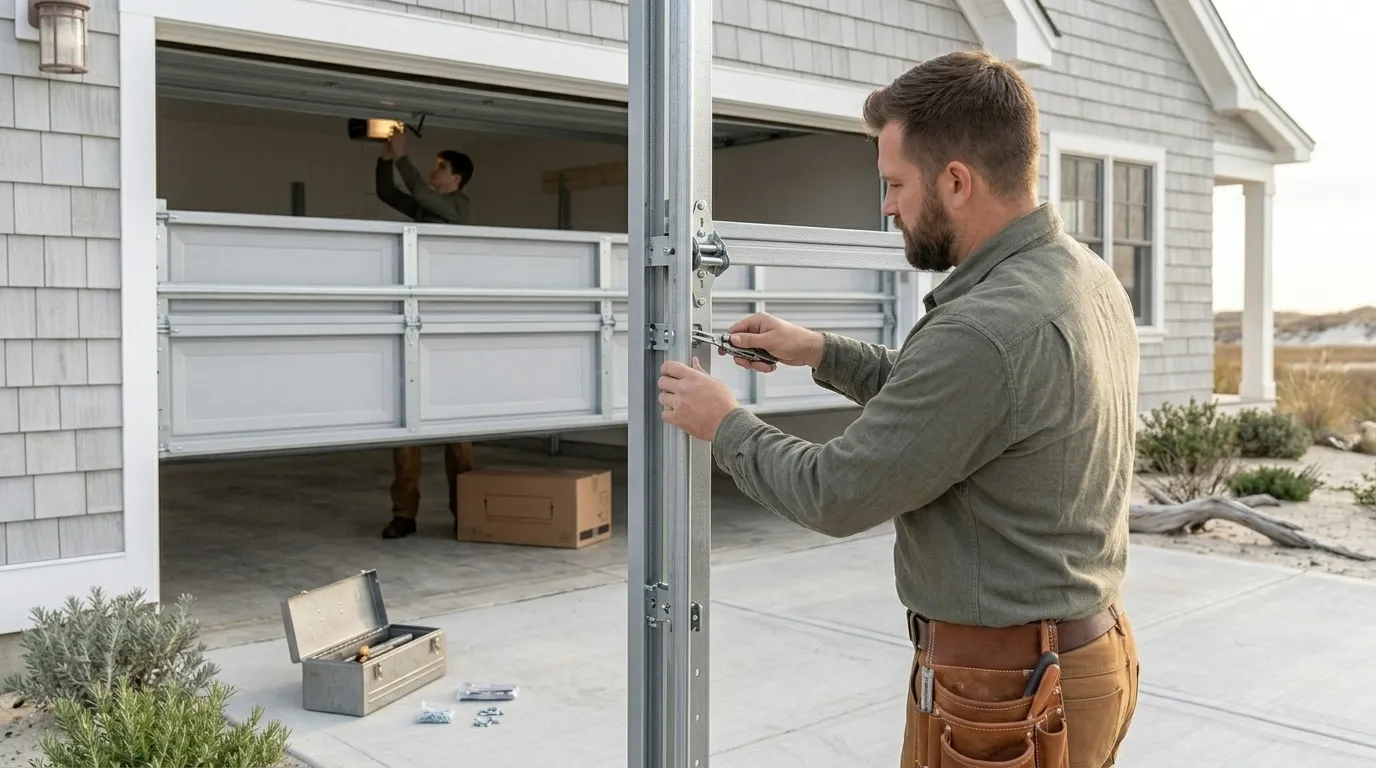
Most calls on a single door of this vintage - spring, roller, or cable - run under two hours once the truck is on site, since the hardware is simple and there's only one panel width to work with. Two-car homes with a pair of narrow singles take longer only because it's effectively two jobs, not one wide door. We travel from Livonia, about 6 miles out, so quote time includes that drive rather than a same-block response. Opener issues usually take less bench time than spring work but more diagnostic time, especially on a house that's had two or three openers installed over the decades since it was built - old wiring left behind, brackets that don't match the current unit, that kind of thing.
What You Are Seeing
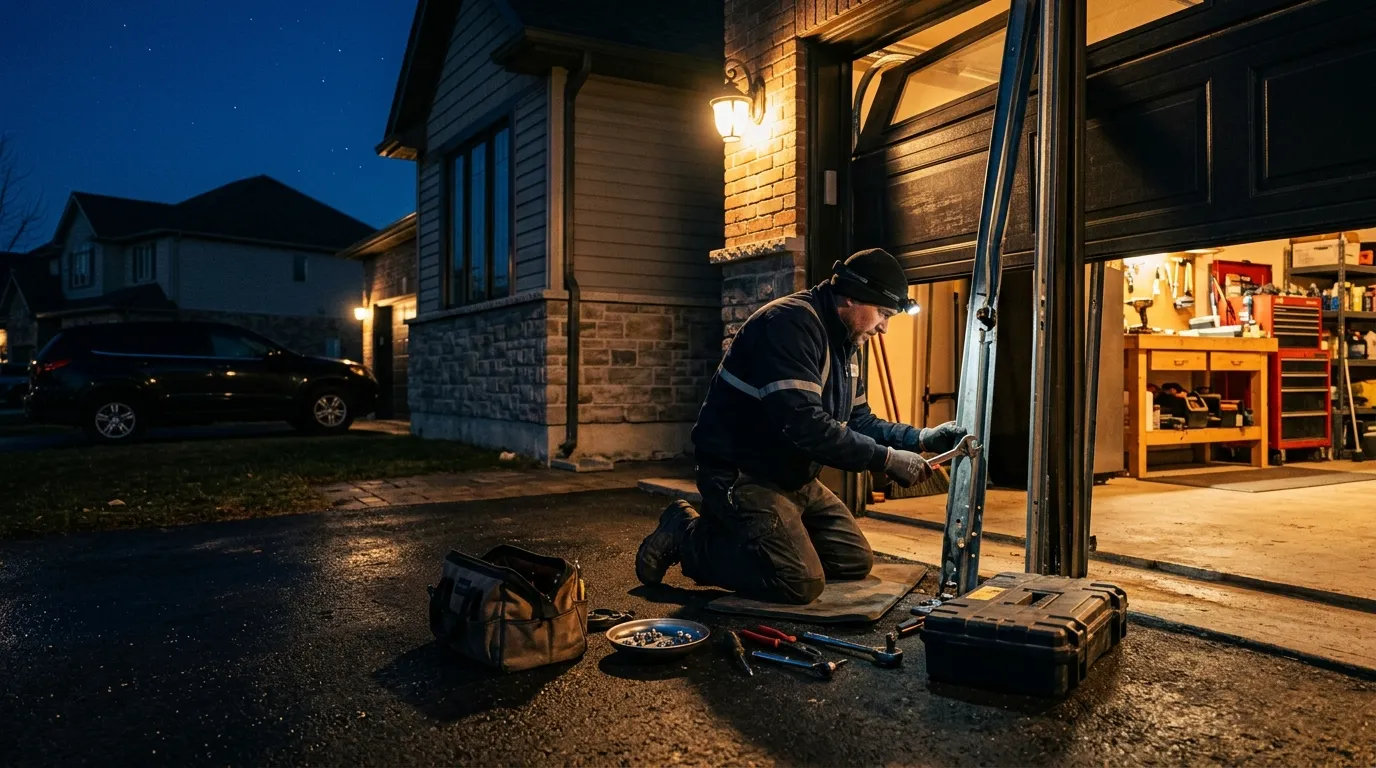
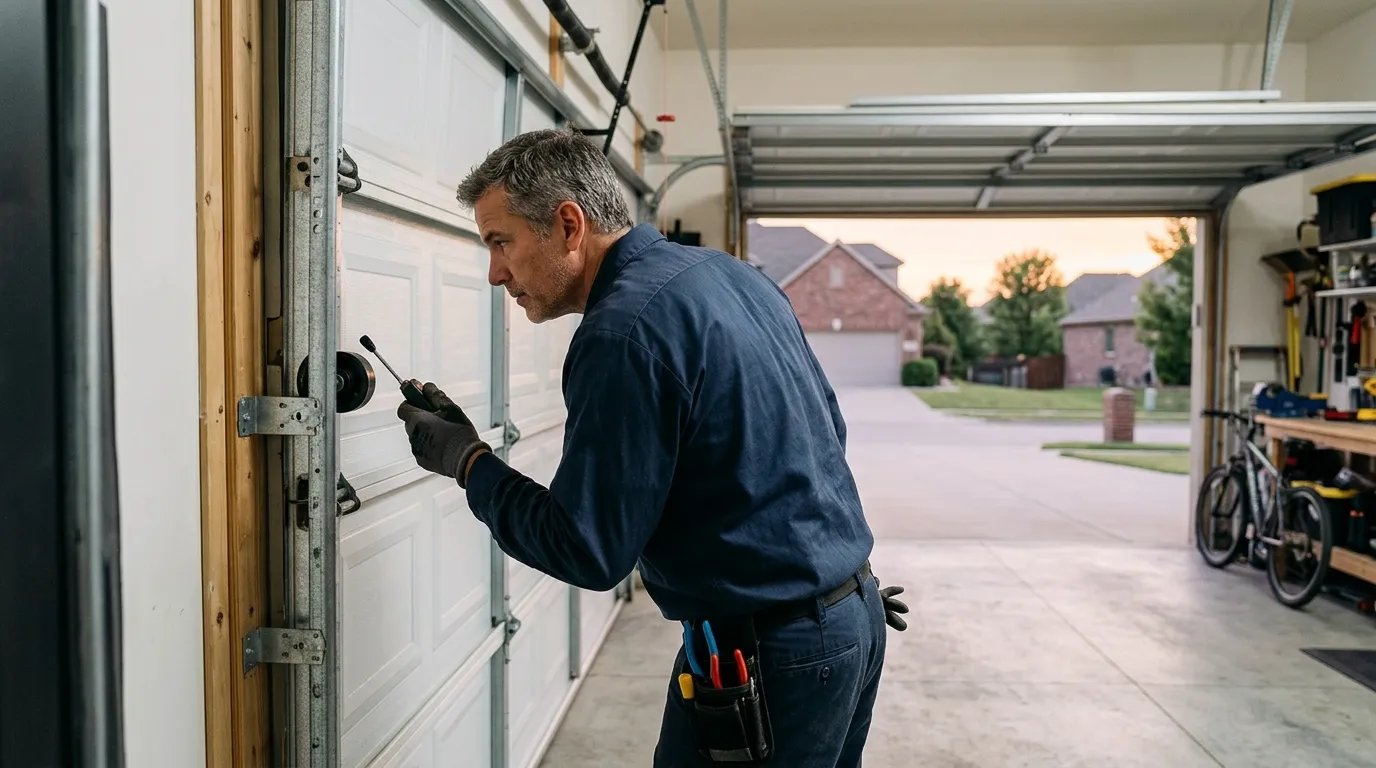
On a door this age, the usual signs are a loud bang followed by the door refusing to lift (a snapped extension spring), a door that lifts a few inches and stops (cable off the drum or a broken cable), or a door that runs crooked in the track (worn rollers or a bent track rail, both common once a door's been opening and closing for six decades). If the opener predates the door hardware upgrade, you'll sometimes see the opener strain and reverse partway - that's usually the opener trying to compensate for a spring that's already lost most of its tension, not an opener fault at all. Grinding or scraping sounds usually point to dry rollers or a track that's slightly out of plumb, both cheap fixes if caught before they wear the roller bearings out completely.
The Complications
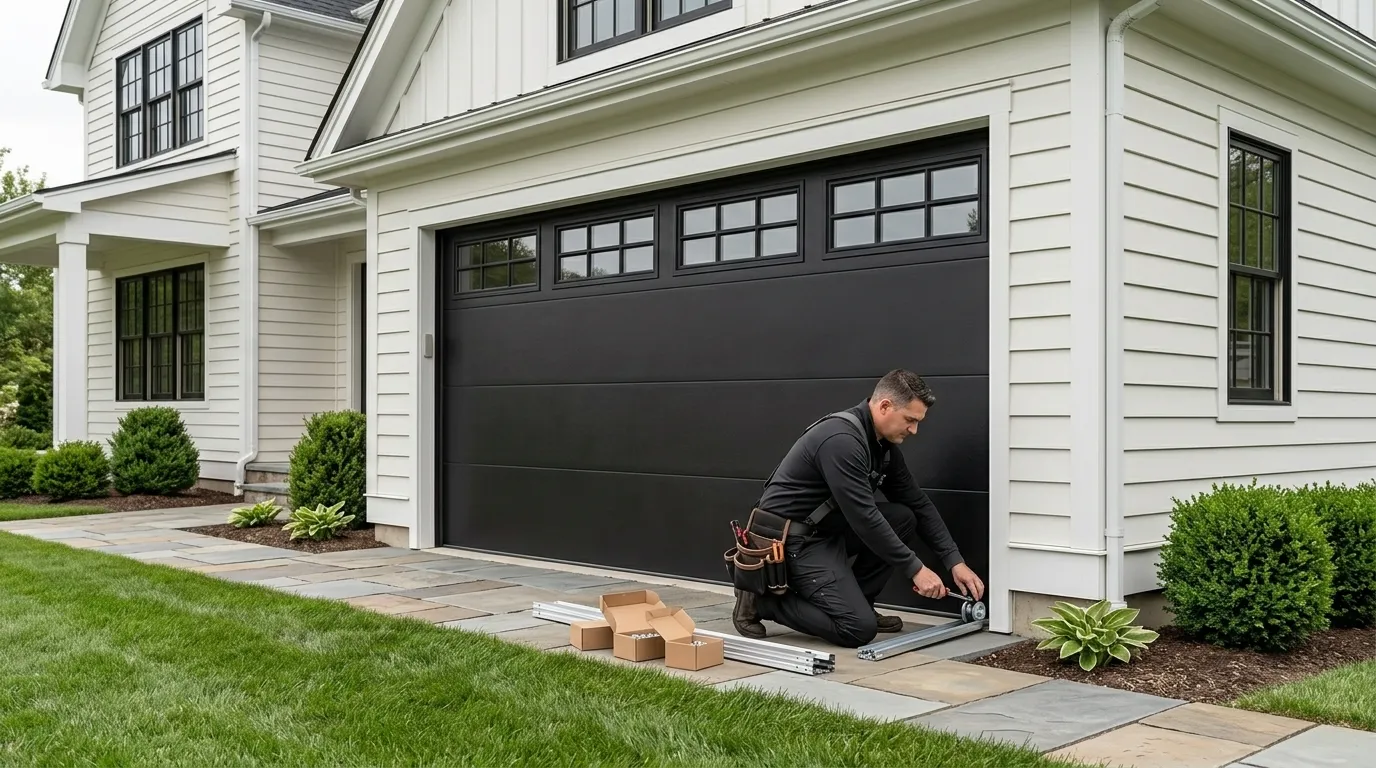
The complication specific to this housing stock is parts availability. A door manufactured to fit a 1958 opening doesn't always match the standard sizes carried today, and original hardware - brackets, drums, even track sections - can be a non-standard gauge. On a straightforward spring swap that's not an issue since spring sizing is measured on site, but on a bent track or a cracked panel, we sometimes have to special-order a piece rather than pull one off the truck. We'll tell you that at diagnosis, not after we've started. The other complication: with 21,986 households in Dearborn Heights and a median income of $61,035, a lot of homeowners here are weighing repair against replacement on a door that's genuinely near the end of its service life. We'll give you the honest number for both and let you decide - we don't push replacement on a door that still has life in it, and we don't pretend a 1958 wood panel with rot in the bottom rail is worth patching.