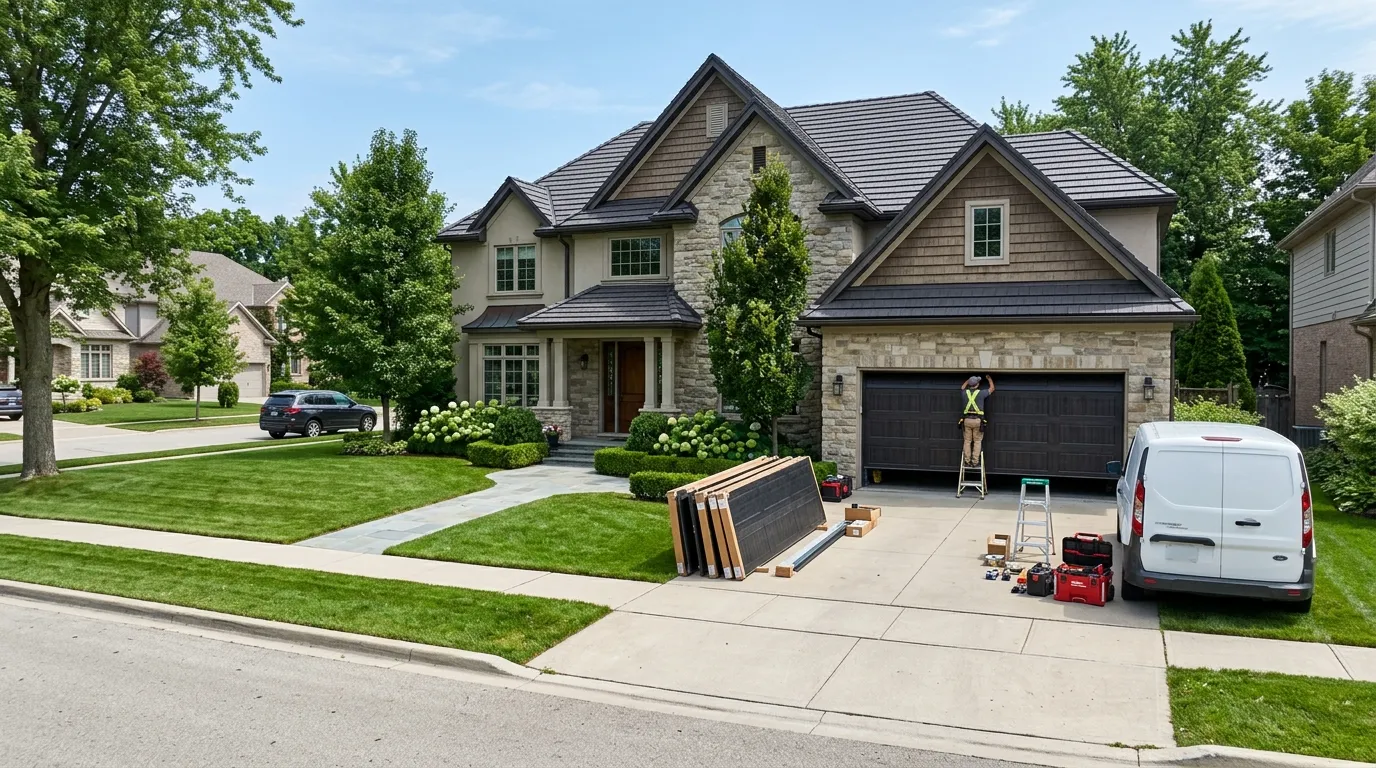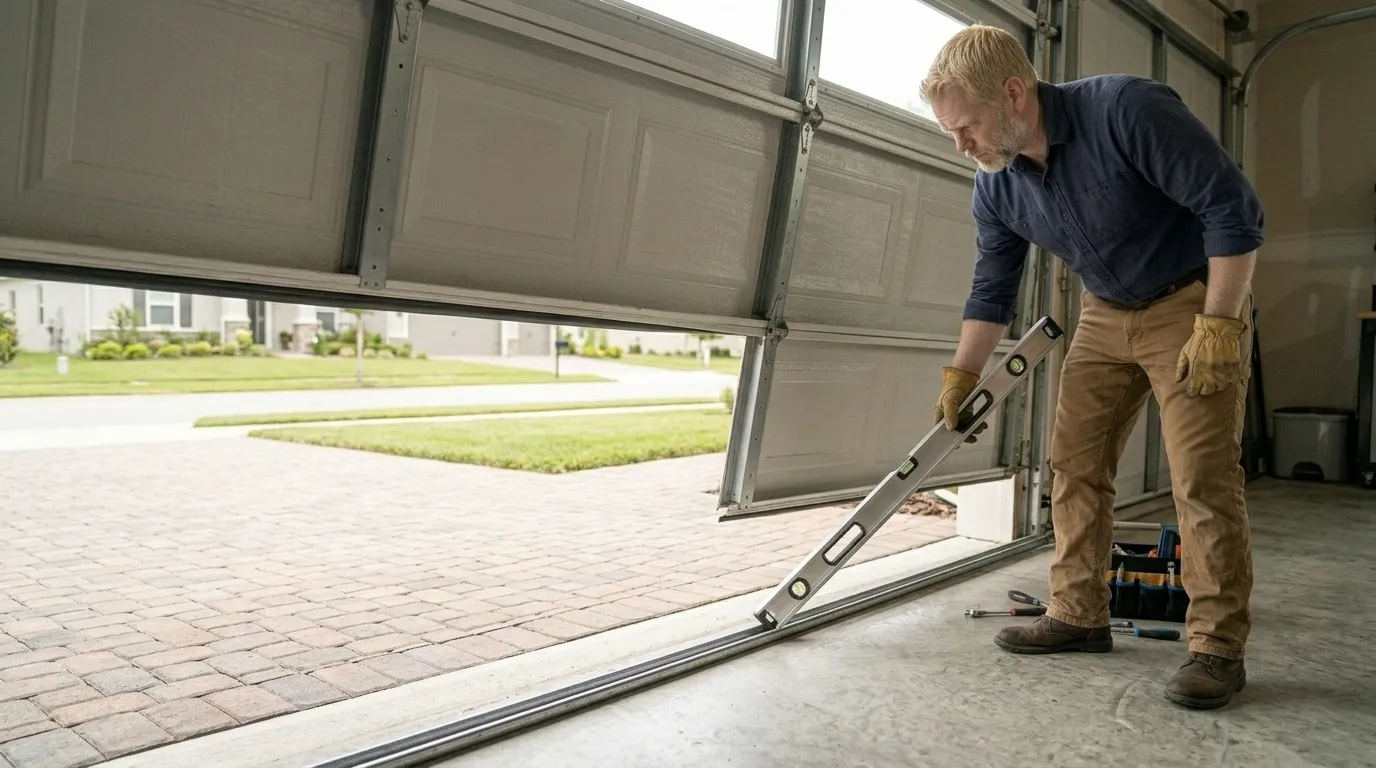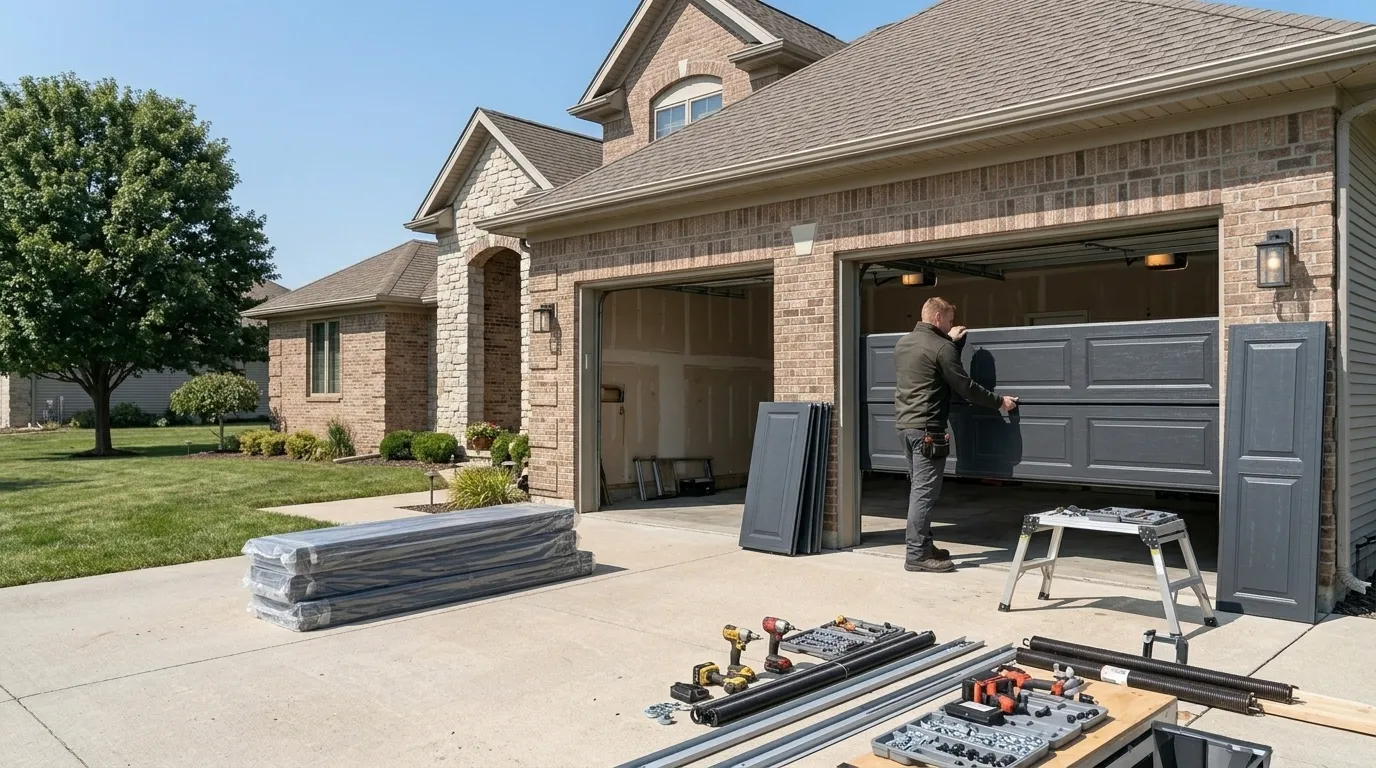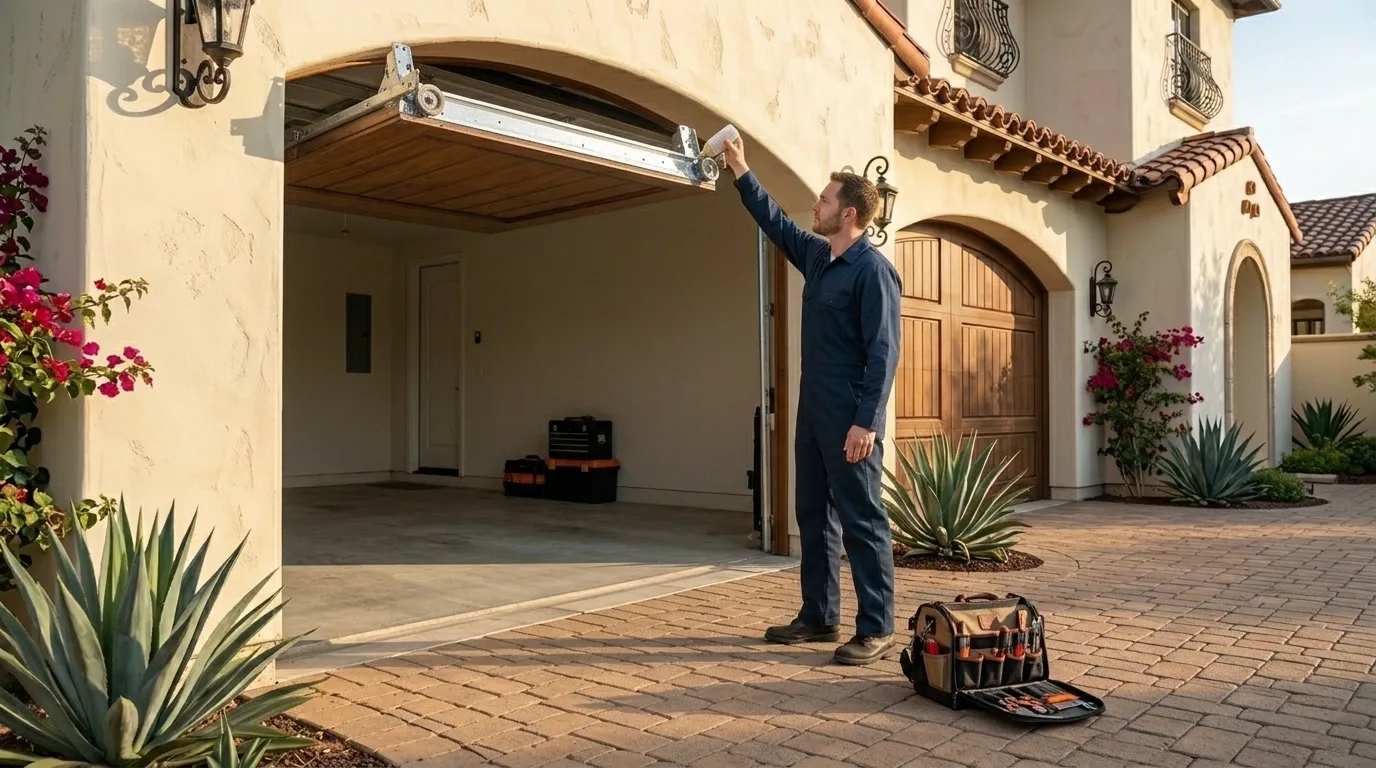
What You Are Seeing
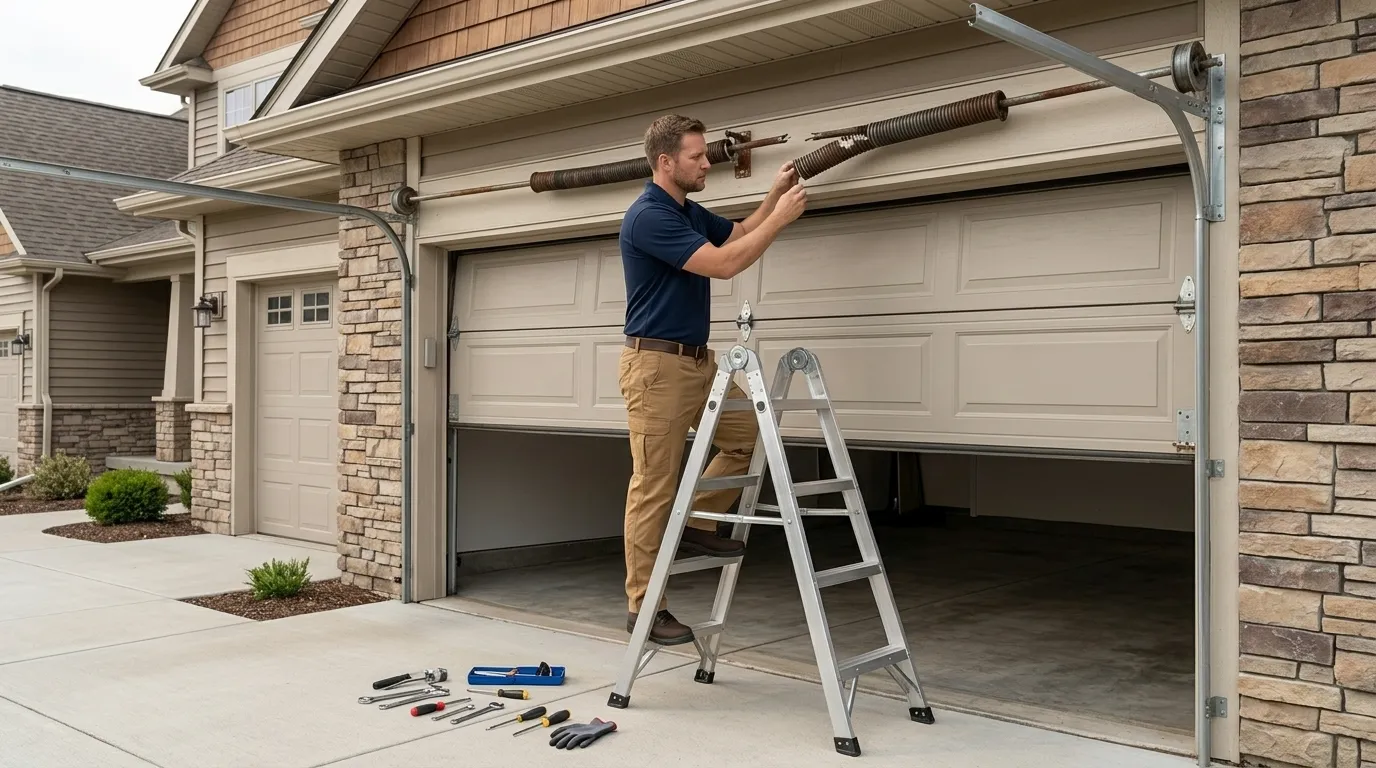
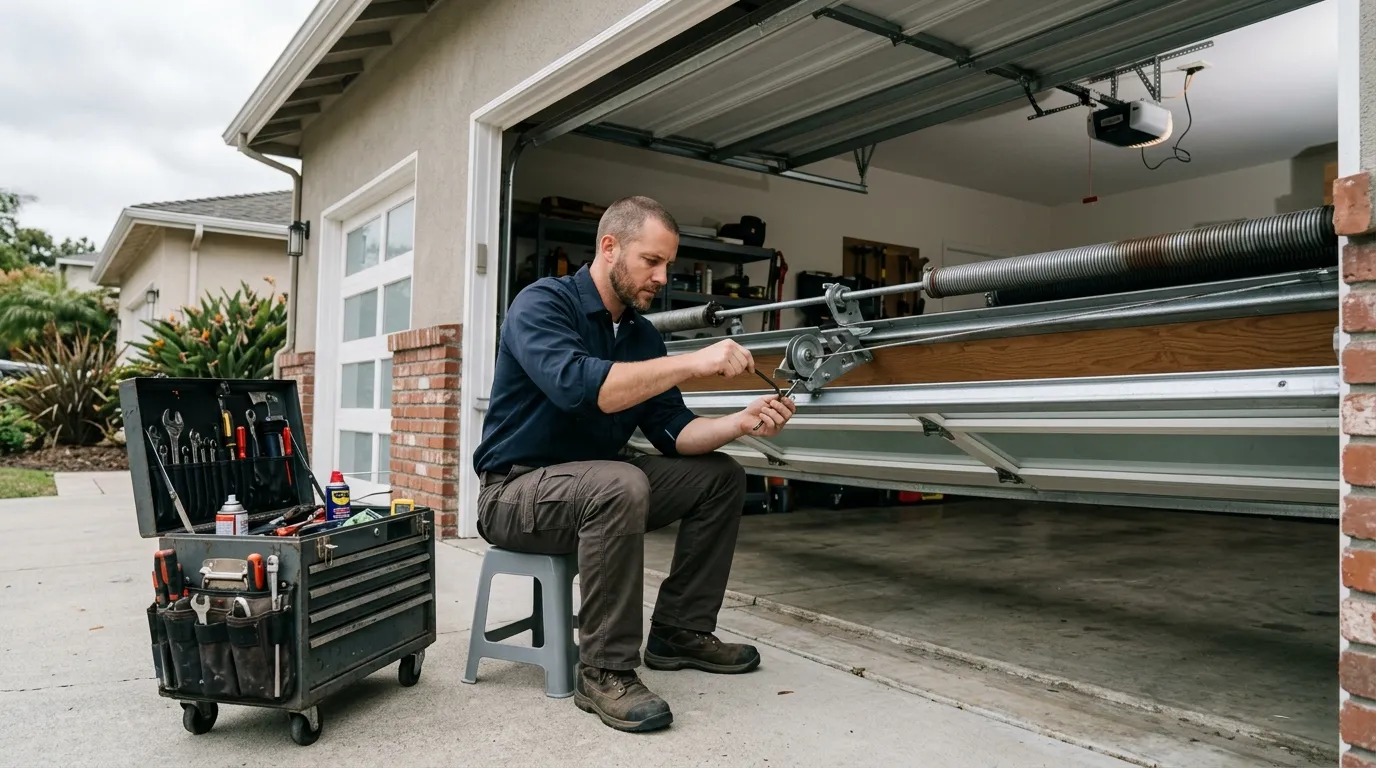
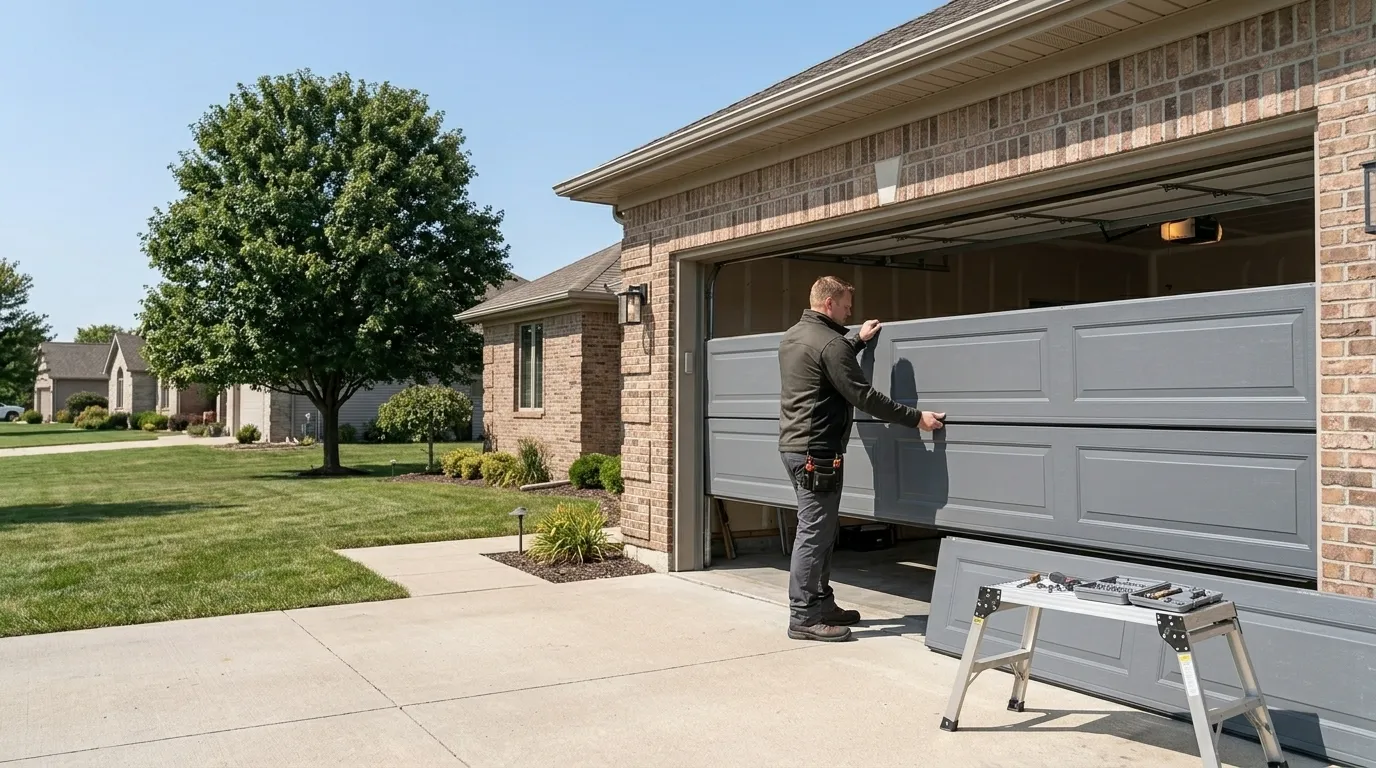
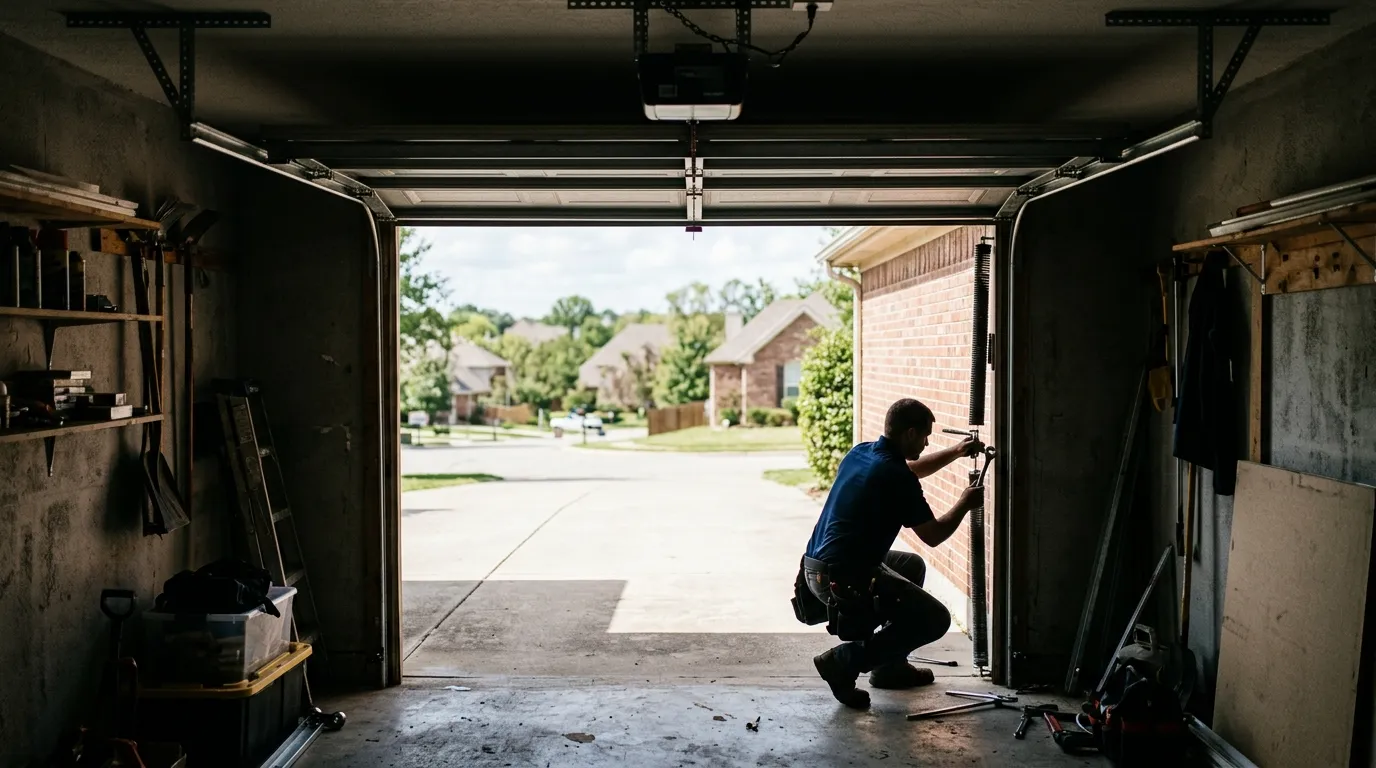
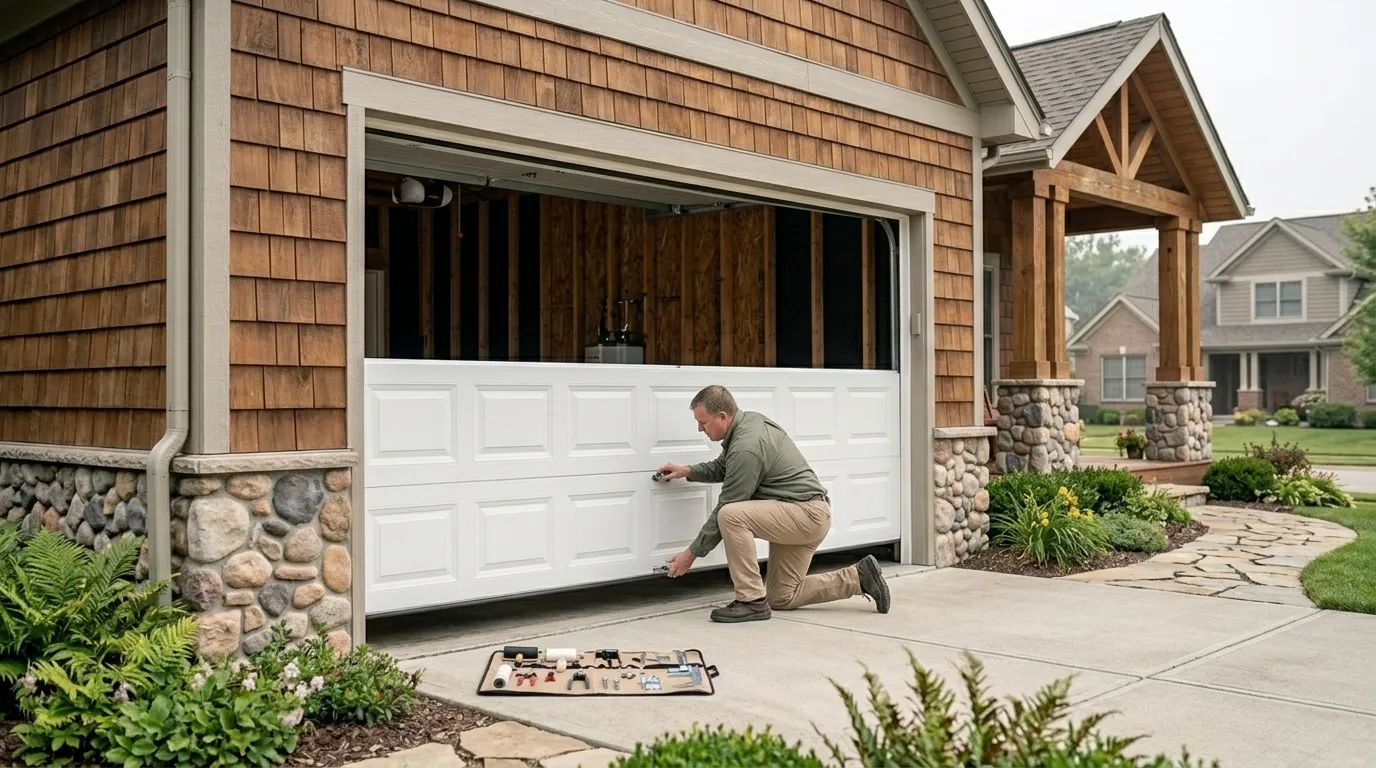
If the door won't budge, or it lifts an inch and stalls, or the opener strains and clicks without moving the panel, you're most likely looking at a broken torsion spring, not a bad opener. A snapped spring often makes a loud bang you might've heard from inside the house - some owners think it's a car backfiring outside. Look above the door: a torsion spring has a visible gap in the coil when it's gone. If the door is heavy to lift by hand, uneven on one side, or the cable near the spring looks loose or frayed, that's the same failure showing up a different way.
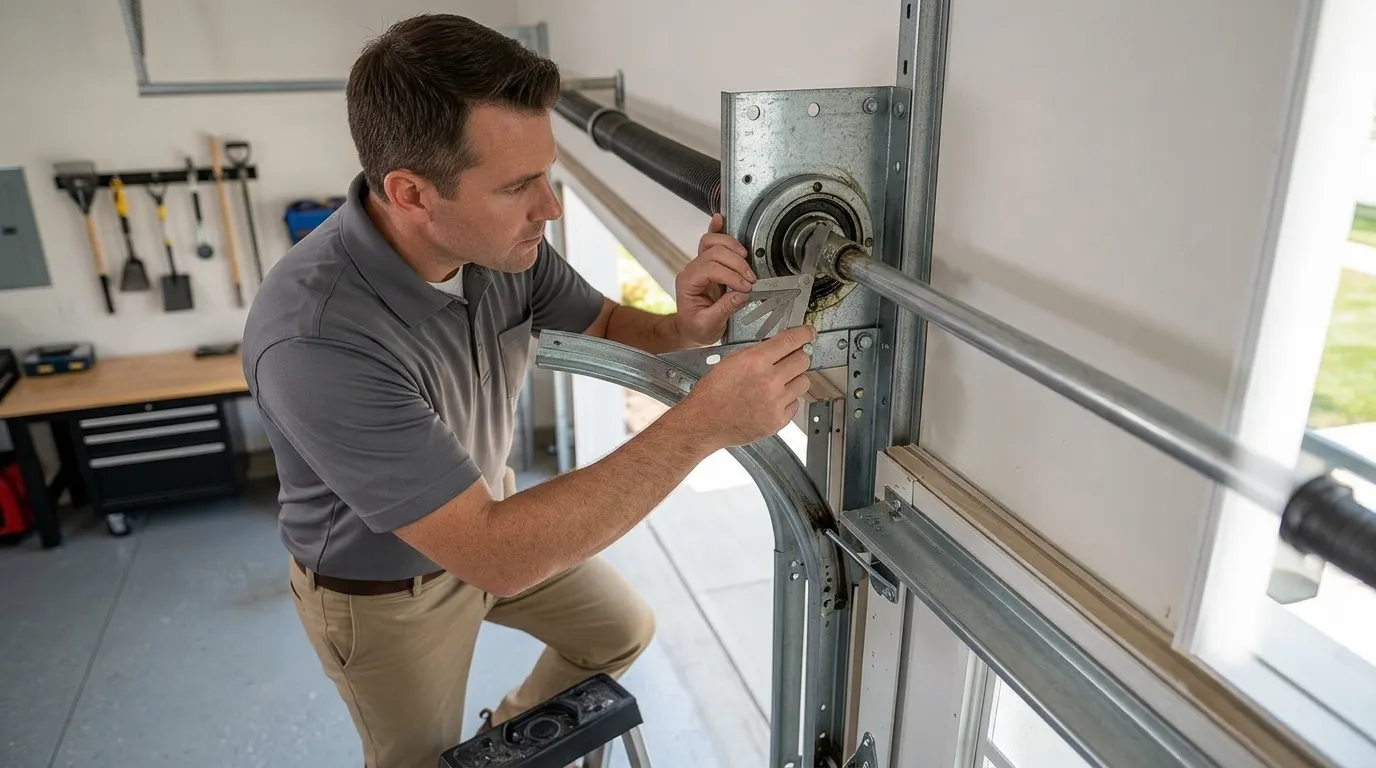
Most homes in this service area were built between 1938 and 1991, with the median build year around 1960, which means a lot of doors still run on the original torsion setup sized for hardware that isn't made the same way anymore. That matters because a spring swap on one of these older setups isn't always a drop-in part - sometimes the shaft, the drum, or the mounting bracket has to be matched, not just the spring. We won't guess at that over the phone; we look at the actual setup before quoting the fix.
Booking a Visit
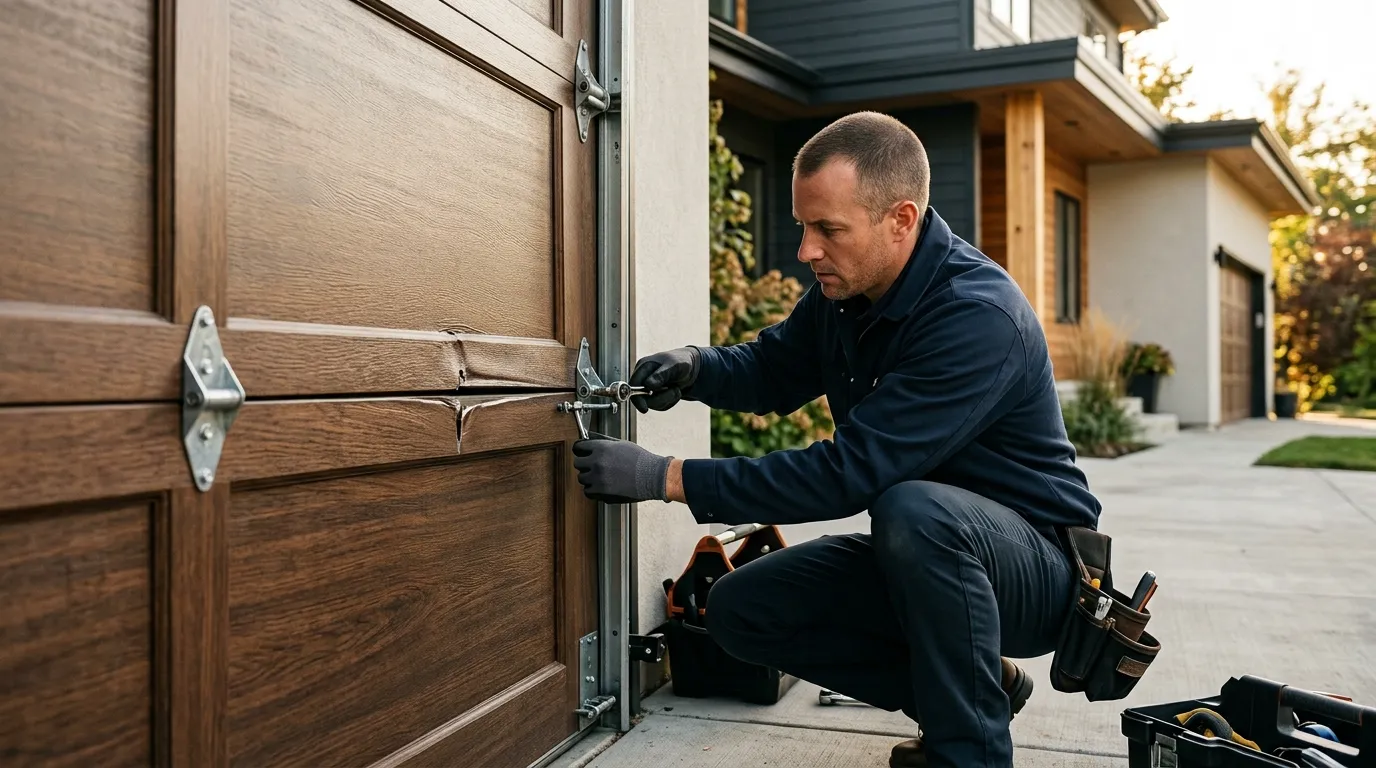
A broken spring is not a job to leave sitting - the door is dangerous to force open by hand once the spring is gone, and doing so risks the cables or the track next. Call and describe what you're seeing: the bang, the door that won't lift, the gap in the coil. That's usually enough for us to know what we're bringing on the truck before we get there.
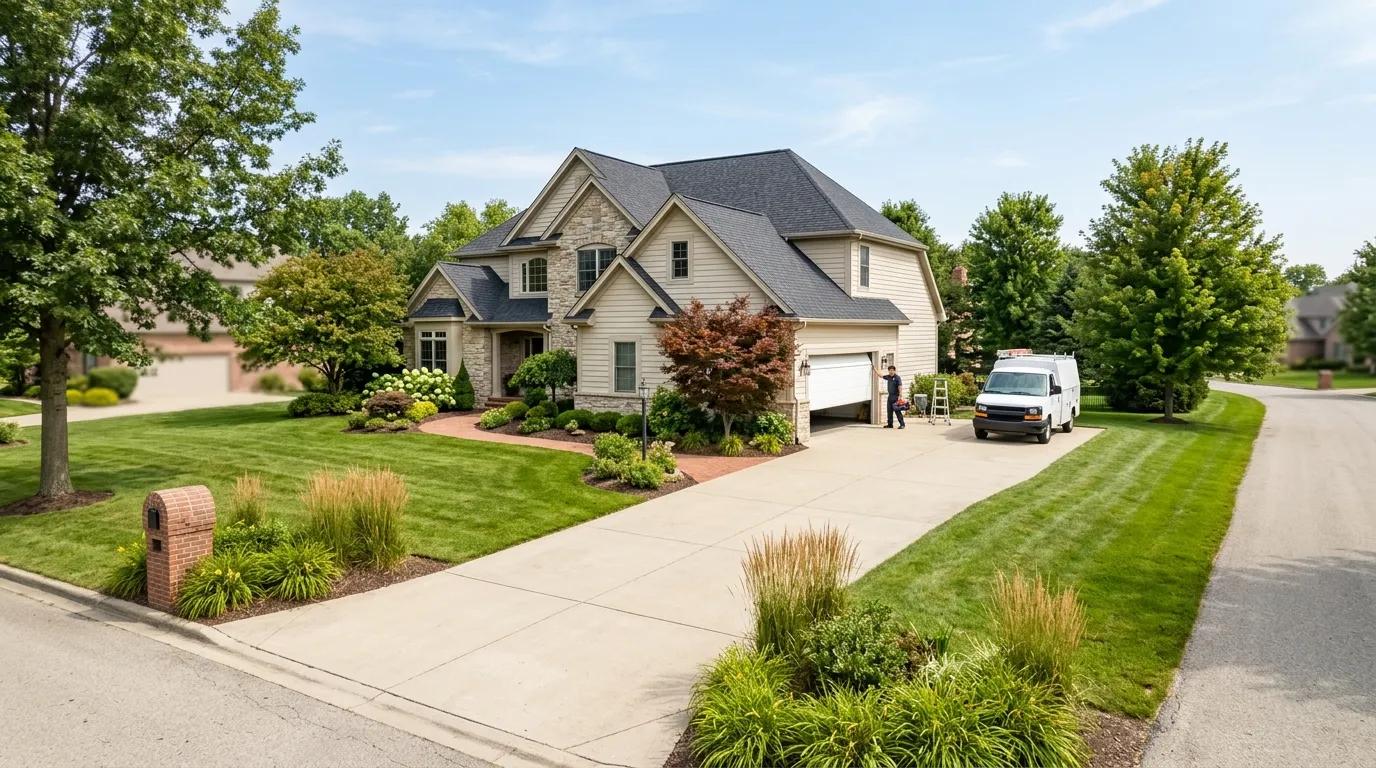
We cover Livonia and the towns around it - Garden City, Dearborn Heights, and the rest of the service area out past. Scheduling works the same regardless of which of those you're; the visit is about your door, your spring size, and your setup, not a script.
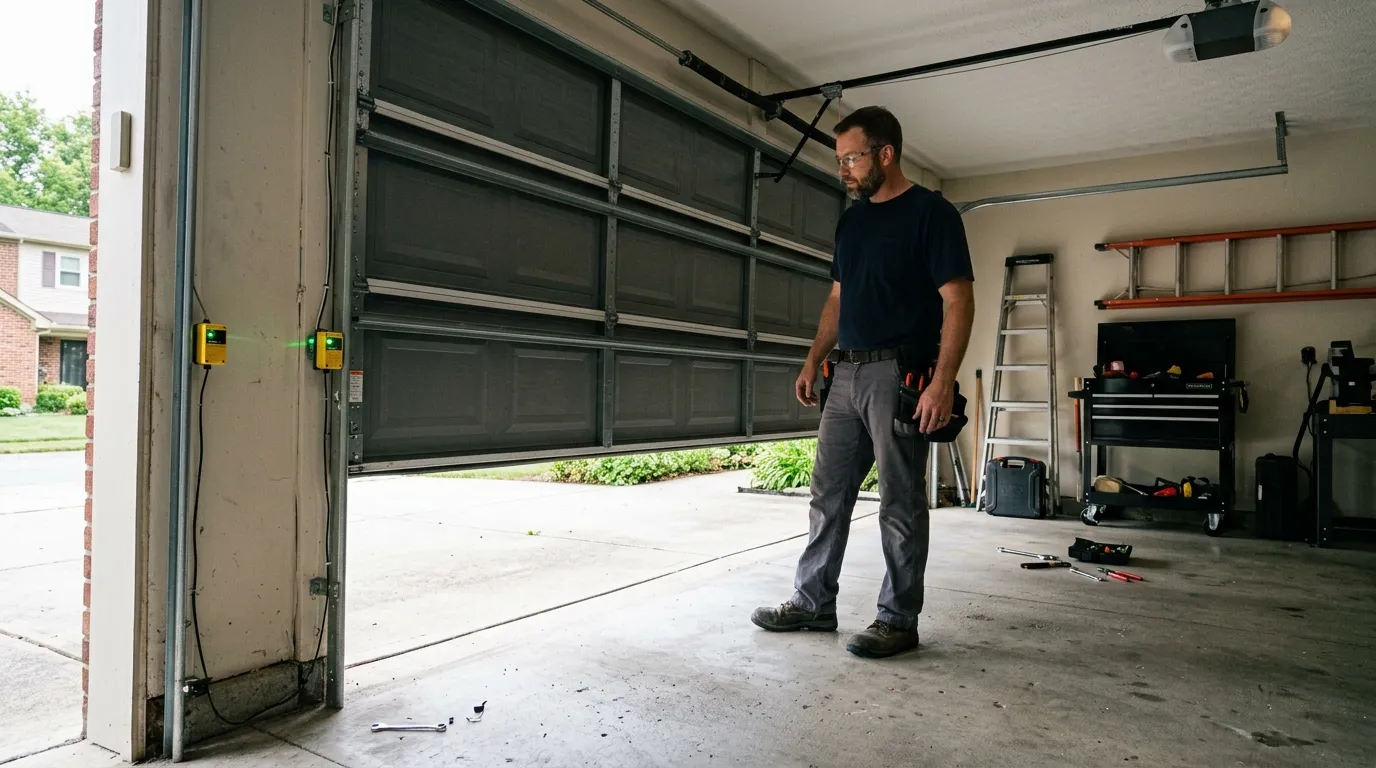
You can reach us through the site at / to get a visit on the books. If you're not sure whether it's the spring or something else - a bad sensor, a slipping cable, a worn roller - tell us what you're seeing and we'll tell you honestly what it sounds like before anyone drives out.
How We Fix It
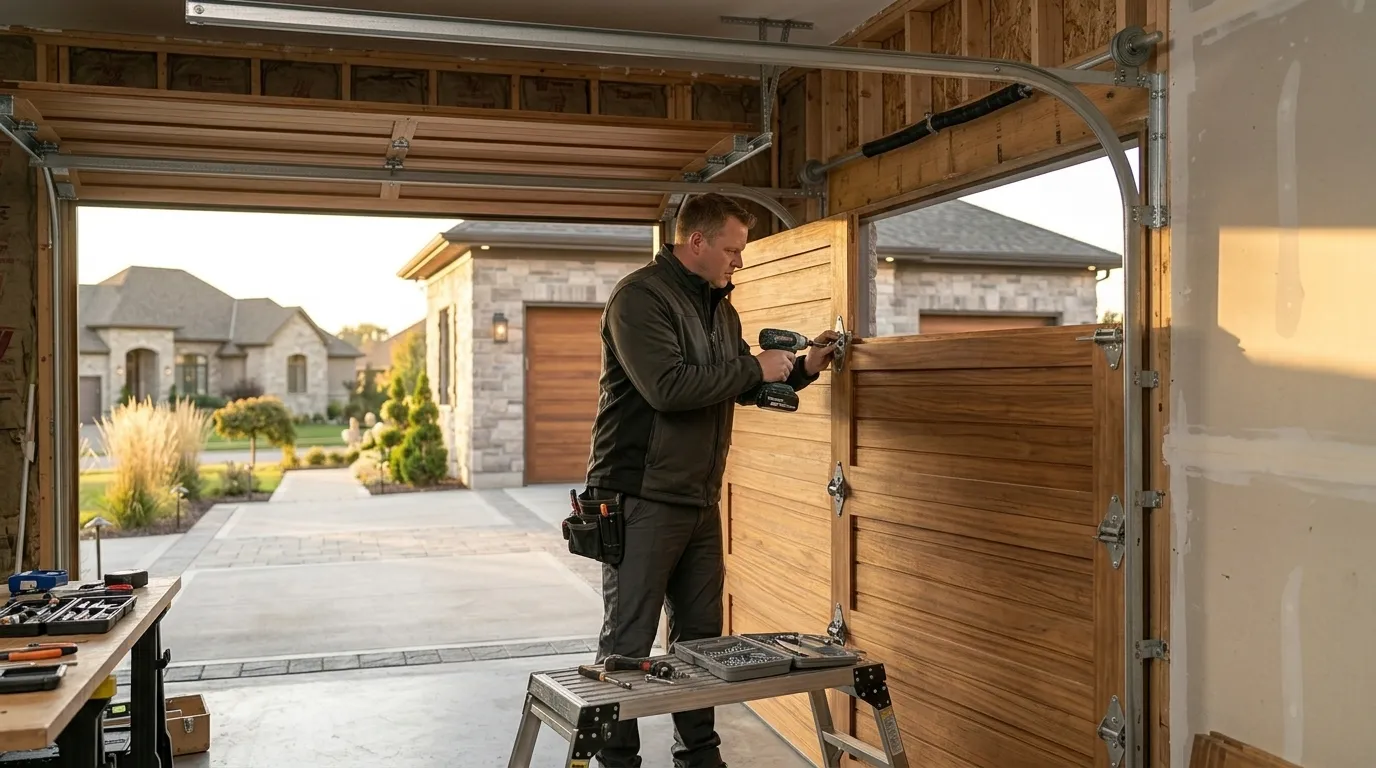
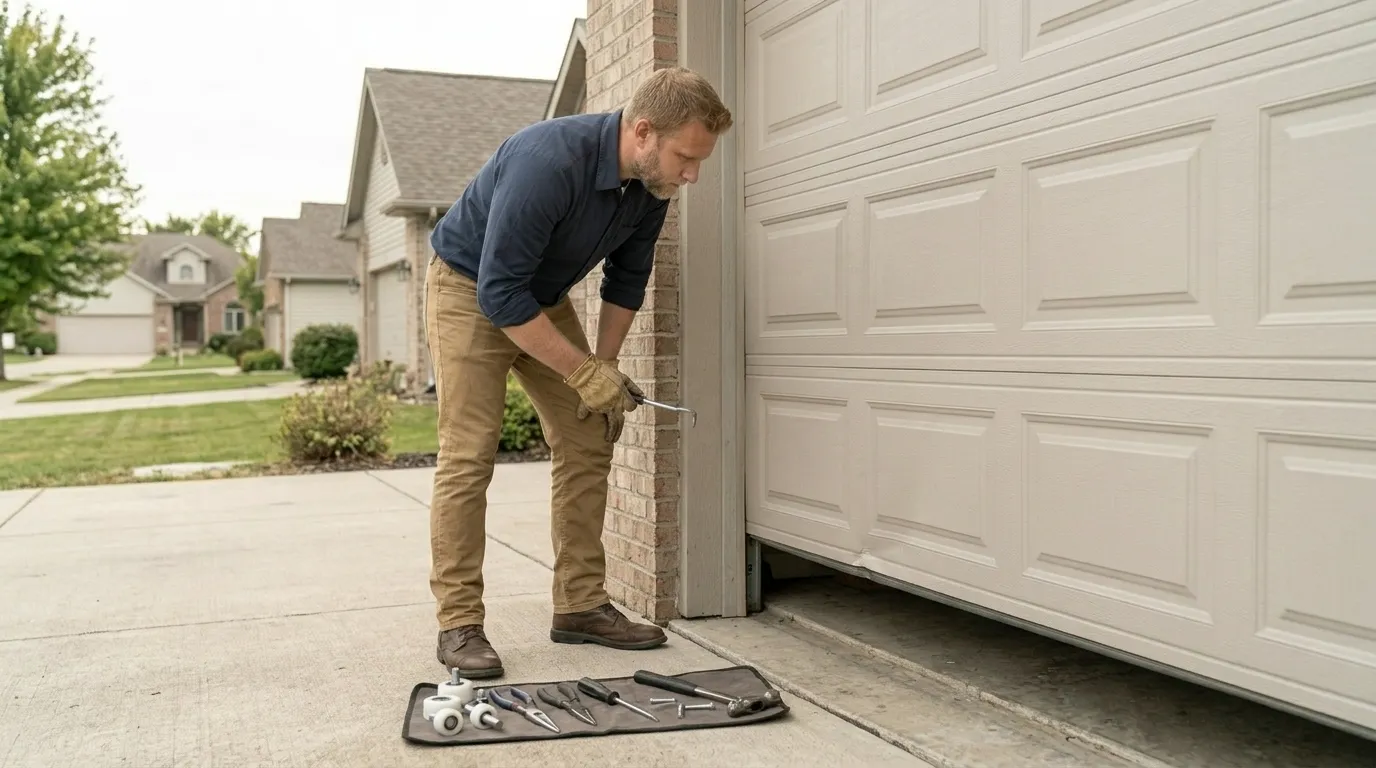
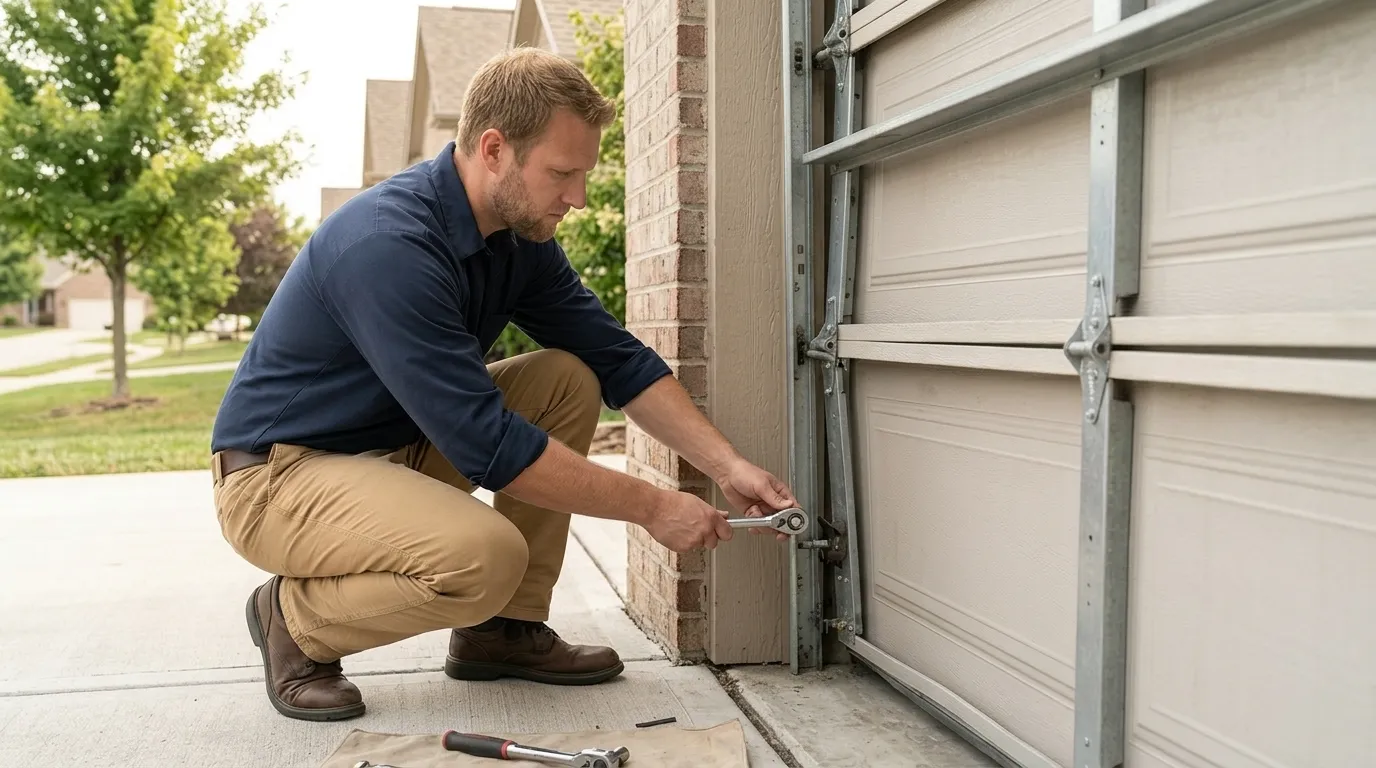
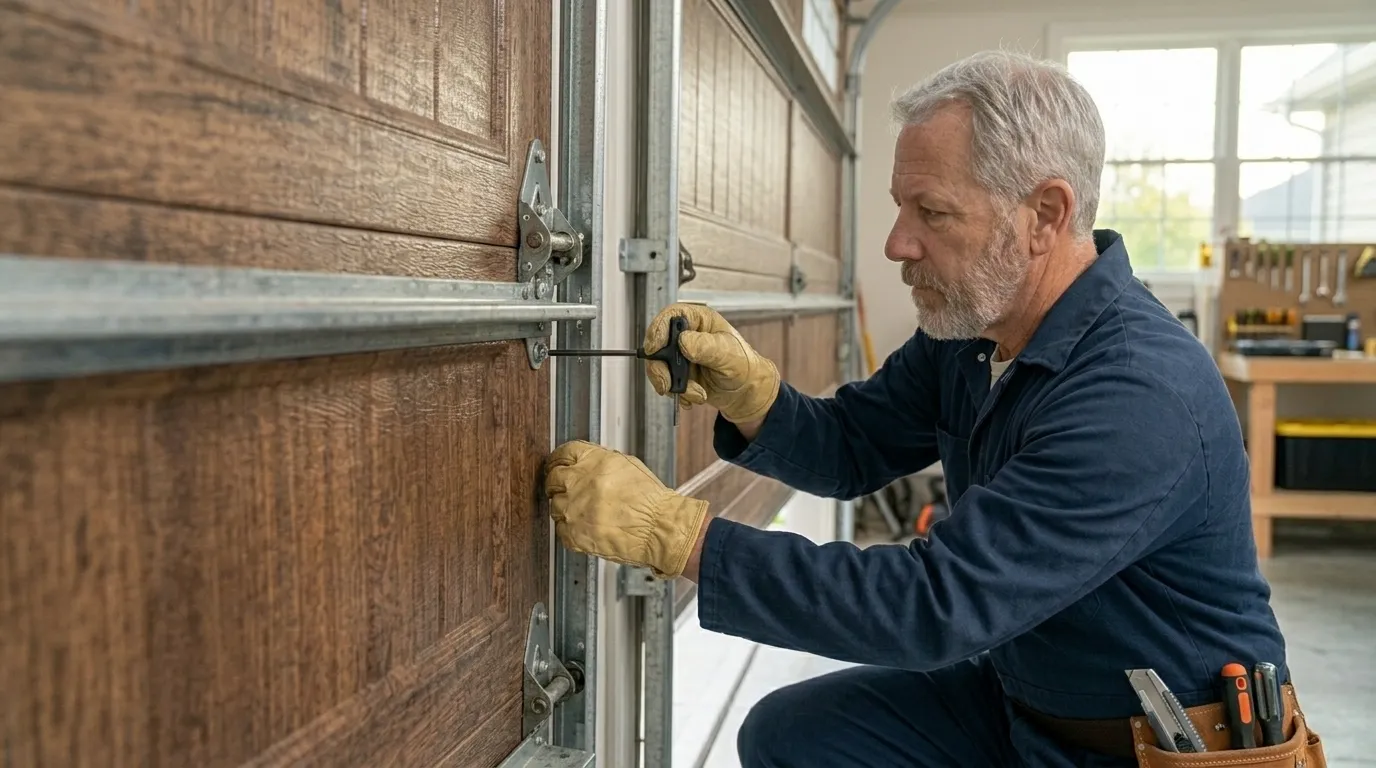
We identify which spring type is on the door - torsion, extension, or in some older setups both - and match the wire gauge, coil diameter, and length to the shaft and drum already installed rather than assuming a stock replacement fits. On a lot of the 1960s-era doors in this service area that's the step that actually takes the time, not the swap itself.
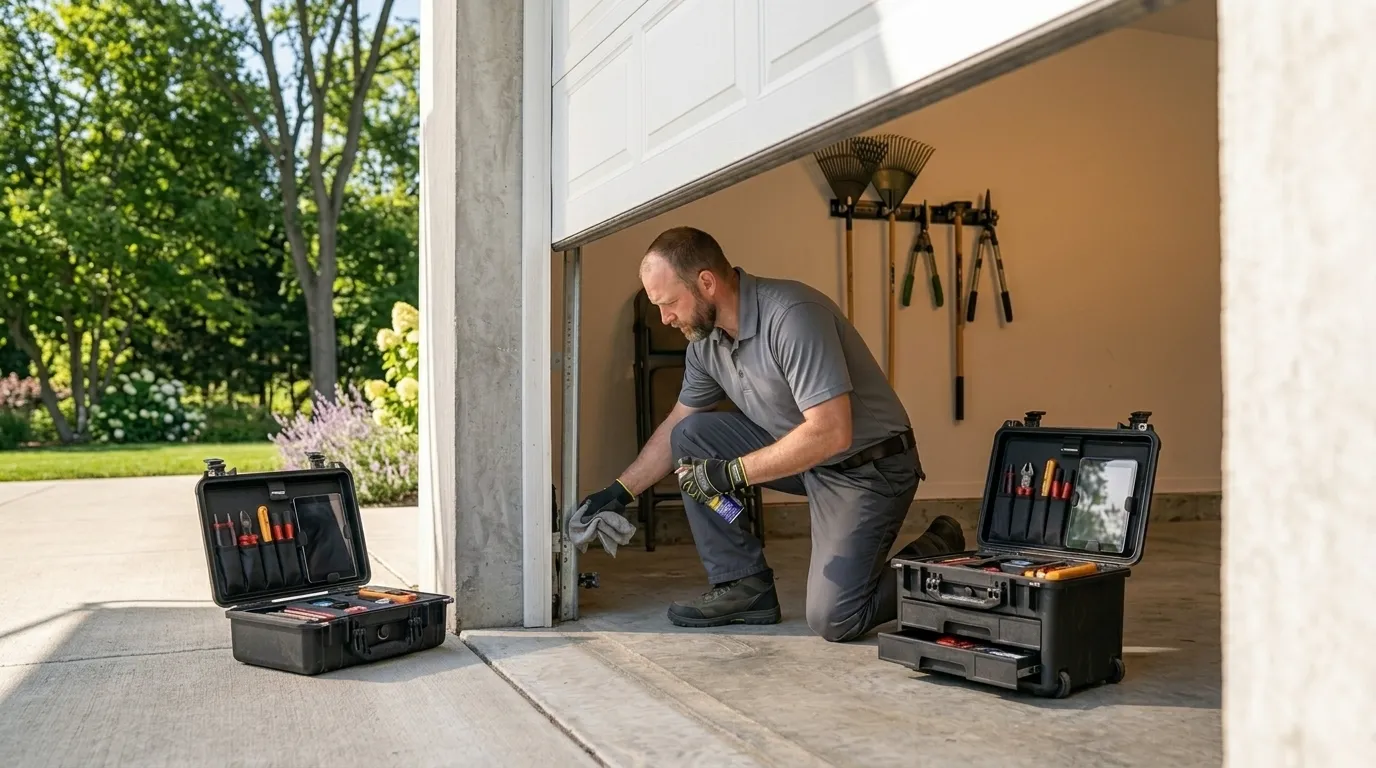
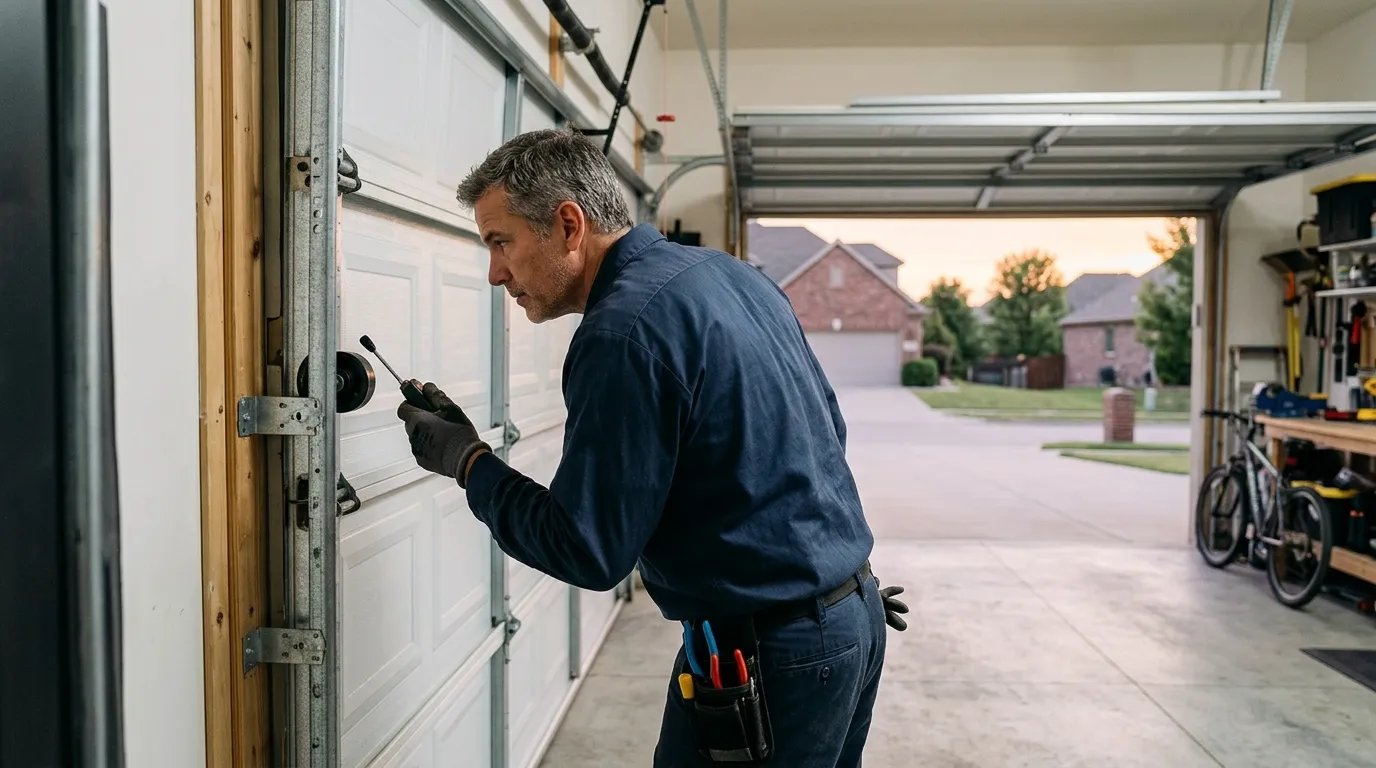
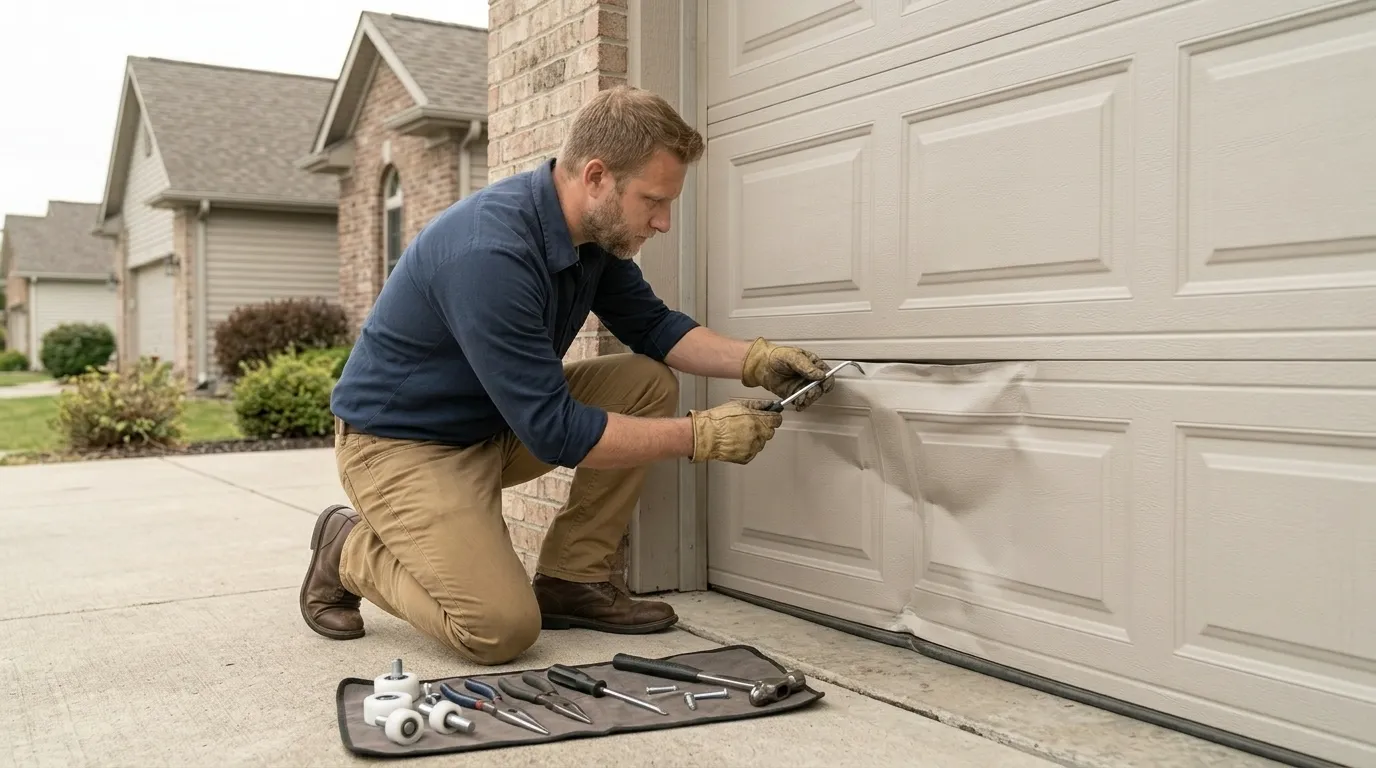
We replace the spring, check the cables and drums for wear at the same time since they're already exposed, and balance the door before we leave - a door that isn't balanced right will just wear the next spring out faster. If the track or the opener gear is also worn, we'll say so, but we don't upsell a full opener replacement to fix a spring problem.
Honest limitation: on some of the oldest torsion setups, the shaft or drum has corroded or worn enough that a spring swap alone won't hold balance for long. In those cases we'll tell you straight that a hardware upgrade is the better fix, even though it's a bigger job than what you called about - a spring you replace twice in two years costs more than doing it right once.