Doing It Yourself
Berkley sits twelve miles from our shop in Livonia, which matters more than it sounds like it should. A broken spring call here isn't a same-block run - it's a truck loaded before it leaves, because a torsion spring on a house built in 1949 isn't the same part as one on a house built in 1975, and showing up without the right size wastes everyone's afternoon.
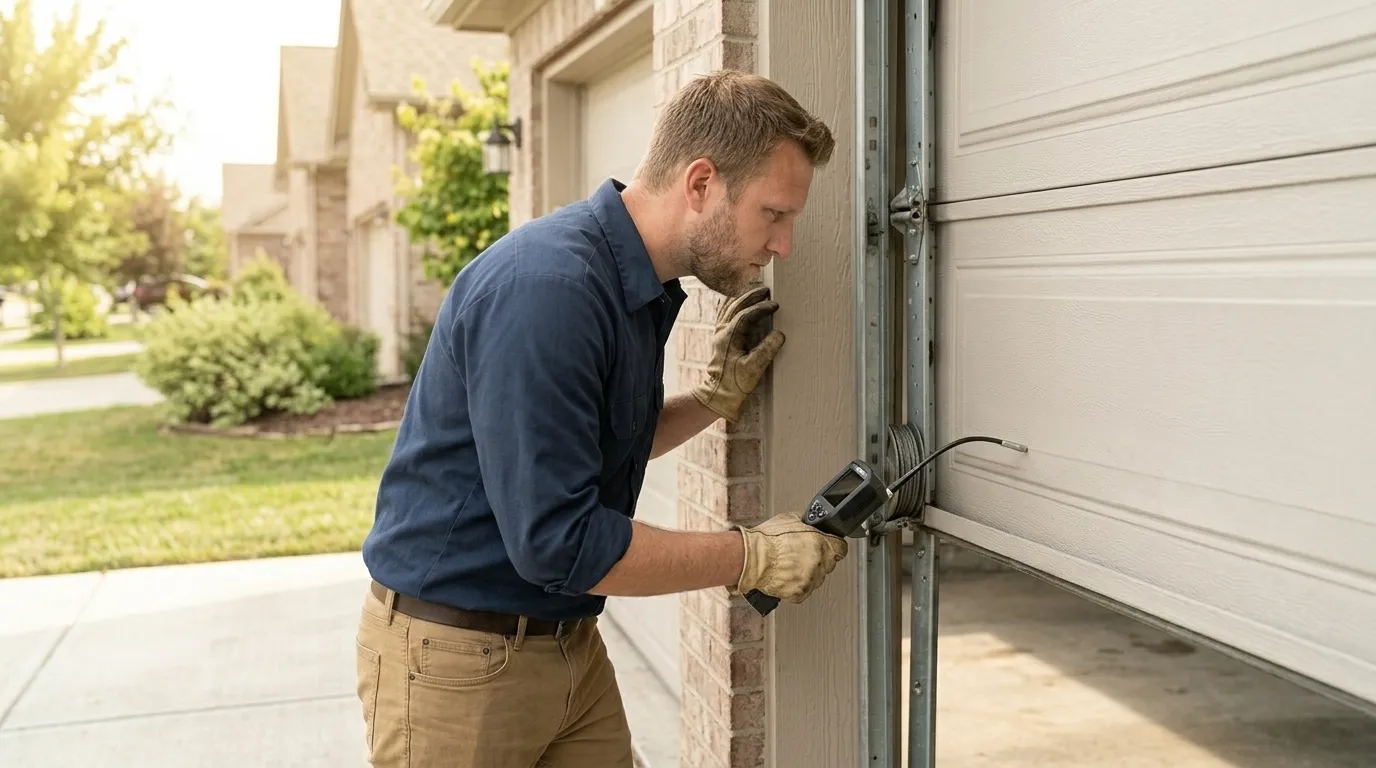
That said, some things you can check before you call anyone. If the door won't budge and the opener strains or hums without lifting, that's almost always a broken spring, not the opener. Look at the spring itself - a torsion spring above the door with a visible gap in the coil is broken, full stop. Do not touch it, do not try to unwind it, and do not try to lift the door with the spring in that state. A wound torsion spring holds enough force to break bones. This is the one job in the garage door trade where the DIY answer is genuinely 'don't.'
What you can safely do is disconnect the opener (pull the emergency release cord) and see if the door moves at all by hand with help. If it's dead weight, you've confirmed the spring diagnosis and saved us a step on the phone.
How We Fix It
Most of the original garage structures in this part of Berkley date to around 1949, which is well ahead of the service area's overall median of 1960. That earlier build era usually means side-mounted extension springs rather than the center-mounted torsion springs common on later additions and replacement doors - different hardware, different failure pattern, different fix.
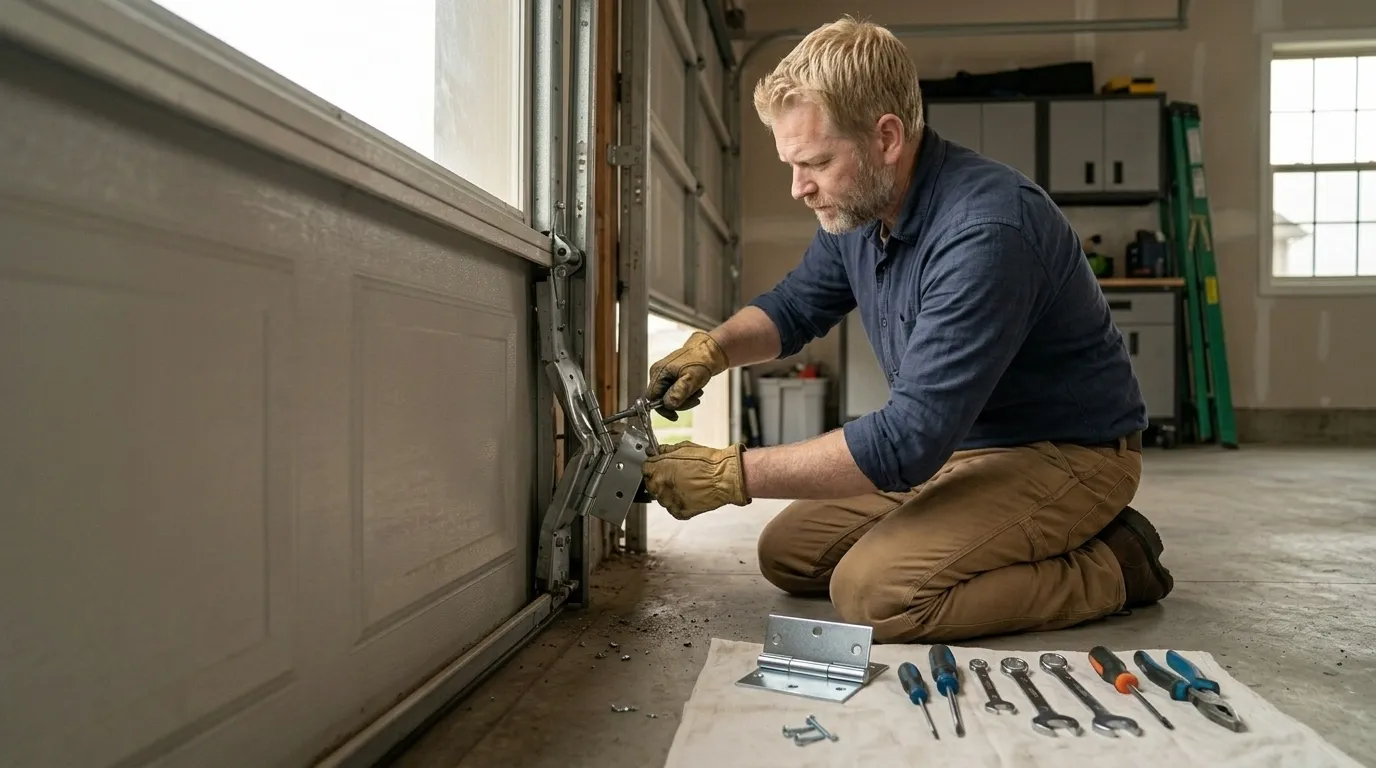
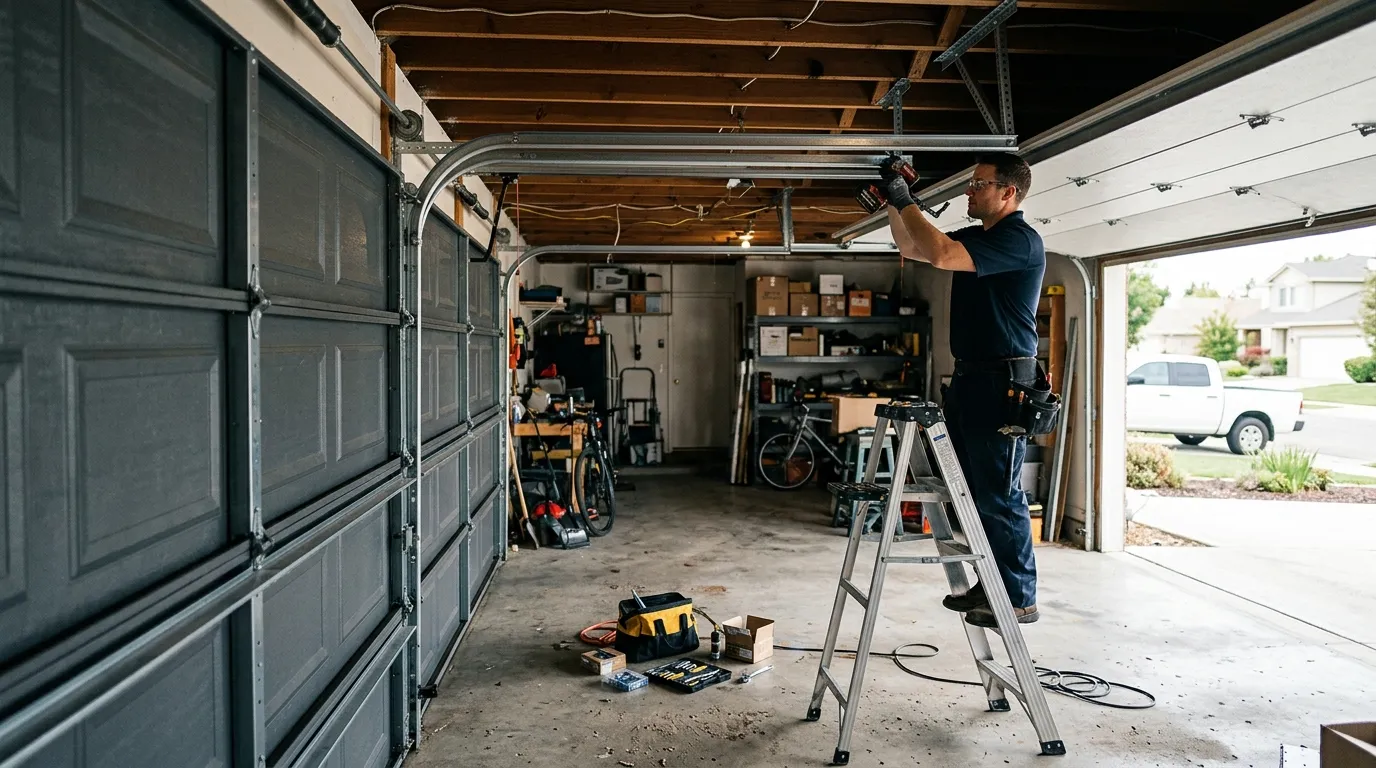
On an extension-spring setup, we're checking both springs (they wear as a pair, even when only one snaps), the pulleys, and the safety cables that should be threaded through the spring - a lot of older installs never had one added. On a torsion setup, we measure wire size, coil diameter, and wind length off the old spring or the drum, because guessing the spring size on a cold-climate torsion system is how you end up with a door that's off-balance six months later.
We replace in pairs on double doors regardless of which side broke. One matched spring left old and worn next to a new one just moves the next failure a few months down the road, and that's not a fix worth billing for.
What Causes It Around Here
Springs fail for one of two reasons almost everywhere: age (cycle count catches up with every spring eventually) or cold. This region sits in a severe cold climate band, and steel spring wire loses flexibility as temperature drops - a spring that's been fine for years can snap on the first hard cold snap of the season, especially if it was already near the end of its cycle life.
Berkley's household income runs well above the wider service area's median of $70,984, and higher-income households here tend to run heavier insulated doors and stronger openers - both of which put more load on a spring that's already working harder in cold weather. Combine an older 1949-era house that's had a heavier door swapped in at some point with a Michigan winter, and you've got the two most common spring calls we get from this stretch of Berkley: a spring that was fine last month and isn't now.