Doing It Yourself
Most garages in Berkley went up around 1949, and that year matters more than people think when you're picking an opener off a shelf. These are narrow, single-bay structures built for the cars of that decade, often with a wood door that was never engineered to carry a modern chain-drive unit without extra bracing across the top panel. Drop a big-box opener bracket straight onto seventy-plus-year-old wood and you're loading stress into a panel that was never designed for it.
The other problem is wiring. Garages from this era rarely came with a dedicated outlet near the header, so a DIY install often means running new circuit work before the opener ever gets bolted up. That's an electrician's job, not a Saturday-afternoon add-on.
We're not going to tell you it can't be done - plenty of people manage it. But if your door is original or close to it, the safe move is to have someone confirm the panel can take the load before you drill a single hole. That one check is where most DIY installs on older doors go wrong, and it's the part a kit's instruction sheet never covers.
How We Fix It
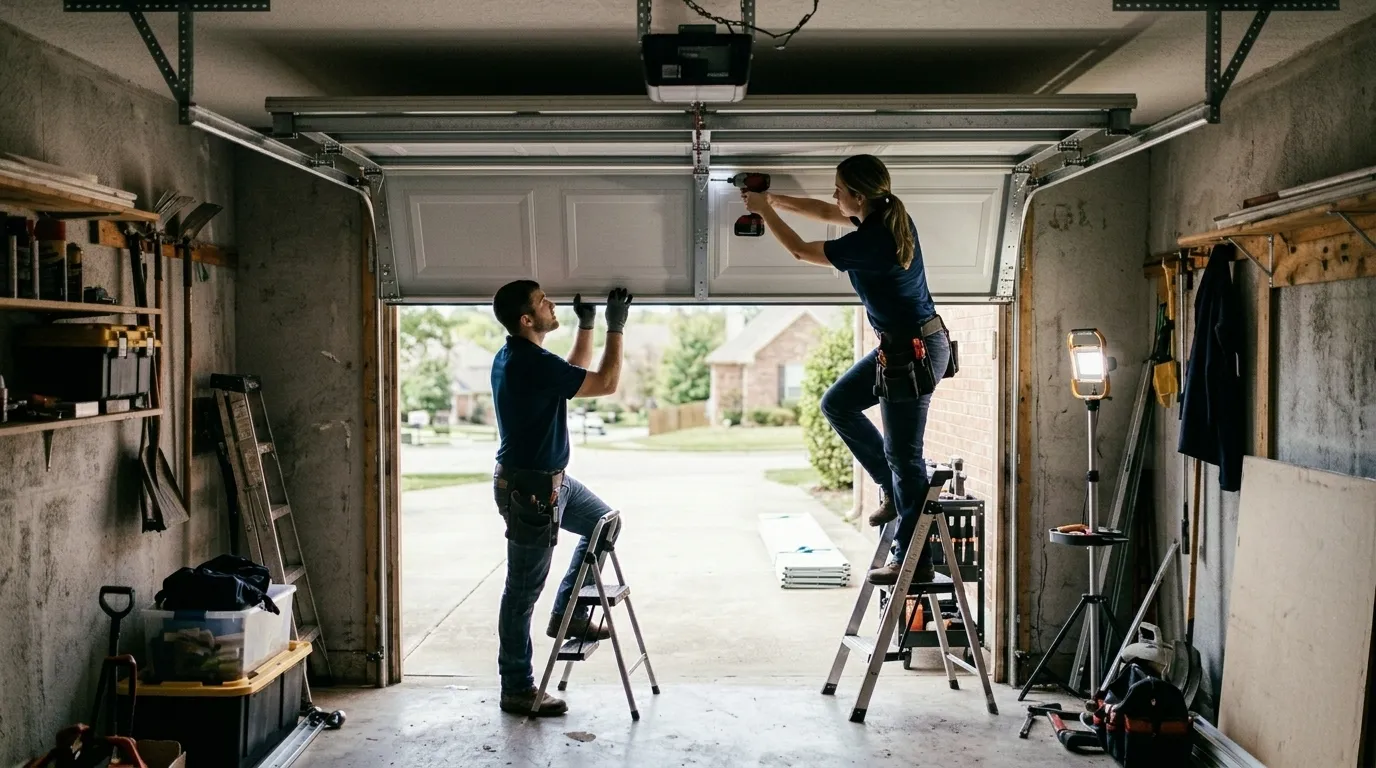
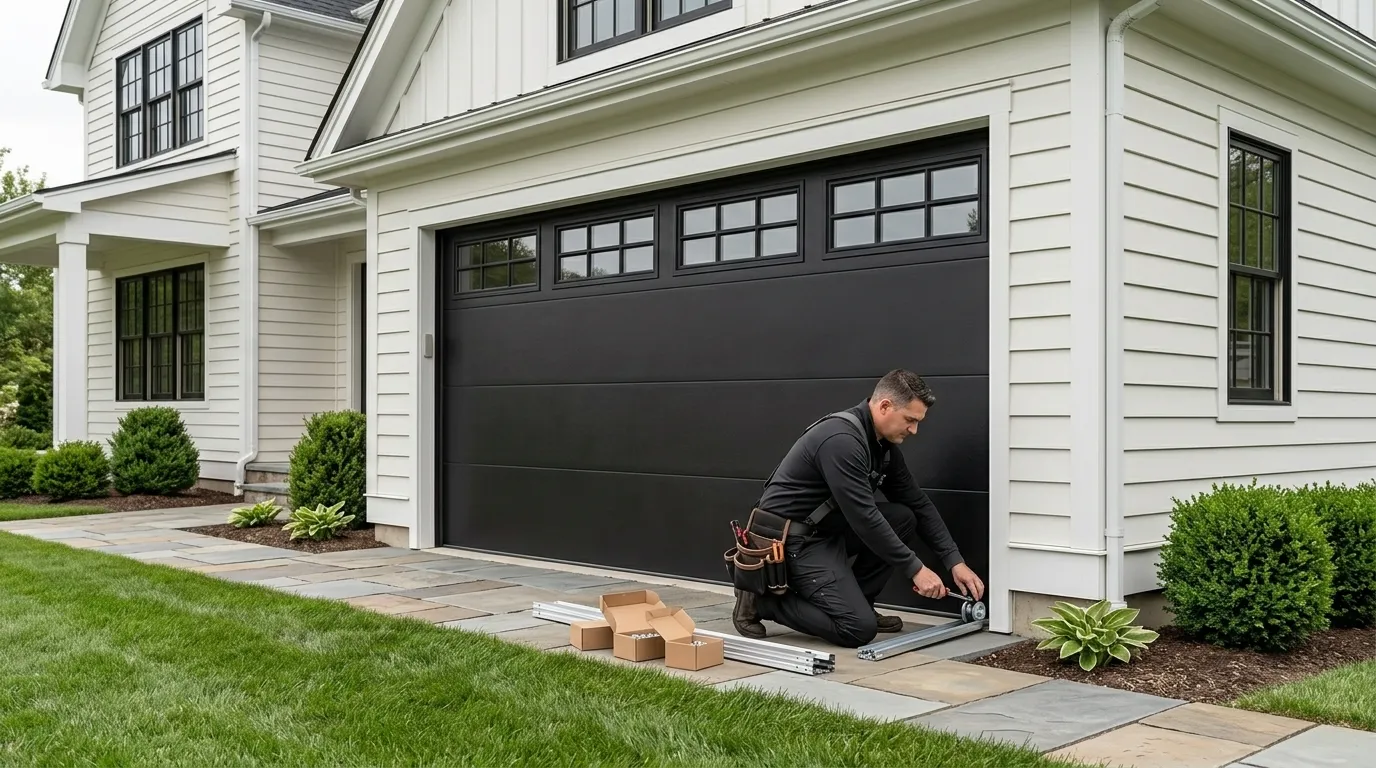
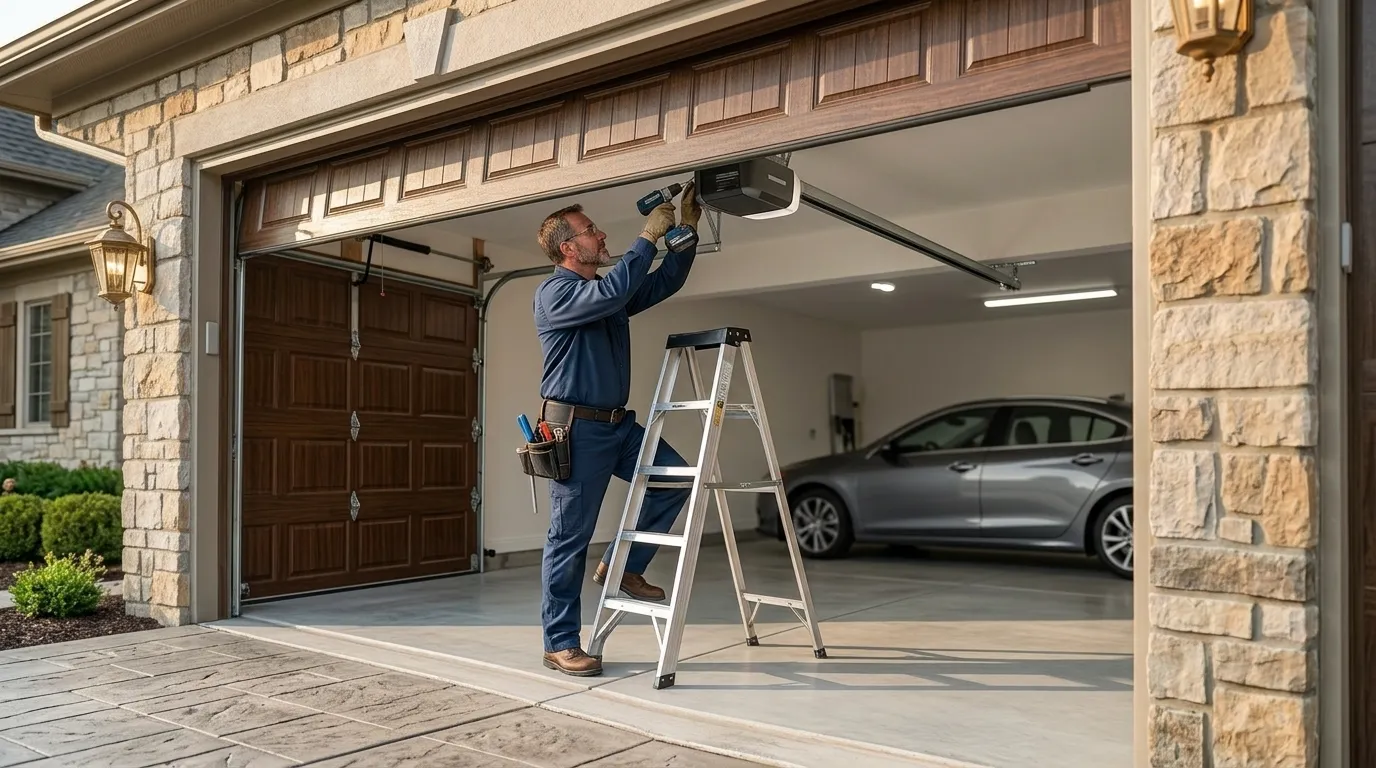
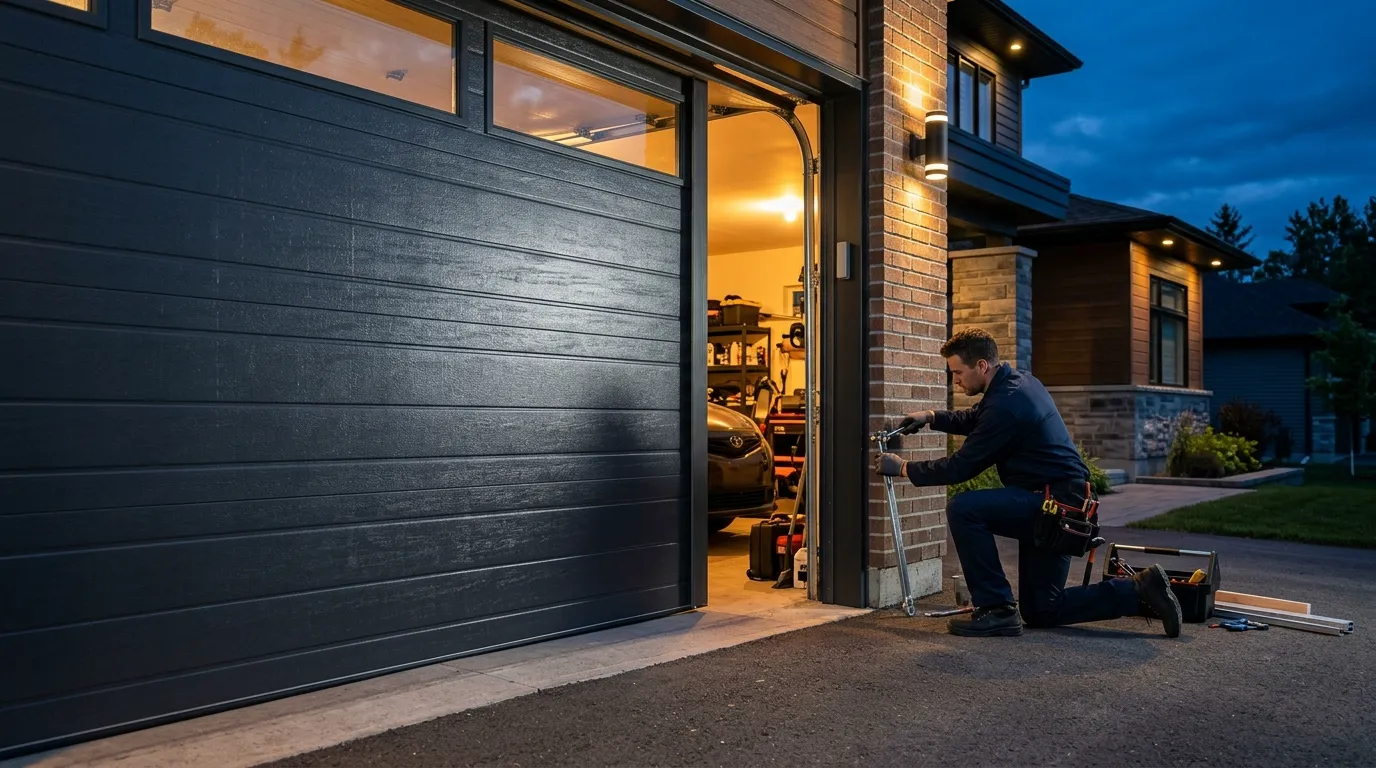
We come out from Livonia, about 12 miles over, with the truck stocked for exactly this kind of job: reinforcement brackets sized for older wood panels, the hardware to add a dedicated circuit tie-in where the garage doesn't already have one, and openers rated for doors heavier than what you'd find in newer construction.
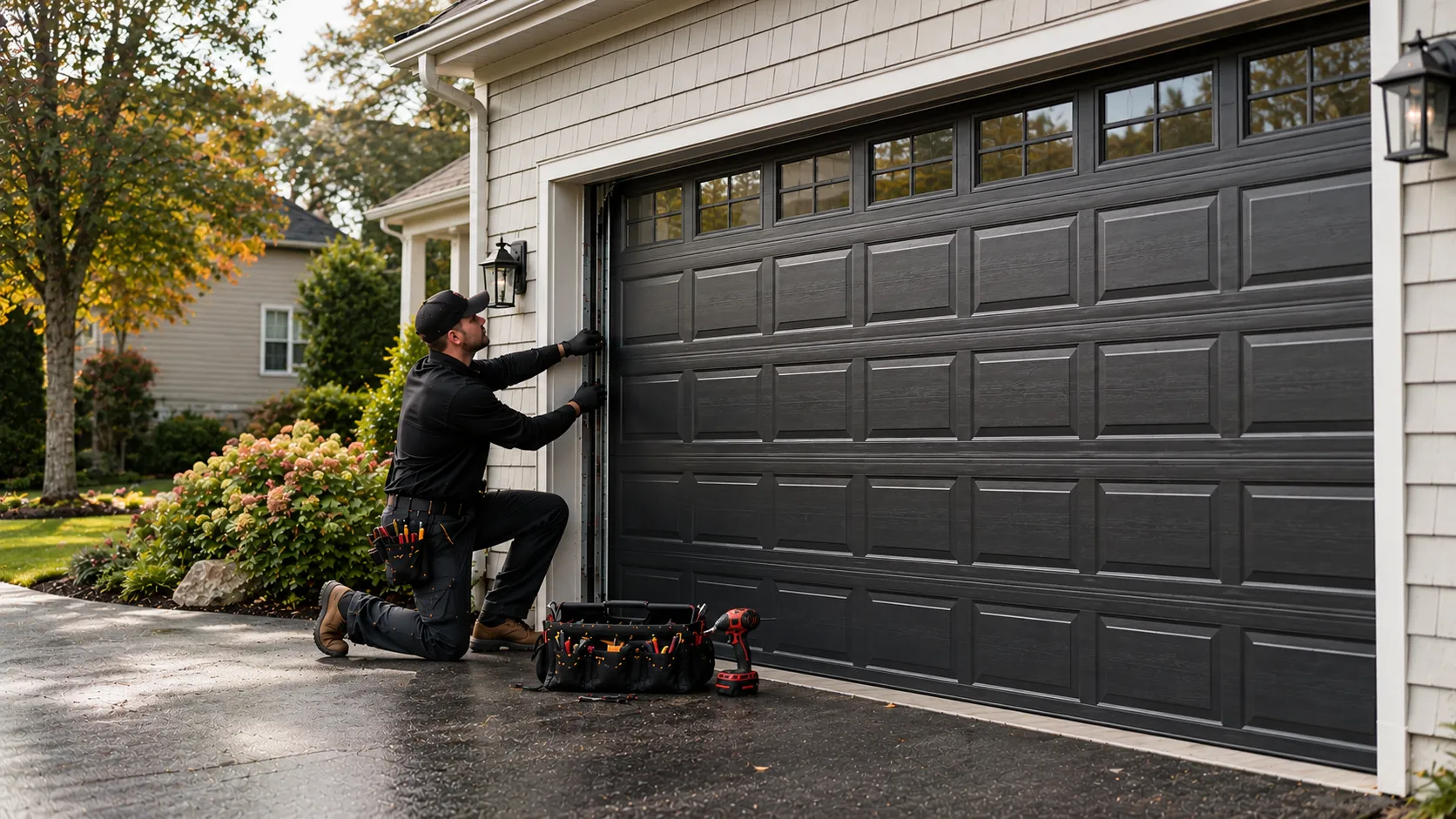
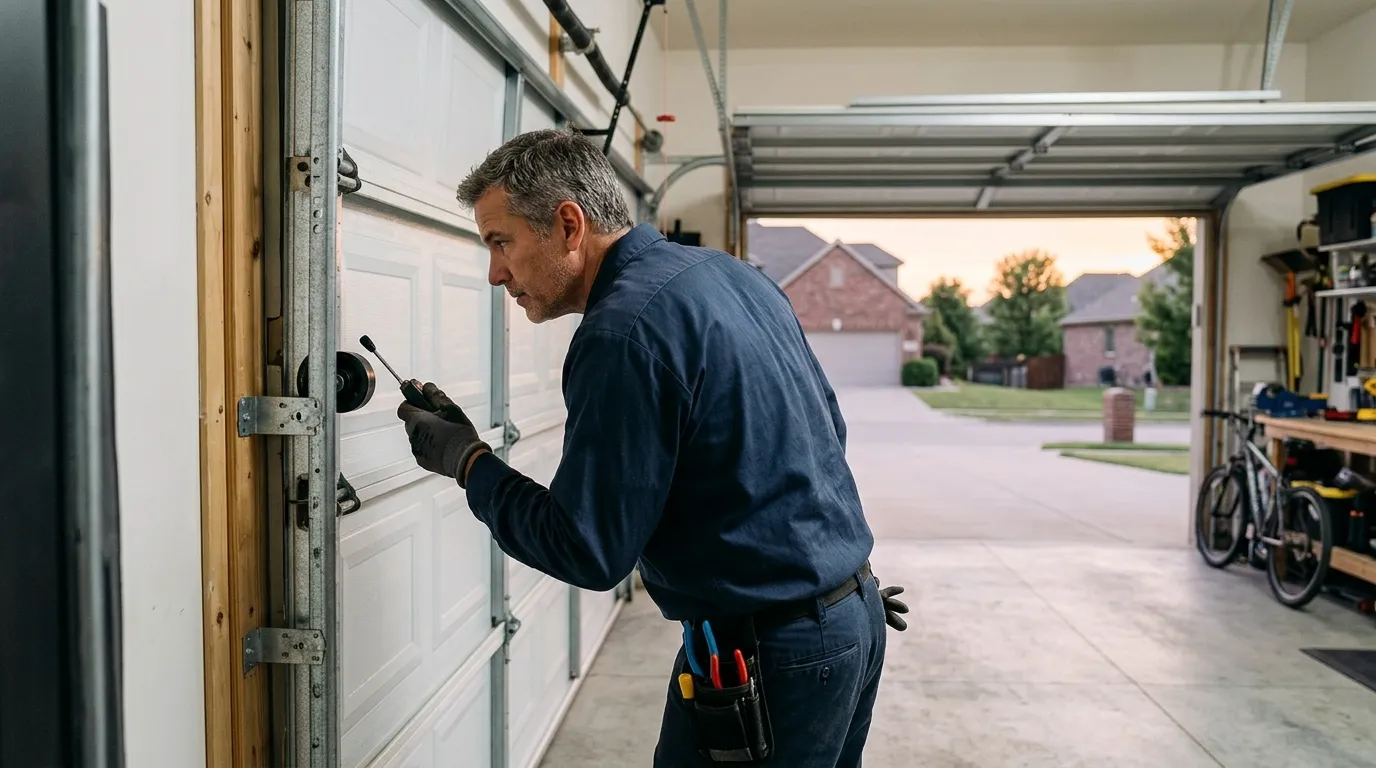
On a 1949 door, step one is always a look at the panel and the track before we talk opener horsepower. If the wood has softened at the top rail - which happens on doors this old - we reinforce it before mounting anything, because an opener bolted to a weak panel is a comeback call waiting to happen. Once that's solid, we match the opener to the door's actual weight rather than defaulting to whatever's cheapest, since an underpowered unit on a heavy wood door burns out its own gears inside a couple of years.
Berkley's household income runs well above the wider service area's median, and we see that show up in what people ask for here - more requests for battery-backup and quieter belt-drive units than we get elsewhere, so we carry both on the truck rather than ordering after the fact.
What Causes It Around Here
Two things push Berkley opener calls that you wouldn't see the same way on a newer street. First, the age of the housing stock: doors built when this neighborhood went up in the late 1940s are wood, heavier than the steel doors on newer construction, and openers sized for steel routinely struggle or fail early when someone puts one on an original wood panel without adjusting for the extra weight.
Second, the region's winters. This area sits in a severe cold climate band, and cold makes wood doors swell and bind in their tracks in ways steel doors don't. An opener straining against a door that's dragging in a tightened track wears out its drive gear faster than the same unit on a door that moves freely - and on a neighborhood full of original 1949 doors, that's a more common failure than a bad opener out of the box.
With only 6,852 households in Berkley, we're not seeing this at the volume of a bigger city, but the pattern repeats enough on the older streets that it's worth checking the door itself before assuming the opener is the problem.