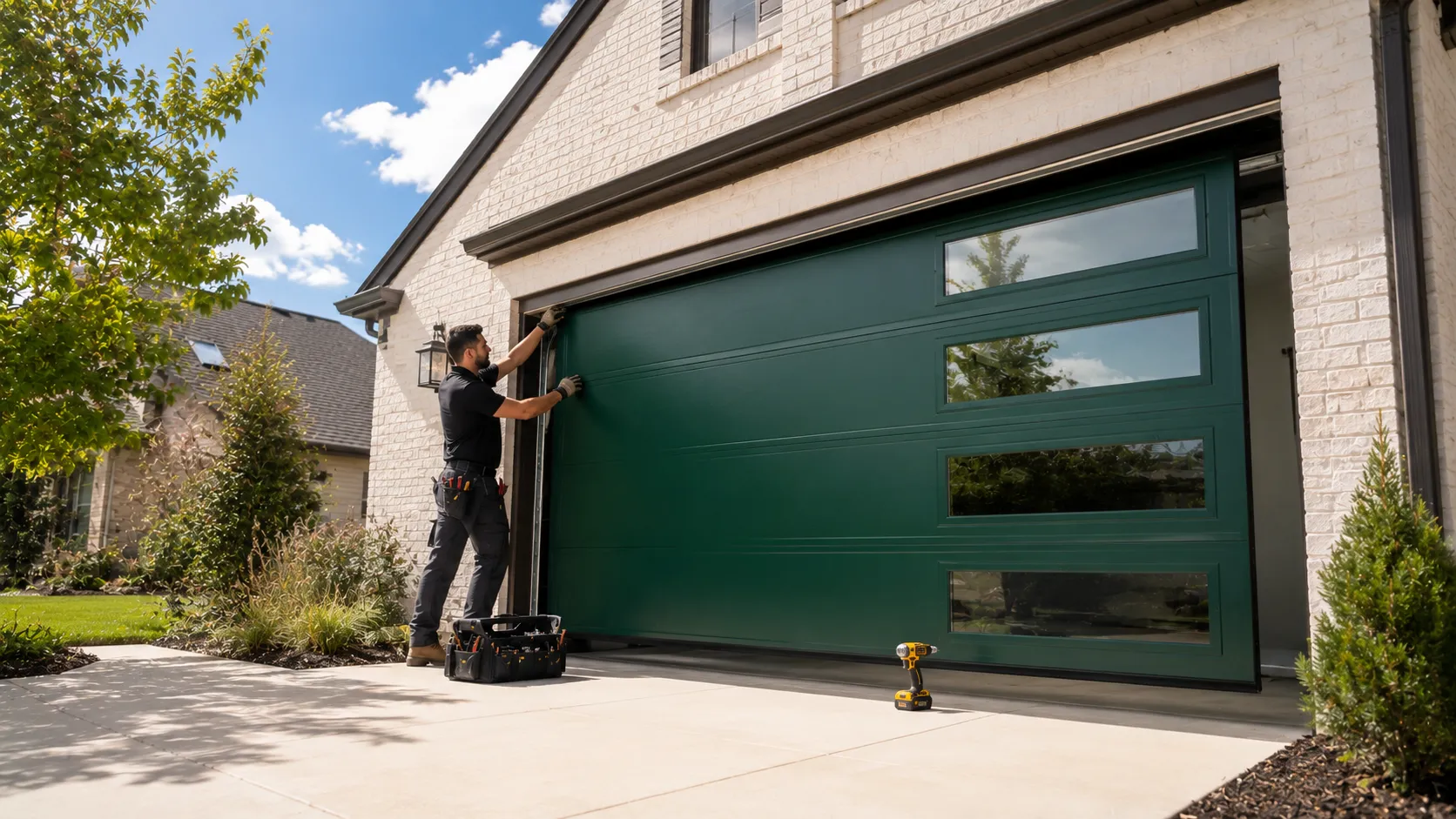
Doing It Yourself
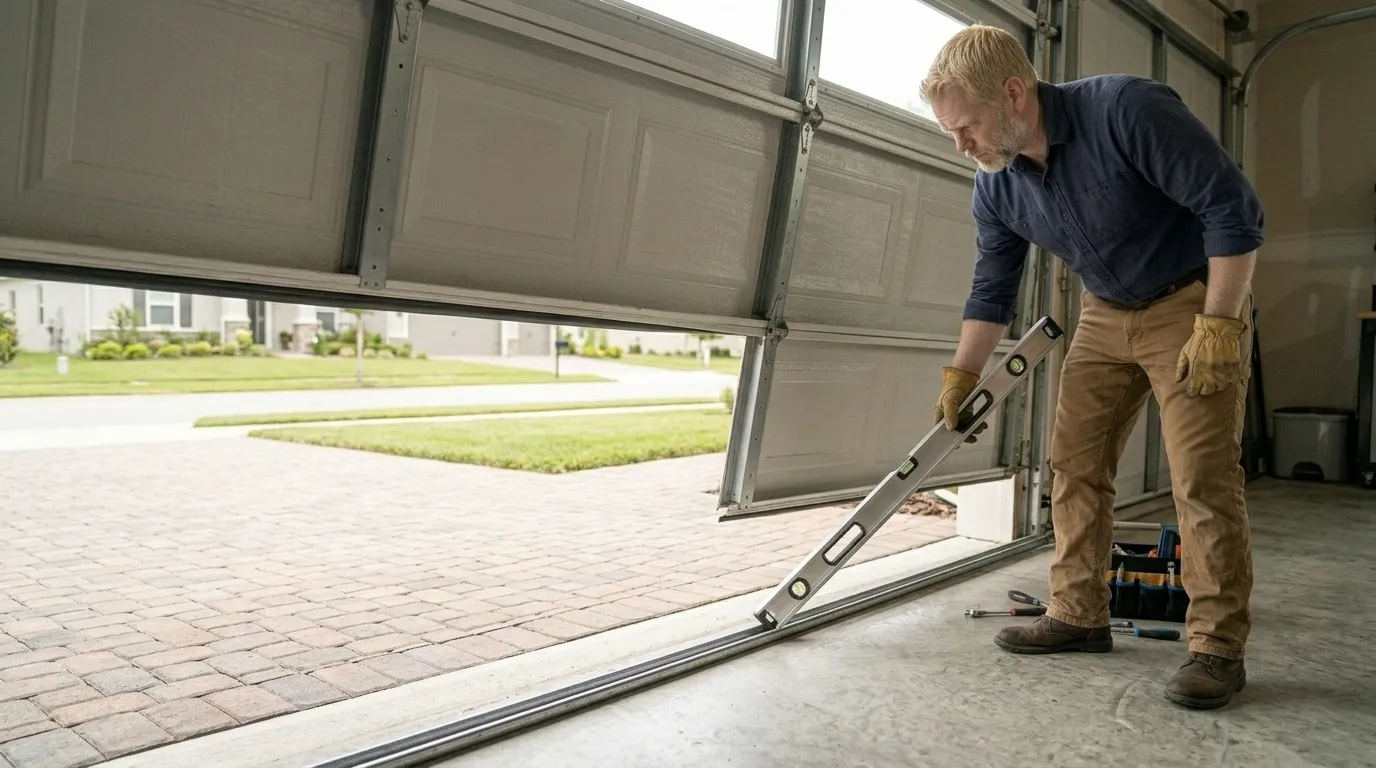
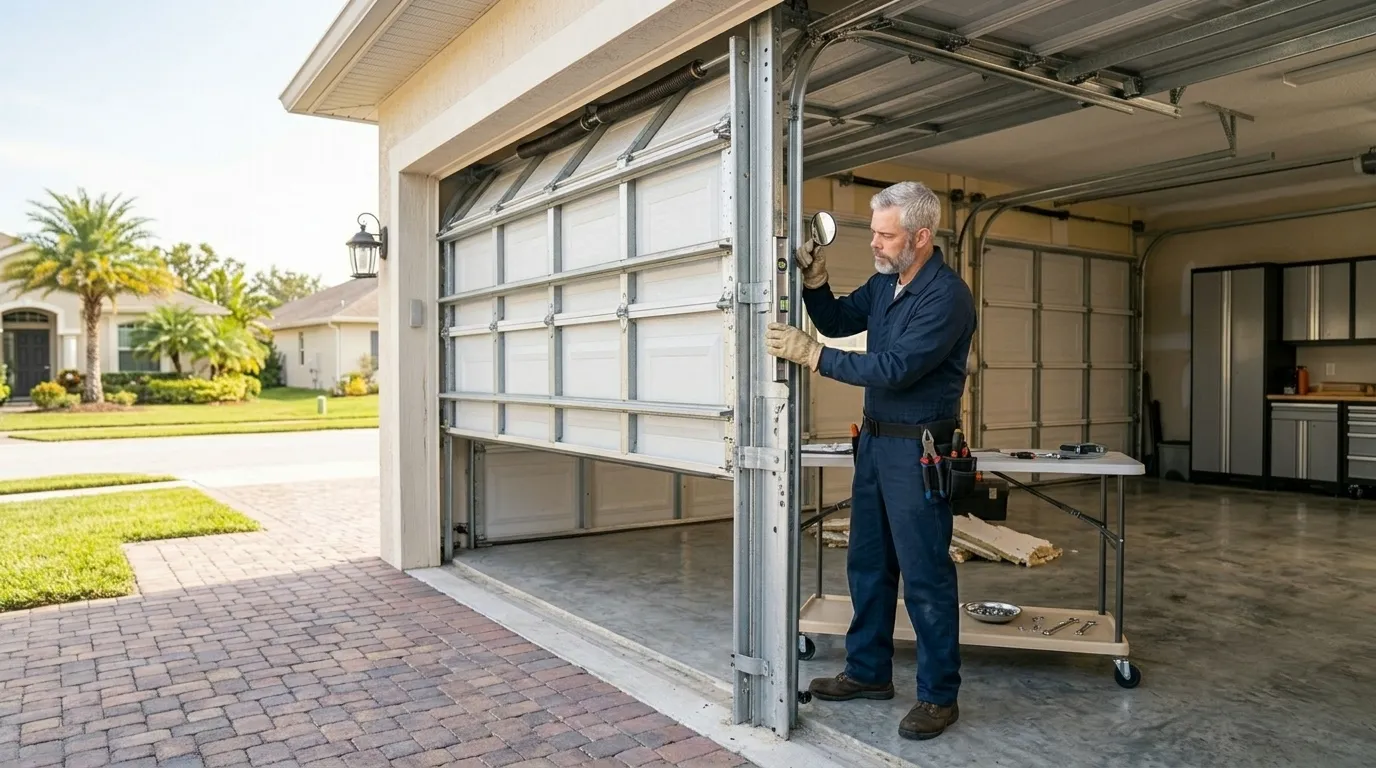
If your door has jumped the track, the safest first move is to stop using the opener. In a Berkley house built around 1949, the track brackets are often the original stamped steel, and they were never meant to flex the way a modern rolled-steel track does. Pulling on a bent track to force it back into the rollers can snap a bracket that's been holding on for seventy-plus years, and now you've turned a track job into a track-and-jamb job.
You can safely check a few things. Look at the bottom corners of the door - if a roller has come out of the track there, and the door is otherwise square, sometimes a firm push (with the opener disconnected and the door manually supported) will seat it again. If the track itself is visibly bent or pulled away from the wall, stop. That's not a DIY fix, especially with older lag-bolted brackets instead of the through-bolted hardware used today.
One honest limitation: we can't tell you over the phone whether your track is salvageable or needs replacing. On houses this age, tracks are frequently paired with hardware that's no longer a standard stock size, so what looks like a quick straighten-and-reattach sometimes turns into a full track swap once we're looking at the actual mounting points.
How We Fix It
We come out from Livonia, about 12 miles, and start by finding why the door came off track before we touch anything - a bent track, a broken roller, a snapped cable, or a bracket that's pulled loose from the jamb. On a house from Berkley's 1949 median build year, the jamb wood itself can be part of the problem; decades of settling shift the opening just enough that original brackets no longer sit flush.
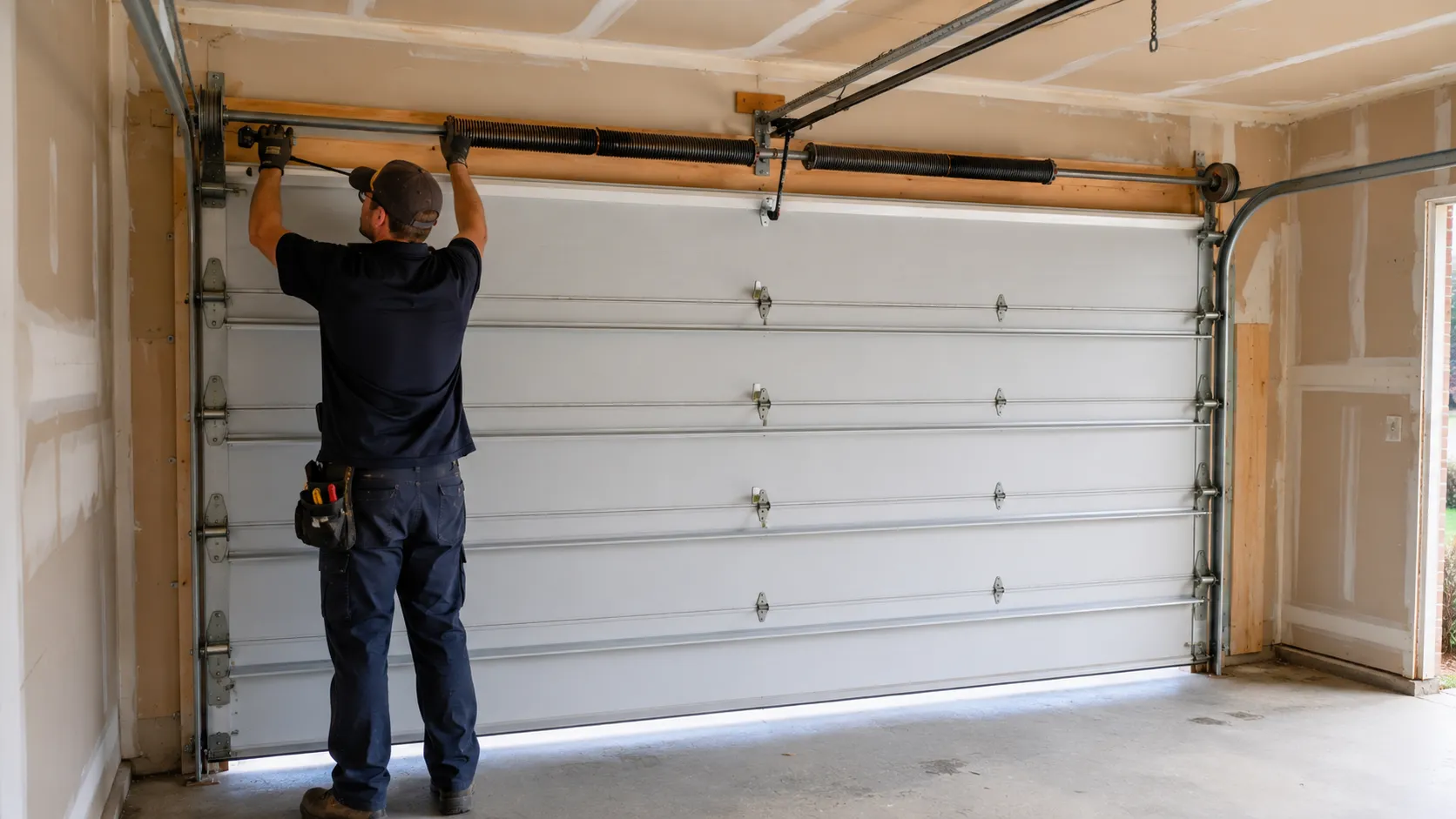
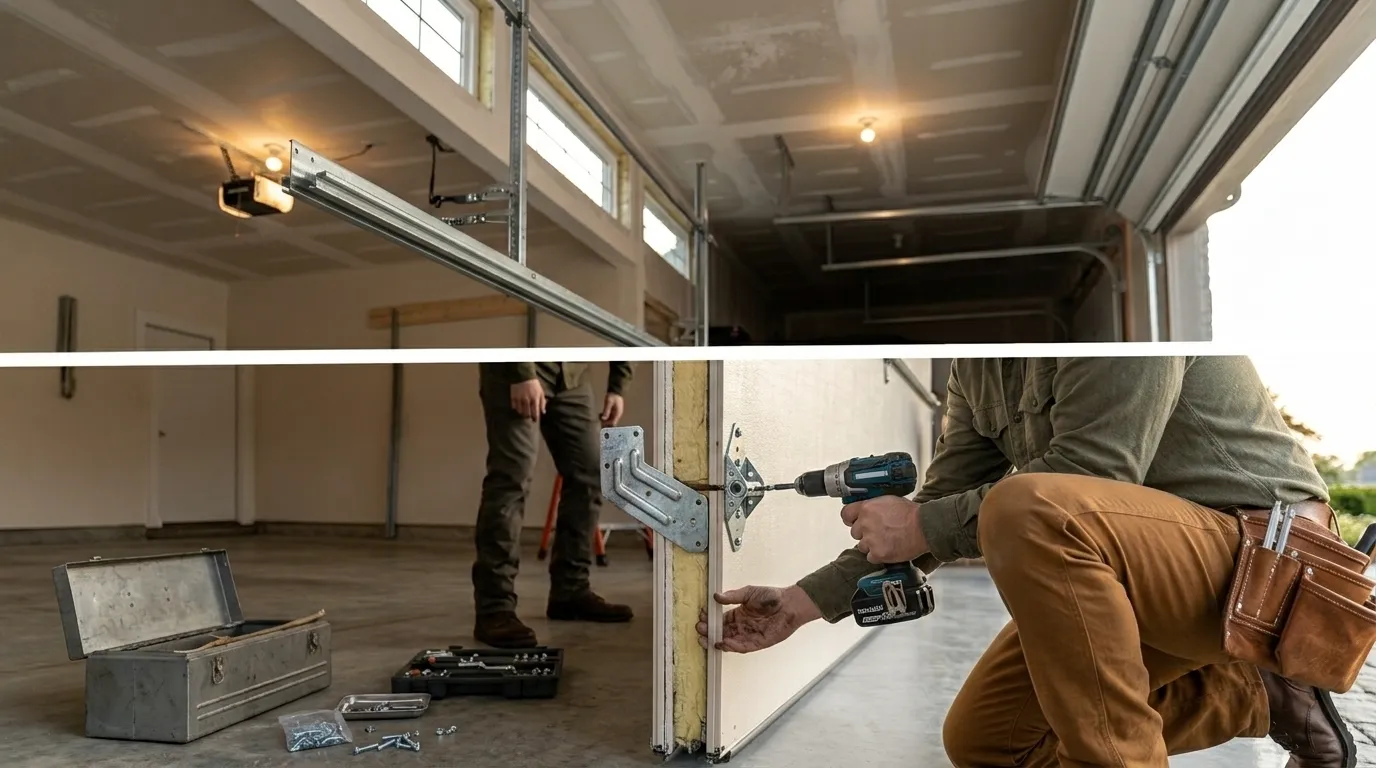
If the track is bent, we pull it and reset or replace it, matching the mounting pattern rather than assuming a new universal track will bolt straight onto old lag holes. If a roller has failed, we replace the full set on that side rather than the one roller, since the rest are usually close behind it, especially on original 1940s-era doors. Cables get replaced, not spliced. If the bracket pulled from the jamb, we re-anchor into solid wood, which sometimes means a slightly different bolt pattern than what's there now.
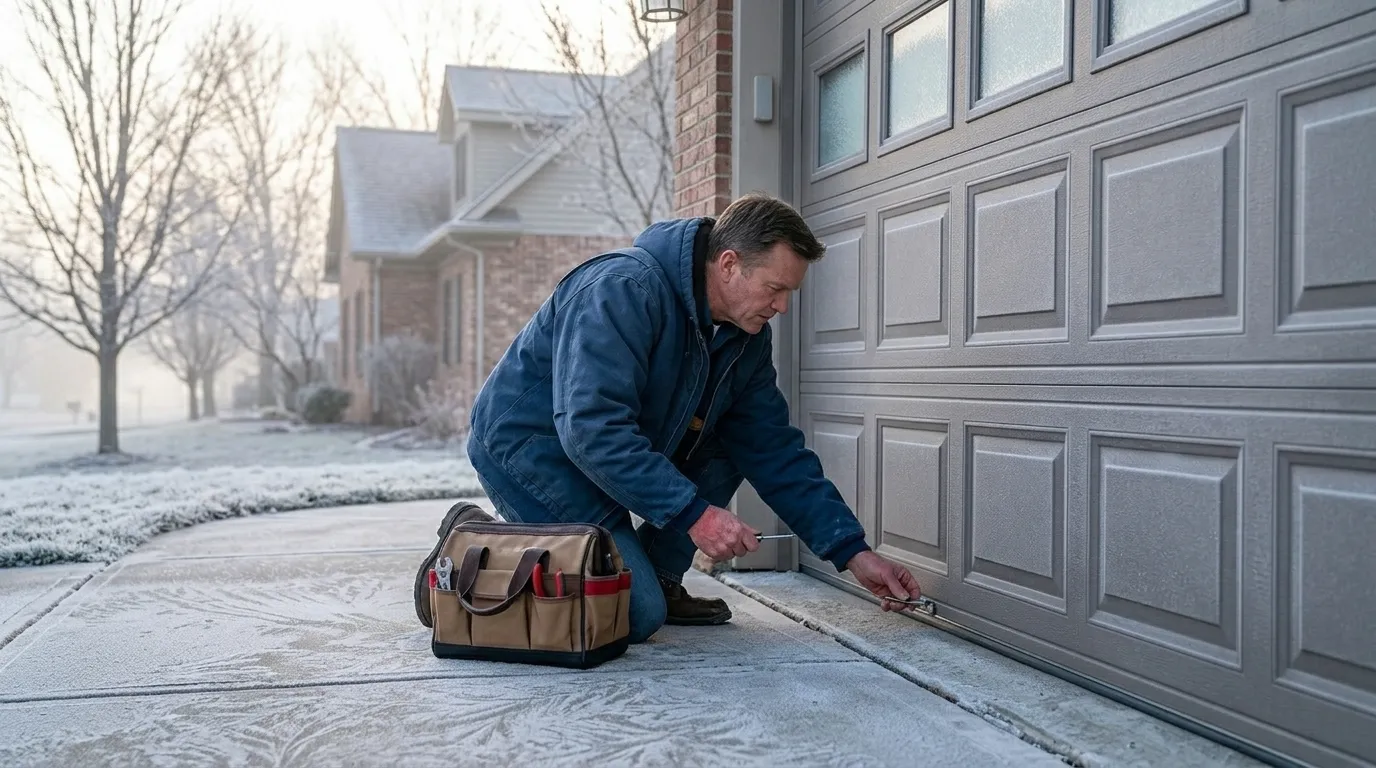
Winters here get genuinely cold, and a door that's off-track and left open even a few inches is a fast way to freeze a slab or damage insulation in an attached garage. We treat off-track calls as a priority for that reason, not because we're based here - we're not, we're driving in from Livonia.
What Causes It Around Here
With a median build year around 1949, a large share of Berkley's garage doors are running hardware that predates modern galvanized track and nylon rollers - original steel rollers on steel track, which wear against each other rather than rolling smoothly, and eventually bind or jump. That's the single biggest reason we see off-track calls concentrated in older sections of town rather than newer construction nearby.
Cold plays a real part too. This region sits in a severe cold climate band, and steel track contracts in low temperatures just enough to change roller clearance. A roller that was riding fine in August can catch and pop the door off track in January, especially if the track was never quite square to begin with.
The other pattern we see: doors that have had one or two partial repairs over the decades - a replaced spring here, a new opener there - without anyone checking whether the track and rollers were ever brought up to match. Mixed-era hardware doesn't fail more often, but when it does fail, it tends to fail as an off-track event rather than a clean part break.