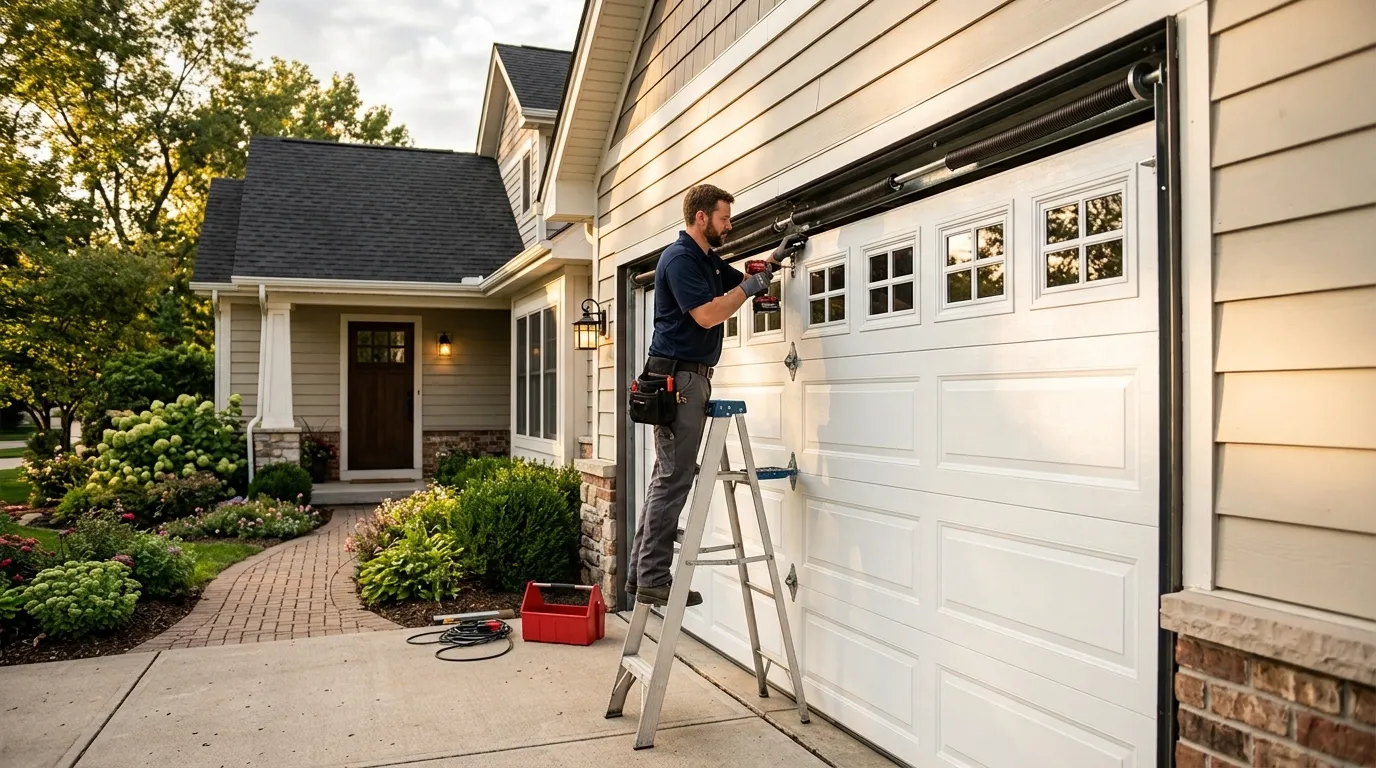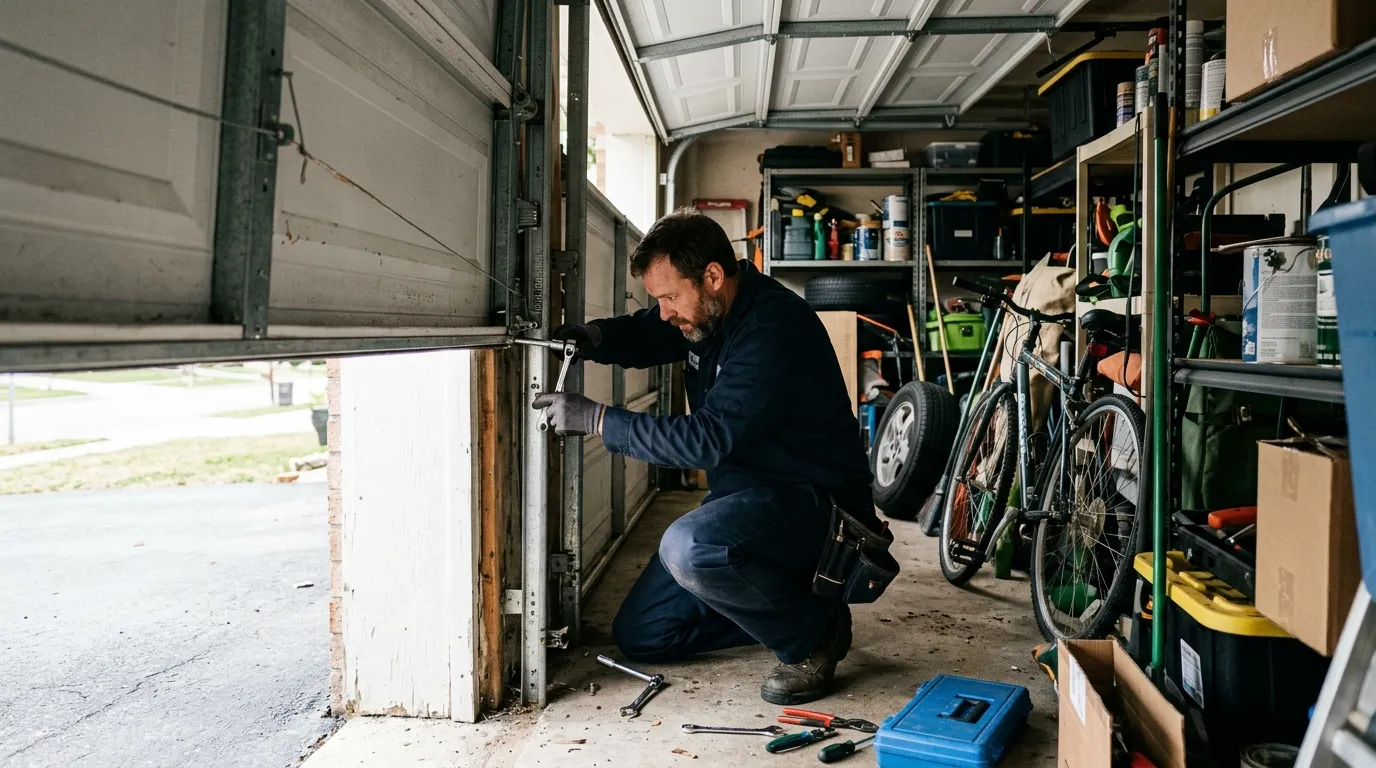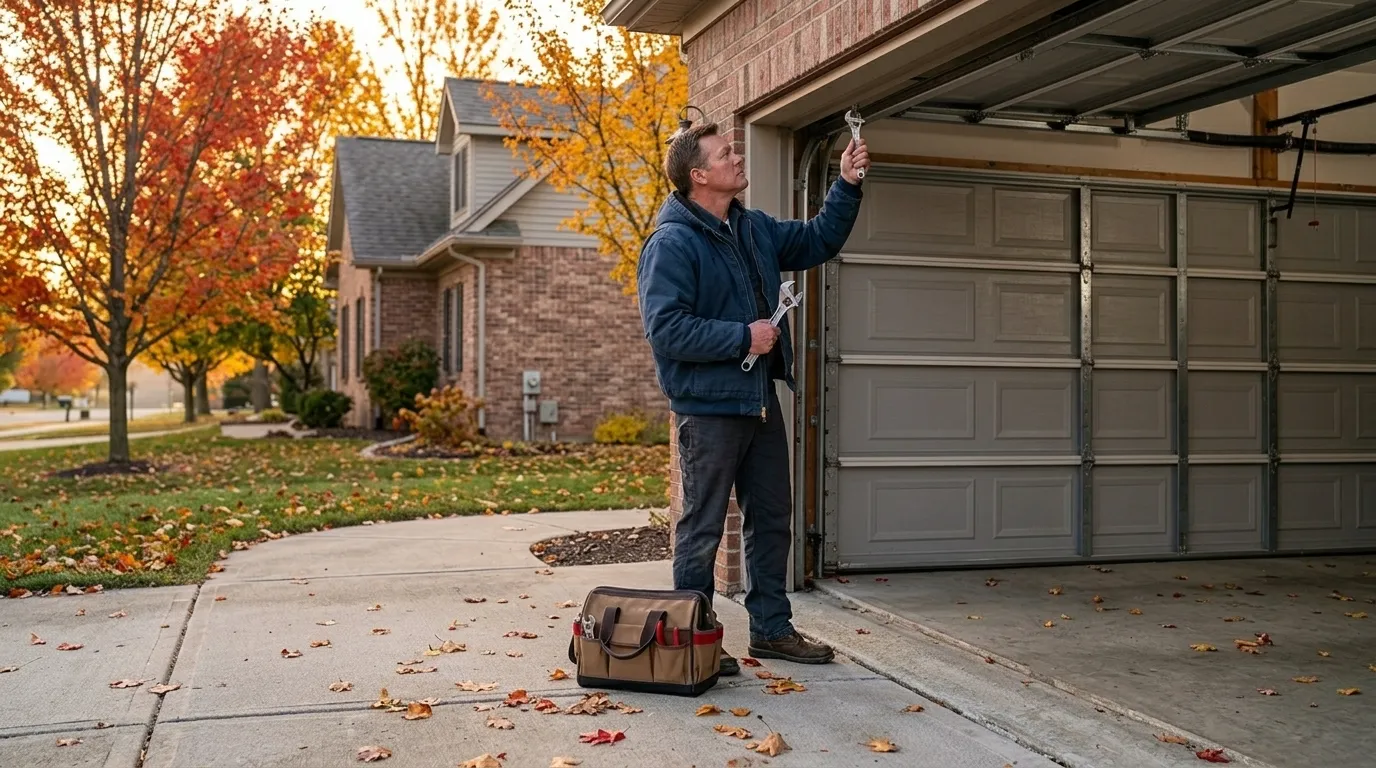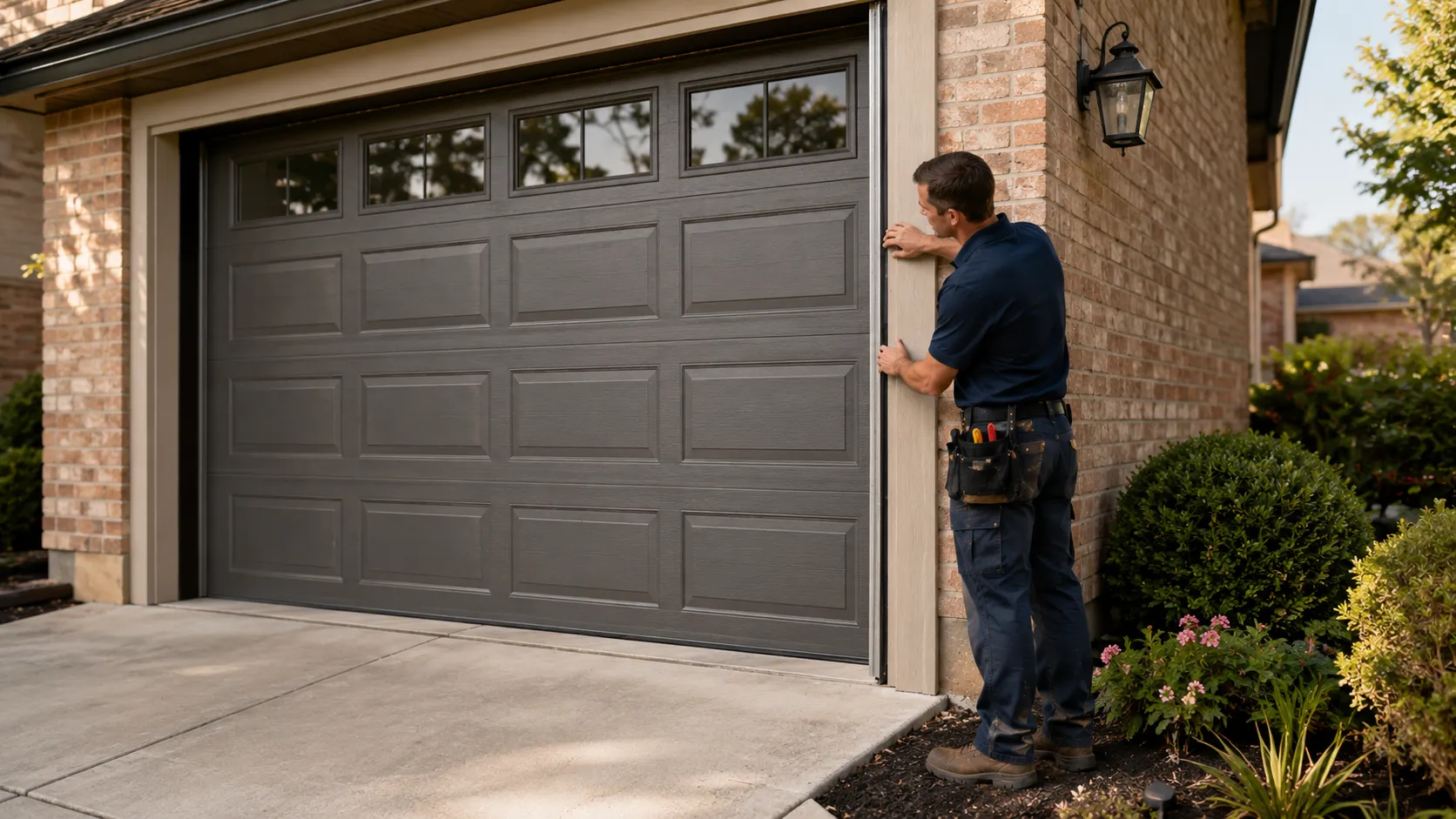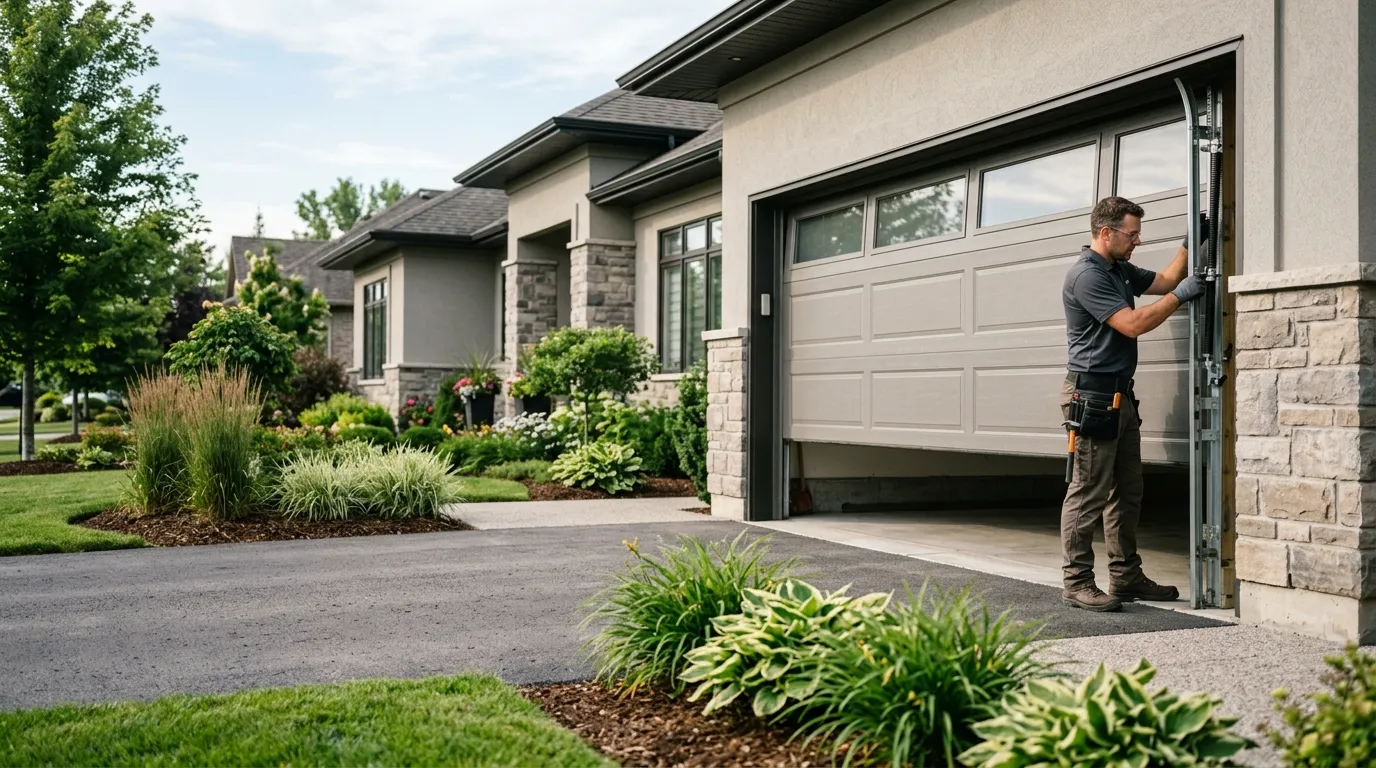
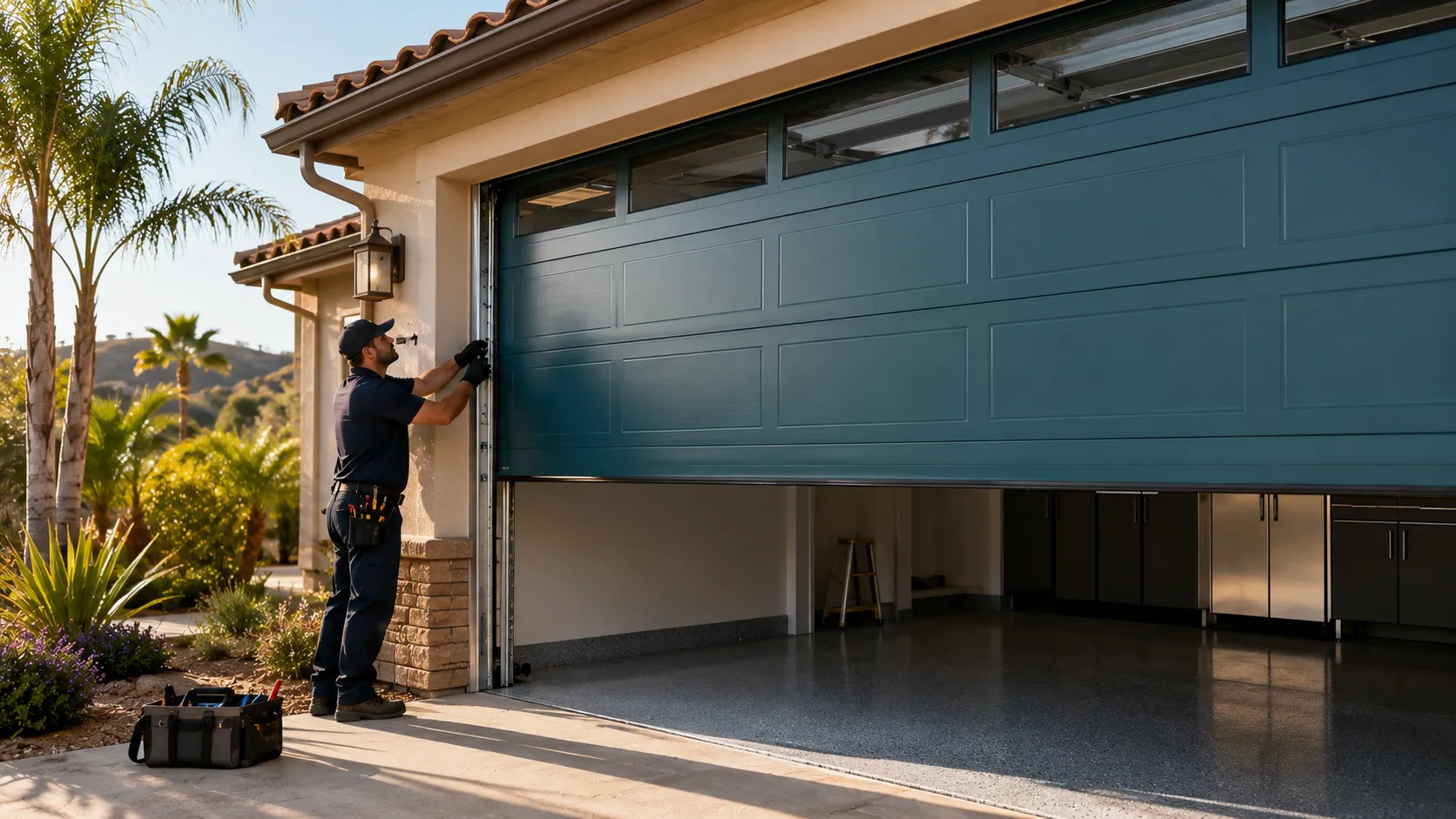
How We Fix It
Birmingham's median household income sits at $153,125, more than double the $70,984 average across the rest of our service area. That number matters more than it sounds like it should, because it changes what "fixing it" means. In a lot of towns we cover, a homeowner wants the cheapest path back to a working door. Here, once we're under the hood of a worn torsion spring or a stripped opener gear, the conversation usually turns to whether it's worth restoring 1960s hardware at all, or replacing the whole assembly with something built to current standards.
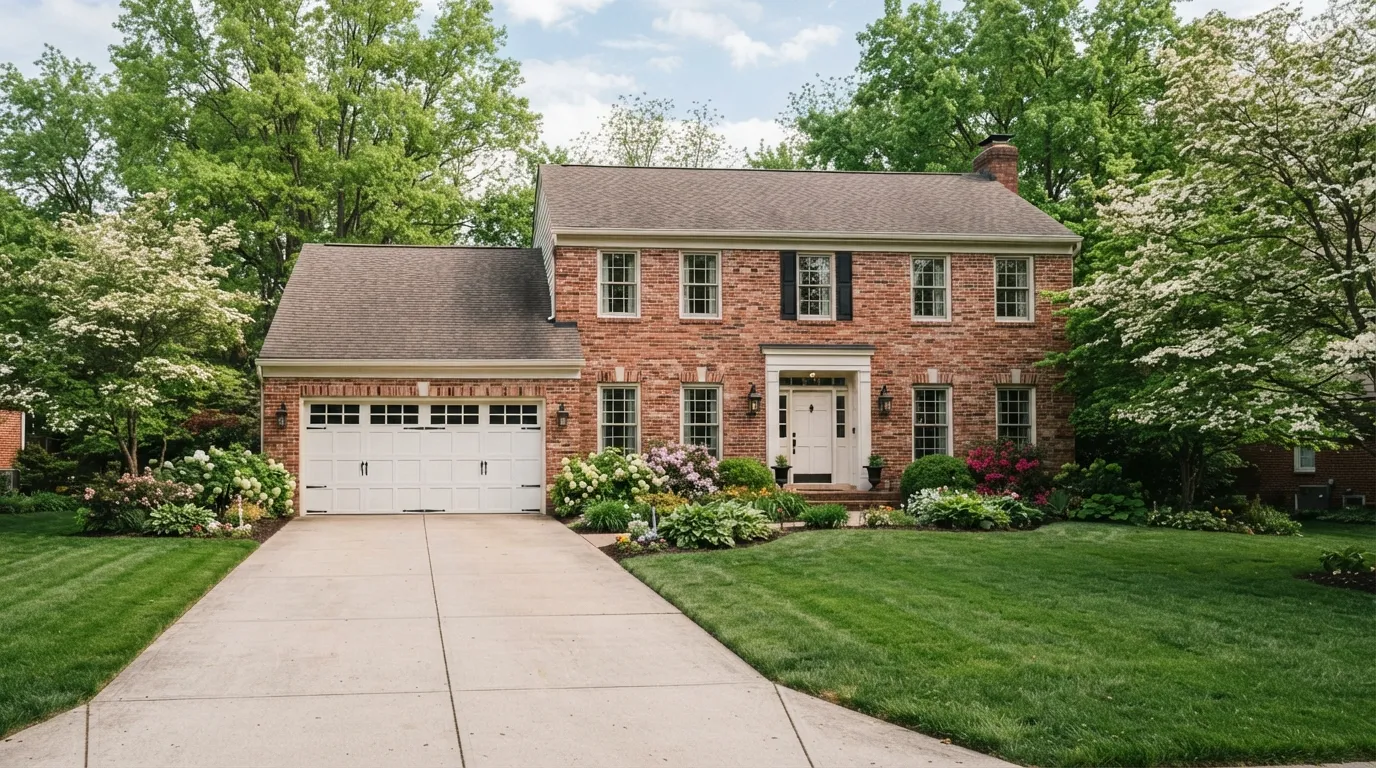
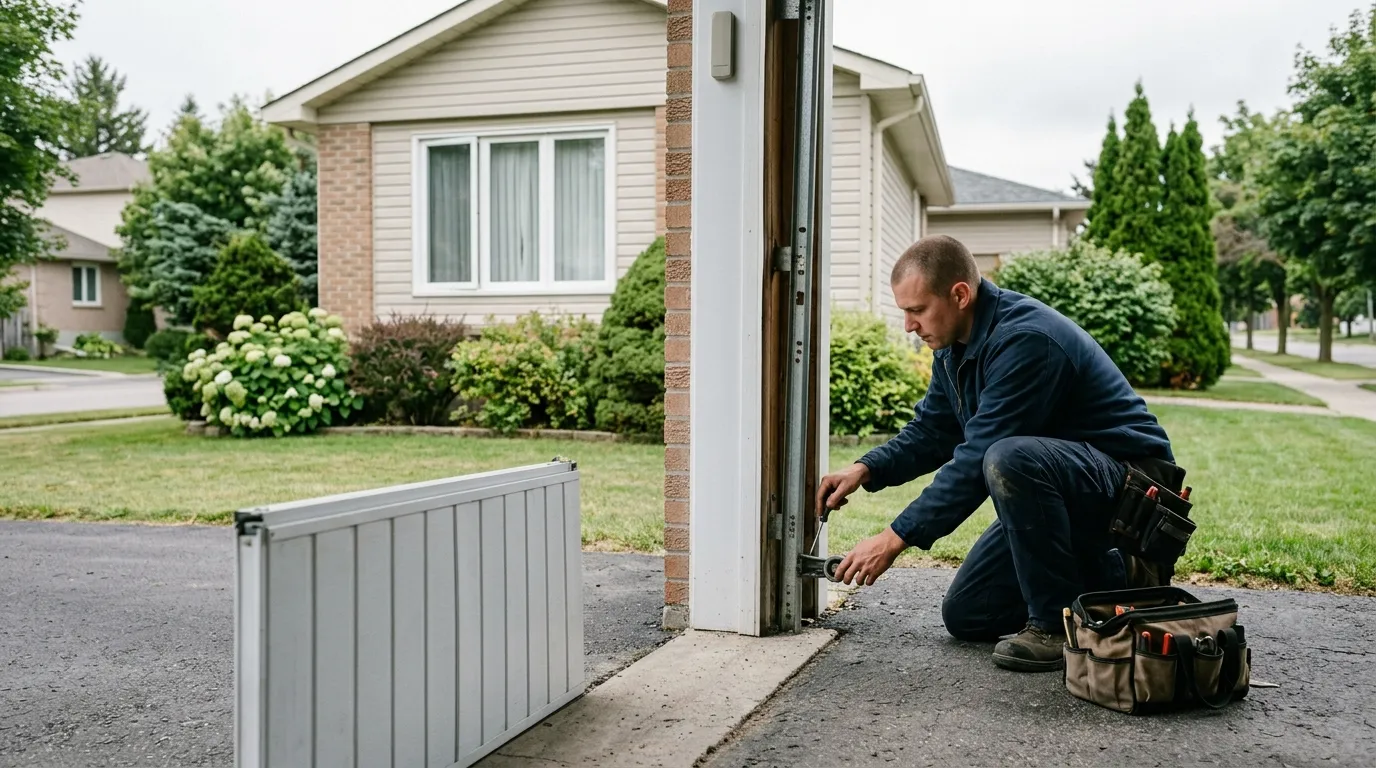
Most houses in Birmingham date to right around 1960, part of the broader 1938-1991 stretch across our service area. That means original steel sectional doors, older torsion setups sized for lighter panels than what's sold today, and openers that have usually already been swapped once or twice. We check spring wind and cable tension against the door weight before touching anything, because a spring rated for a 1960s door won't hold up under a heavier replacement panel.
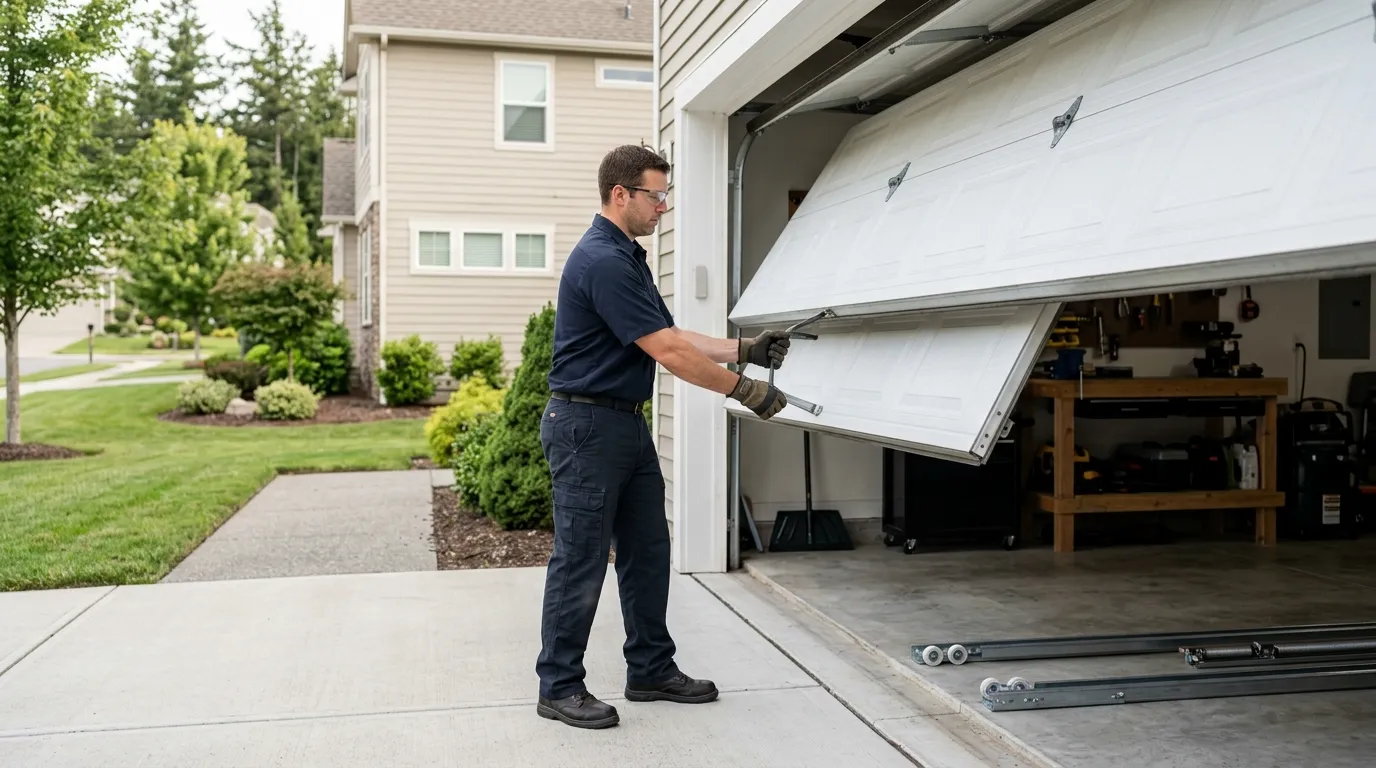
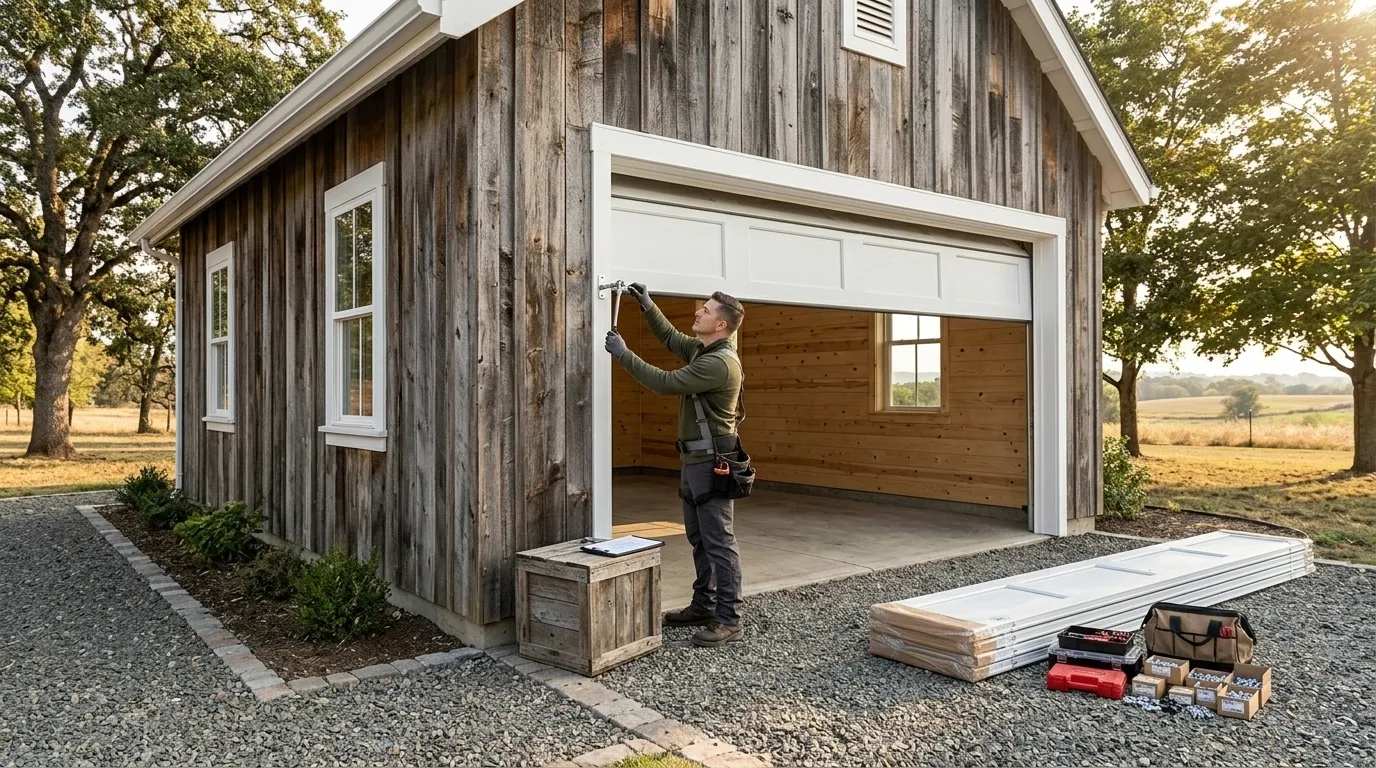
We do standard repair work too: broken springs, off-track doors, worn rollers, opener boards that won't take a signal. The point isn't to upsell every call into a replacement. It's that with the income and the housing age both on the table, replacement pencils out here more often than it does elsewhere on our route.
Booking a Visit
We run this call from Livonia, about 13 miles out. There's no branch or drop-in counter in Birmingham, so every visit starts with a call or a booking through the site, and we scope the job by phone first, then load the truck for what you've actually got, not a guess.
Because we're driving in rather than working out of a local shop, we ask a few more questions up front than a company based in town might: door age, whether it's a single or double, torsion or extension springs, and whether the opener has already been replaced. That lets us bring the right spring size and hardware the first trip instead of a second one.
We don't quote a fixed response window for Birmingham specifically, since travel time from Livonia varies with the day. What we can tell you is that the drive is short enough that most jobs still get handled same day.
Doing It Yourself
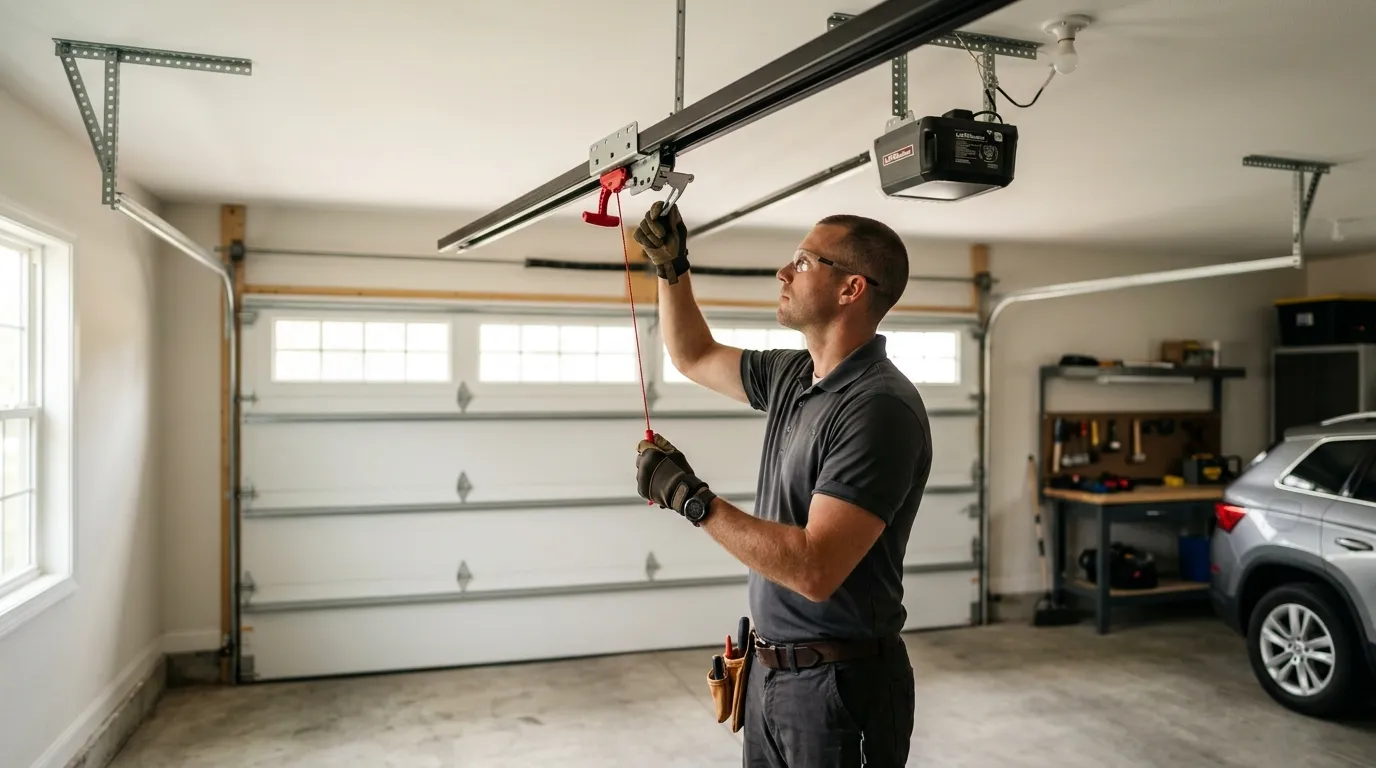
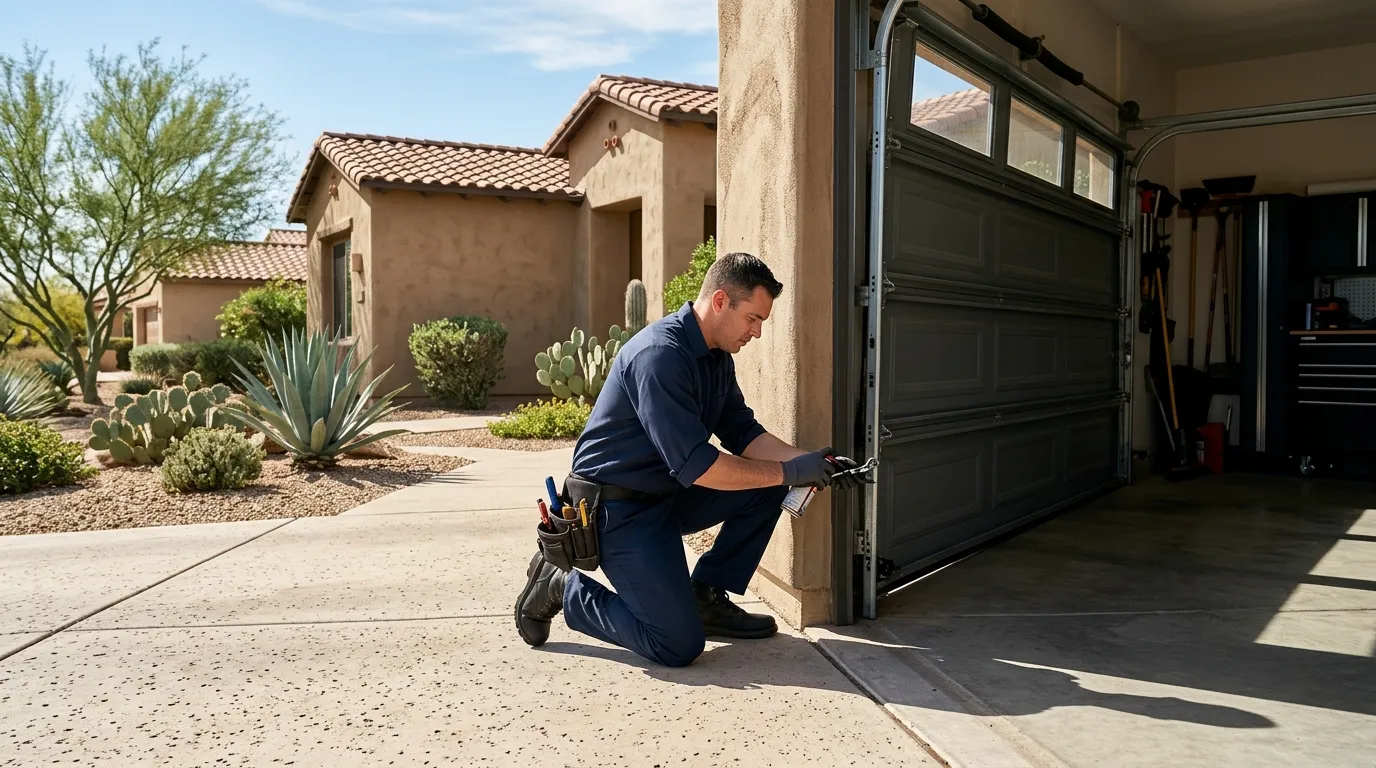
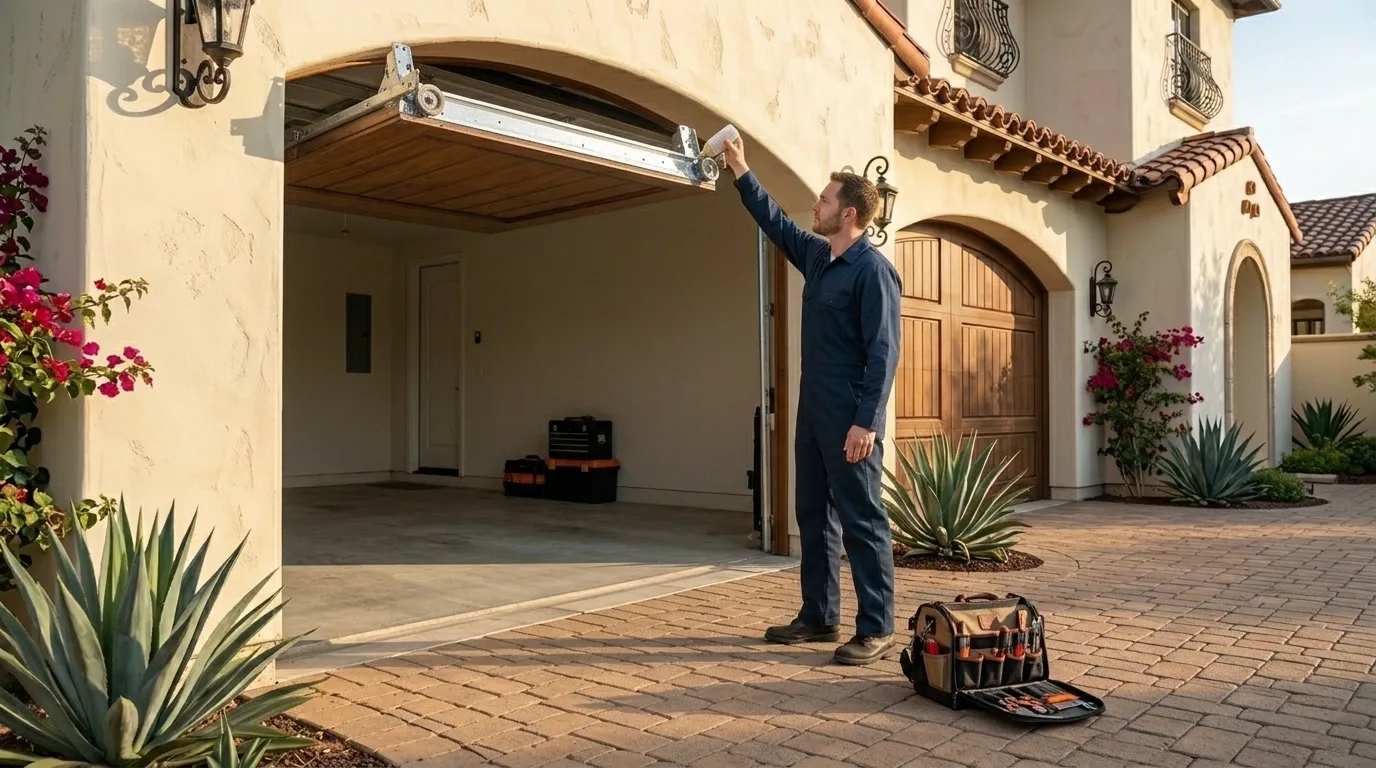
Some of this is fair game for a homeowner: lubricating rollers and hinges, tightening loose bolts on the track, checking that the photo-eye sensors are aligned and clean. None of that needs a truck.
Torsion springs are not a DIY job, full stop, regardless of how handy you are. A wound torsion spring holds enough stored energy to break bones or worse, and on a house this old, the spring may be under more tension than a newer, better-labeled unit. If your door won't open, is noticeably heavier on one side, or drops suddenly when you pull the release cord, that's a spring or cable problem, and it's a call, not a project.
If you're weighing whether to fix or replace and the door is original to a 1960-built house, get a second look before you sink money into rebuilding a system that's near the end of its service life anyway. Sometimes the repair is the right $200 call. Sometimes it's throwing good money at a door that needs replacing next year regardless.