Booking a Visit
Garden City doesn't have its own garage door outfit anymore, so calls here get dispatched from our shop in Livonia, five miles up the road. That's a short enough run that we don't tack on a travel charge for Garden City addresses - it's one of the closer towns on our list, alongside at similar distances.
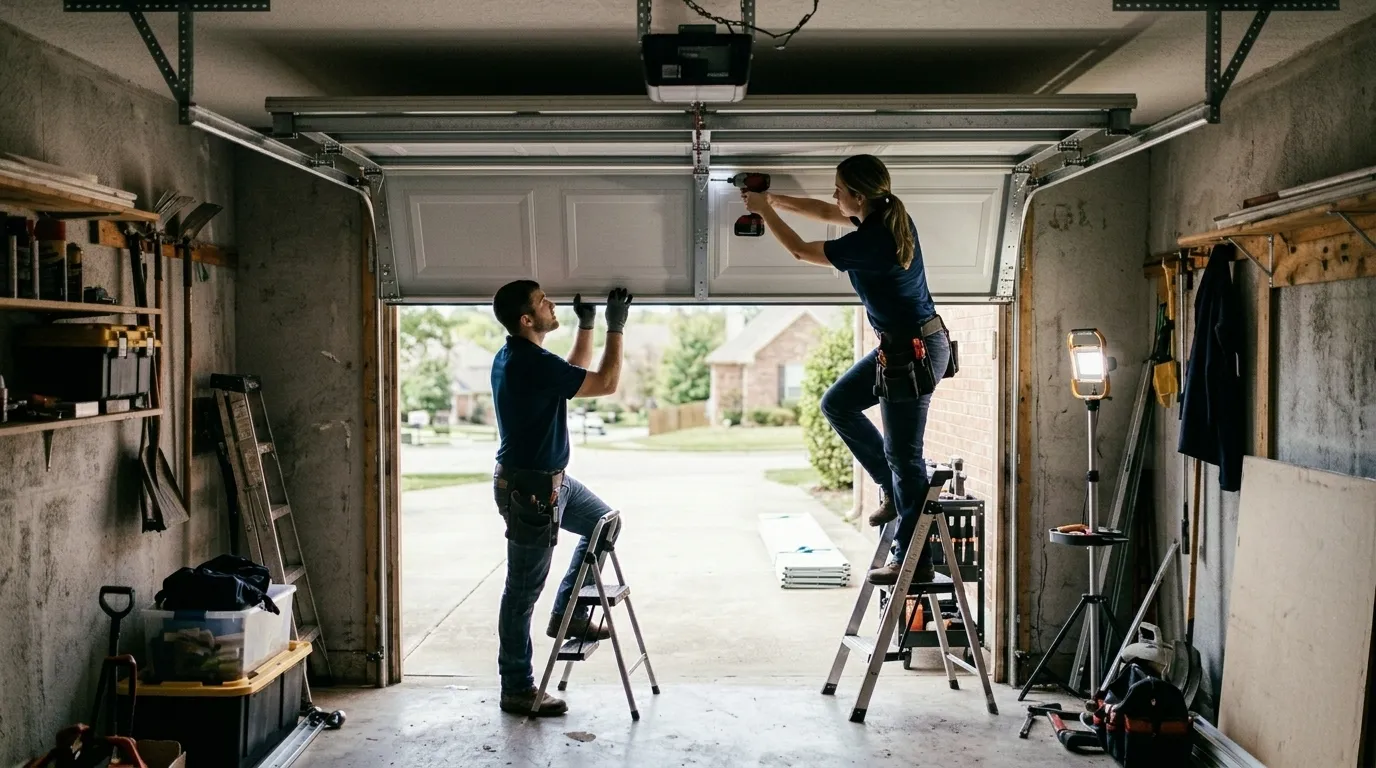
There's no local branch or drop-off counter in Garden City itself. When you call, you're talking to the same crew that handles Livonia, and the truck that shows up is the same one stocked for whatever door era it finds. We ask a few questions up front - one panel or the whole door off the track, whether the opener still runs the motor, whether you can see a bent roller - because that tells us what to load before we leave.
With only 11,015 households in Garden City, this isn't a market that keeps a dedicated crew busy on its own, which is exactly why the Livonia-based setup works: one team, one truck inventory, a short drive over.
The Complications
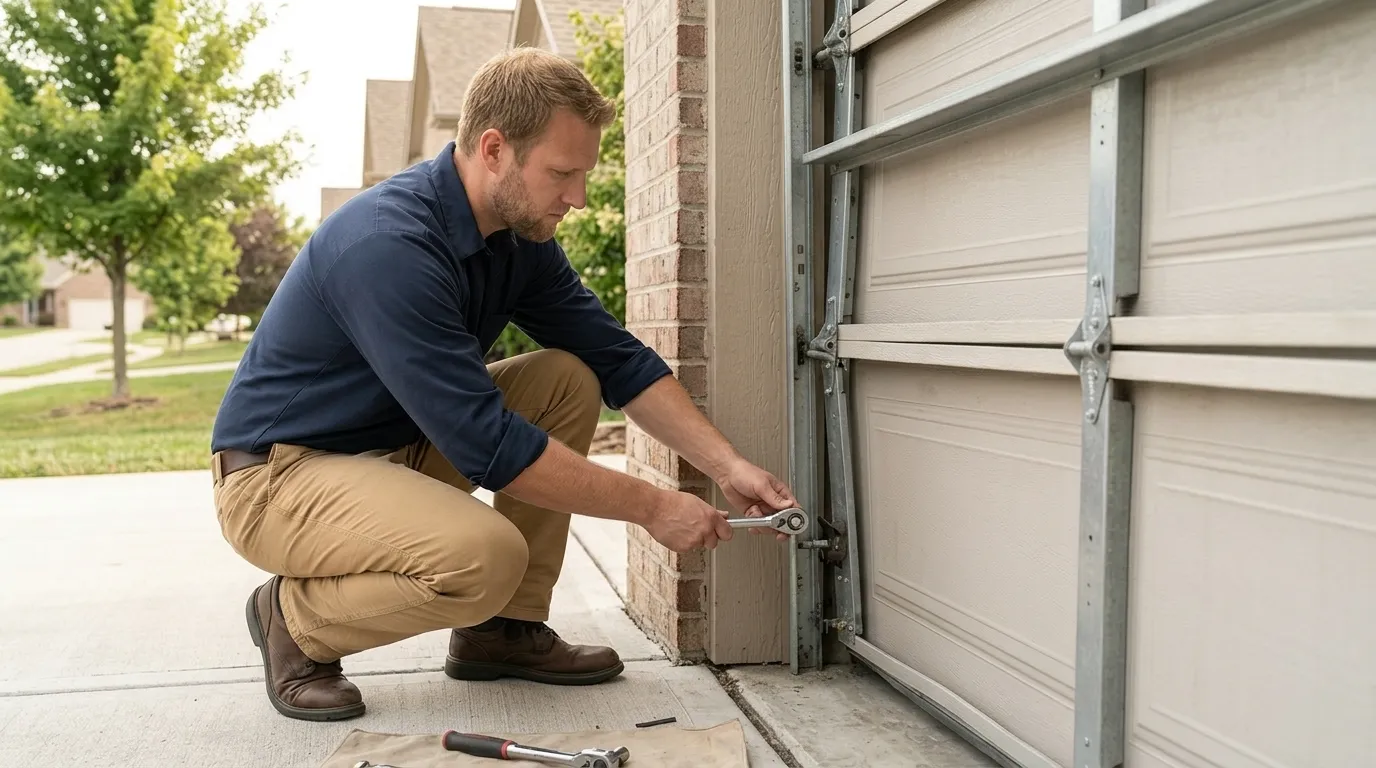
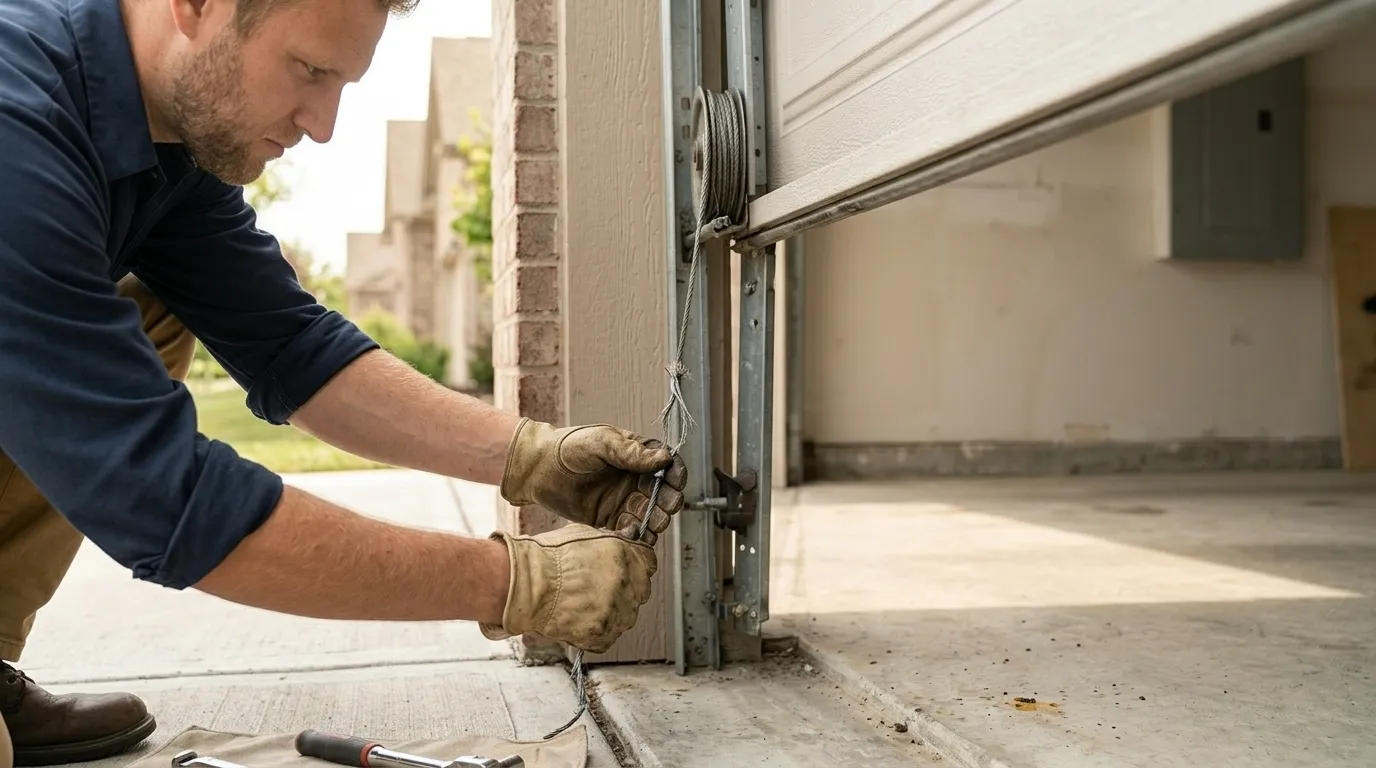
Garden City's median home went up in 1957, a few years ahead of the 1960 median for the wider service area. That difference matters on an off-track call. Doors from this era typically ran on lightweight galvanized track sections bolted to the jamb rather than the heavier extruded rail used from the 1970s on. That older track flexes at the seams over sixty-plus years, and a flexing seam is where a roller finally jumps the rail.
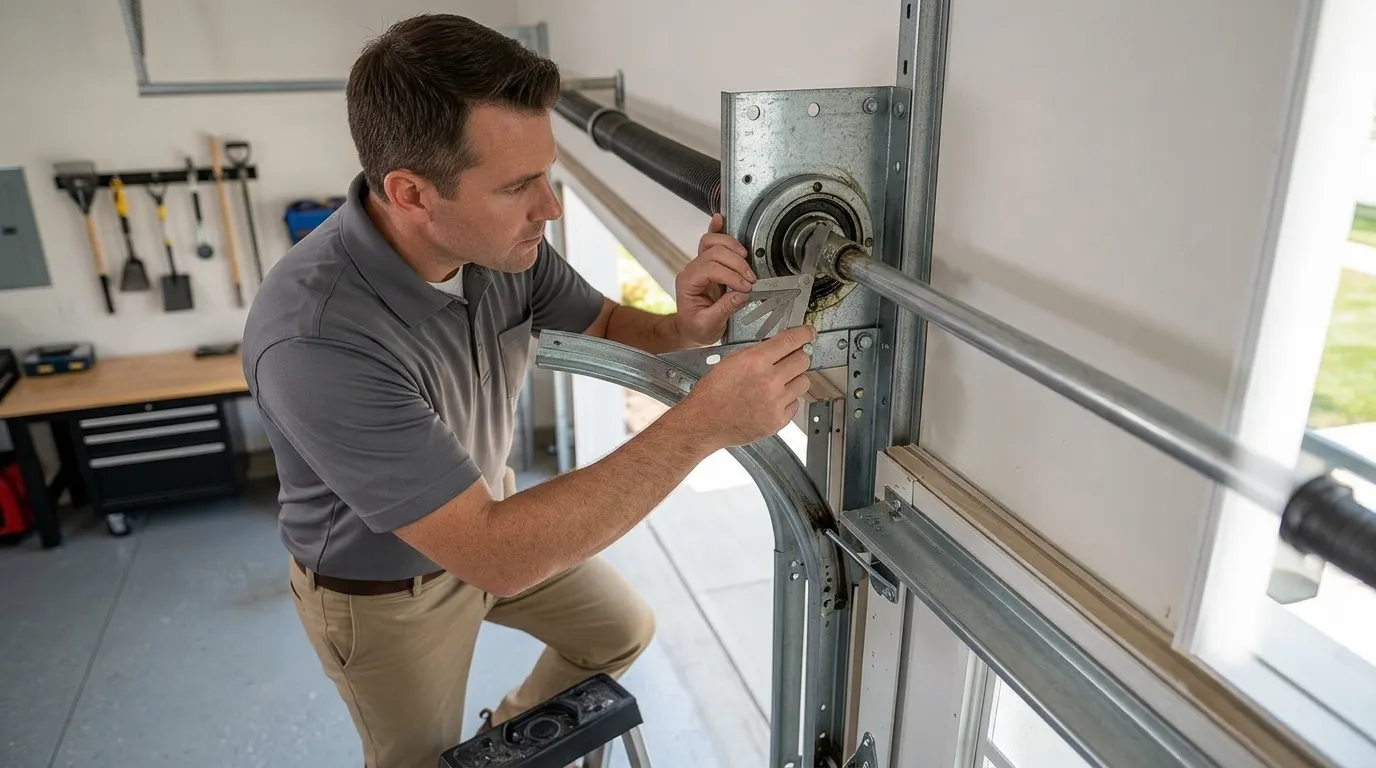
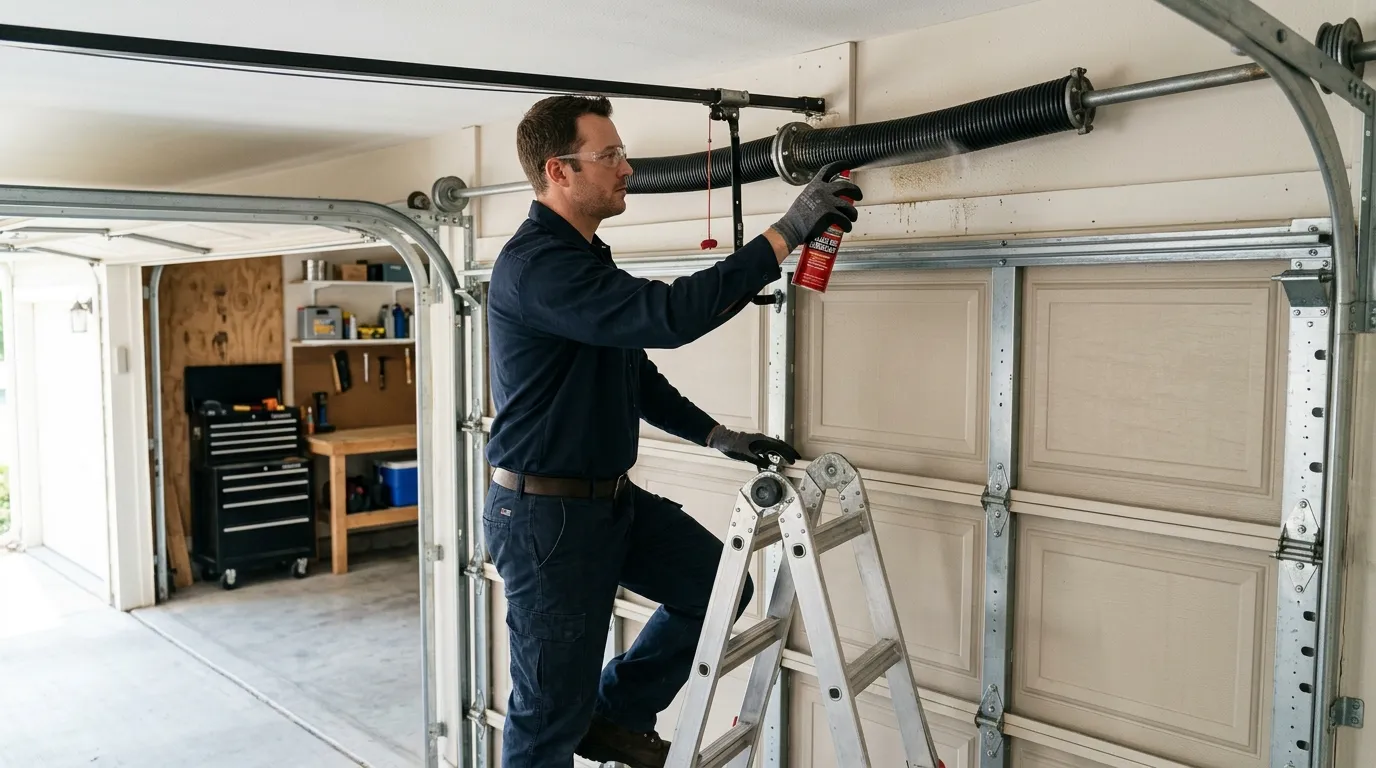
A lot of these houses were built with a single-bay garage, not the two-car layout that came later. Single doors carry differently - narrower, often lighter, sometimes still on the original extension springs rather than a torsion bar. When one of these comes off the track, the fix depends on whether the track itself has bent (common with age) or whether a cable snapped and let the door swing sideways.
Cold winters compound it. Ice and packed snow in the bottom track are a routine cause of a door climbing off its rail partway through a cycle, and that's more likely on a track that's already lost its factory shape.
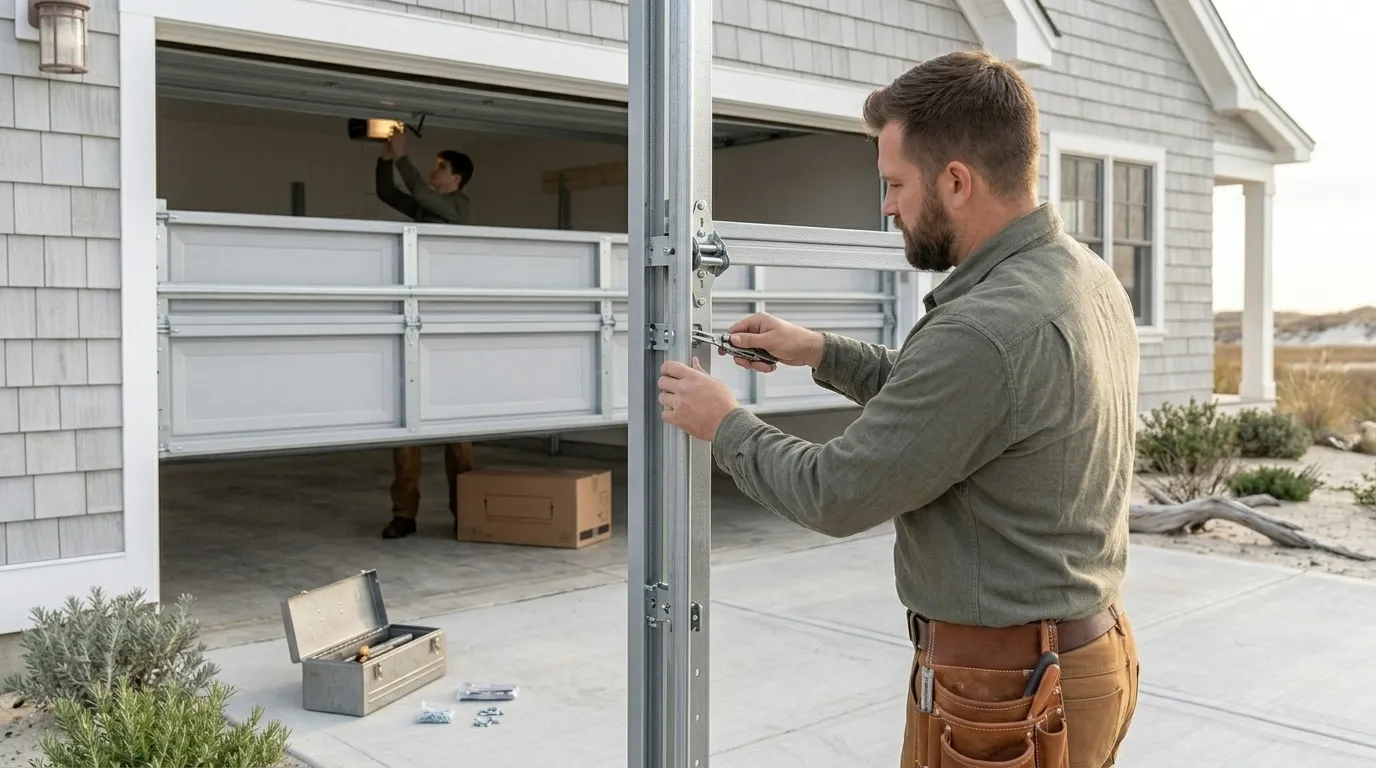
We don't try to force a badly bent track back into square on an older single-bay door - past a certain point, the metal work-hardens and cracks. Replacing that section is the honest call, not a wasted repair.
How Long It Takes
An off-track call on a Garden City house built in this era usually runs longer at the diagnosis stage than the repair stage. Getting eyes on a bent track section hidden behind decades of paint, or checking whether the original rollers are steel or the newer nylon type, takes a few extra minutes on an older single-bay door that hasn't been serviced in years.
Once we know what we're dealing with, resetting a door that's simply hopped the rail without damage is quick work. A bent track section that needs swapping takes longer, since we're matching hardware to a narrower single-bay opening that newer parts aren't always cut for off the shelf.
We don't quote a set number of hours before we've seen the door, because a 1957 single-bay setup and a later two-car door on the same street can take very different amounts of time for the same complaint. That's the honest limitation - we'd rather tell you on site than guess over the phone.
What Is on the Truck
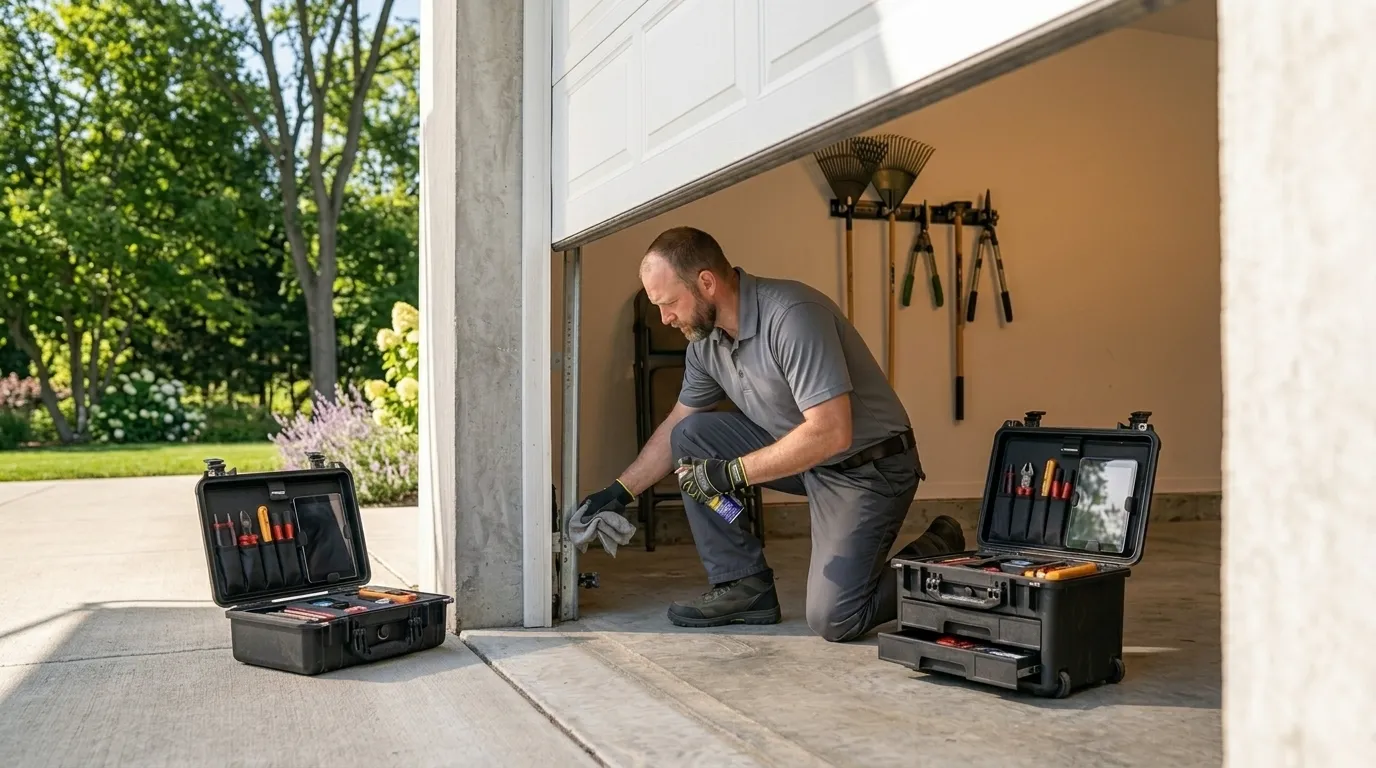
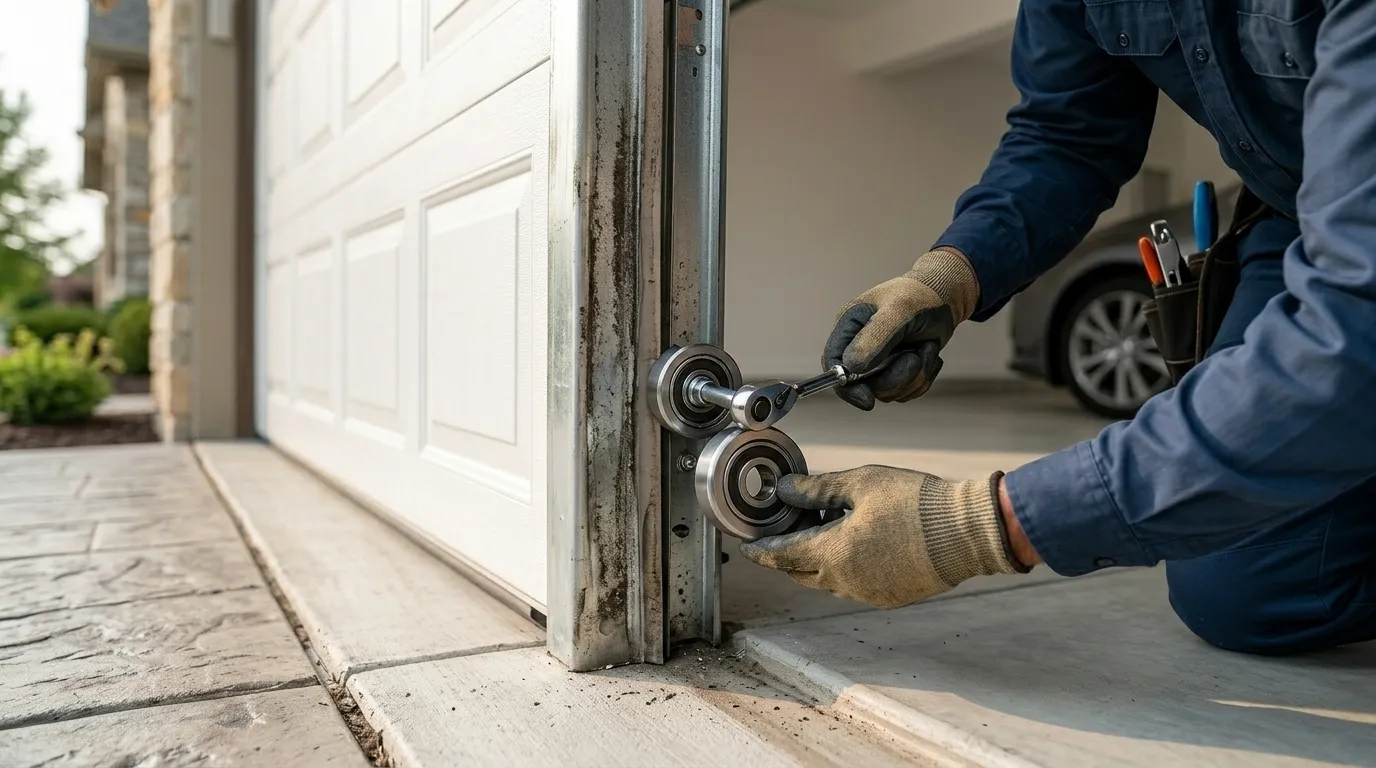
For a town where the housing stock centers on 1957, the truck carries stock sized for older single-bay doors, not just the wider two-car track most new parts are made for. That means narrower track sections, steel rollers alongside nylon ones, and hardware for extension-spring setups as well as torsion bar, since both show up on doors this age.
We also carry cable and pulley stock for the older lift systems, because a snapped cable is one of the more common reasons a single-bay door comes off its track completely rather than just slipping a roller. And with the cold-climate winters this area gets, we keep weatherstrip and bottom seal stock on hand - a worn or missing seal lets in the ice and snow that jams a track in the first place.
What we don't carry is stock for doors outside the standard sizes; a custom or oversized opening on an older Garden City home sometimes means ordering a part rather than pulling it off the truck that day.